
Why visit
Why visit Namibia?
Namibia’s otherworldly beauty tells the stories of earth’s oldest cultures. Climb Sossusvlei’s dunes, spot desert elephants in Damaraland, and connect with Himba and San communities who still practice ancestral ways. These traditions — rooted in spiritual ecology, oral history, and communal living — resonate with the African diaspora’s search for identity and wholeness. For travelers retracing ancestral wisdom, Namibia offers a window into Indigenous African resilience that lives on, untouched by time.
Top places to visit
Popular Attractions
in Namibia
-
Sossusvlei – Namib-Naukluft National Park
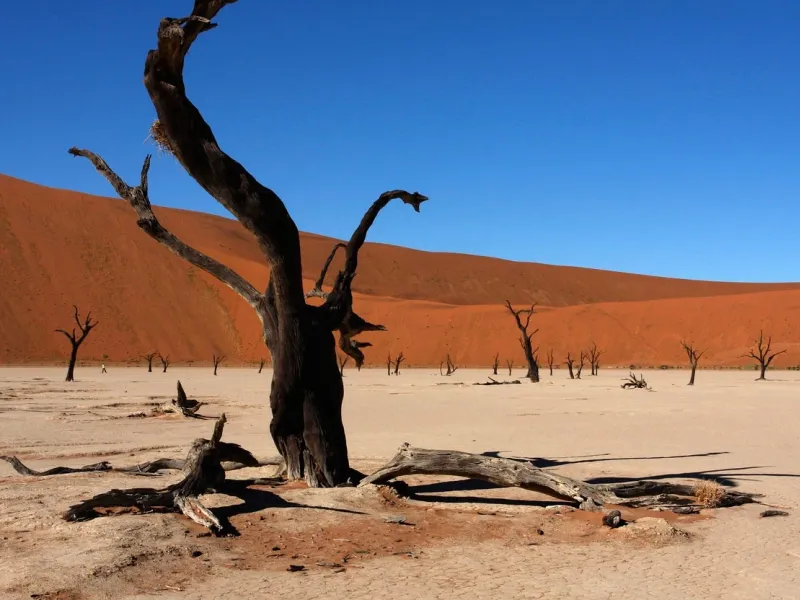
Famed for its rust-red sand dunes, some of the highest in the world, Sossusvlei is an icon of Namibia’s stark beauty. Climb Dune 45 at sunrise for breathtaking views, or wander the eerie white clay pan of Deadvlei, where ancient camelthorn trees stand frozen in time. It’s a surreal, spiritual landscape that leaves a lasting impression.
-
Etosha National Park
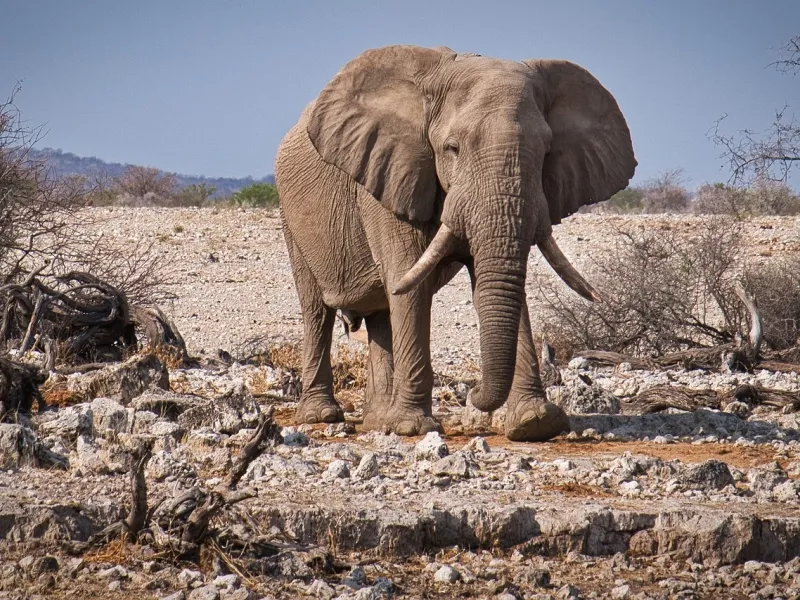
One of Africa’s premier safari destinations, Etosha offers an unforgettable wildlife experience. Centered around a massive salt pan, the park is home to elephants, lions, rhinos, giraffes, and countless bird species. Visit the waterholes for excellent wildlife sightings, especially during the dry season. The park’s accessibility and diversity make it perfect for both seasoned and first-time safari-goers.
-
Swakopmund – Atlantic Coast
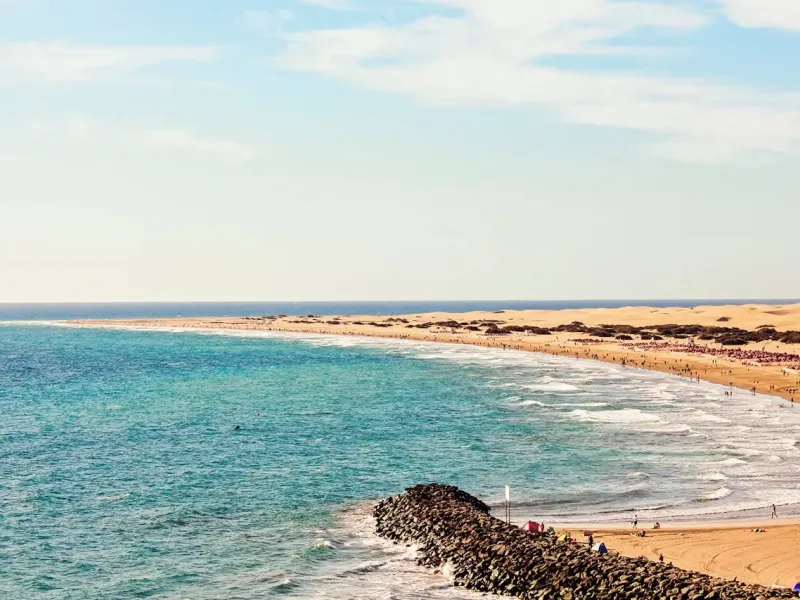
Where desert meets the ocean, Swakopmund is Namibia’s adventure capital and cultural crossroads. Enjoy quad biking, sandboarding, or dolphin cruises — or simply relax in this German-influenced coastal town. Its palm-lined streets, craft markets, and seaside cafes make Swakopmund a charming stop between wild landscapes.
The guide
Explore Namibia by Interest
Planning
Food and Culture
Heritage and History
Traveler Resources
Deep Expertise
We work with local conservationists, San trackers, and community-run lodges to create authentic, respectful experiences. Whether you're learning desert survival skills with the Ju/’hoansi people or visiting a cheetah rescue center, every moment honors both place and people.
Purpose-Driven Travel
LABUSA journeys in Namibia emphasize sustainability and cultural sensitivity. From staying in solar-powered eco-camps to supporting wildlife rehabilitation and Indigenous artisan co-ops, your travel directly benefits conservation and community empowerment.
Affordable Luxury & Authentic Moments
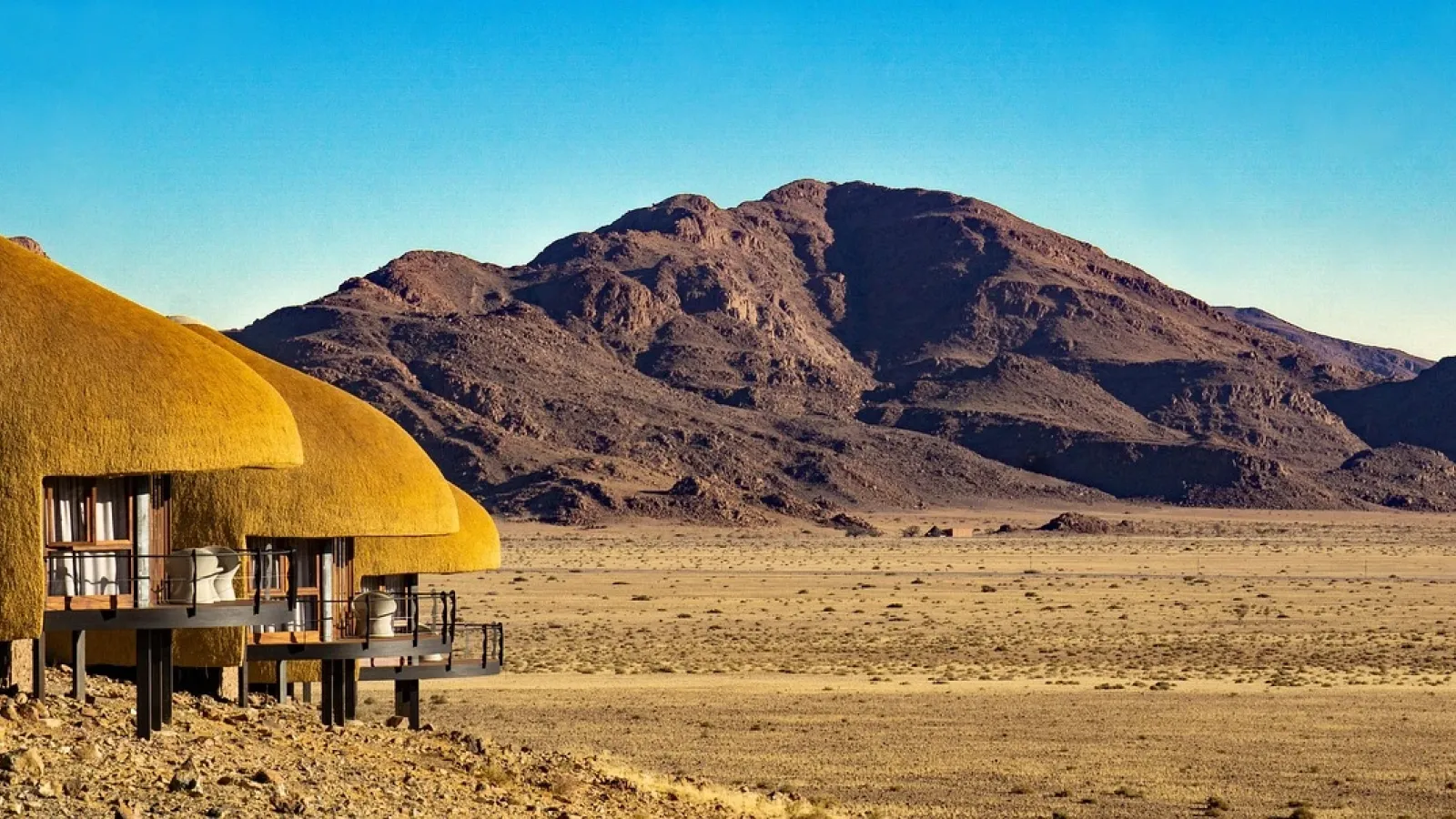
Stay in luxury desert camps nestled among dunes, elevated safari lodges overlooking waterholes, or design-forward retreats built into boulders. Our curated accommodations are immersive, soulful, and ideally situated to let Namibia’s quiet grandeur take center stage.
Common questions
Namibia Travel FAQs
- When is the best time to visit Namibia?
- The desert works in almost any month, which is unusual. Etosha does not: its game viewing depends on animals gathering at waterholes as the land dries, so it improves from June and peaks around September and October. If wildlife is the priority, come in the dry season. If the dunes and the coast are, come when it suits you.
- Do I need a four-wheel drive?
- For the main tarred routes and good gravel in the dry season, no. For deep sand, the far north-west, the Zambezi region or any camping itinerary, yes. Note that the final stretch into Sossusvlei is deep sand and needs 4x4 or the park shuttle.
- How dangerous are the gravel roads?
- They are the single biggest risk of a Namibia trip, and the danger is speed rather than the surface. Most serious injuries to visitors are single-vehicle rollovers. Keep well below the speed you would drive on tarmac, do not correct sharply if the back steps out, and never drive outside towns after dark.
- Is there malaria in Namibia?
- Only in part of it. The risk is in the north and north-east and rises after the rains. Sossusvlei, Swakopmund, Windhoek and the south are not malaria areas. Because it depends so much on your route, see a travel clinic six to eight weeks ahead with your itinerary in front of you.
- What money should I bring?
- The Namibian dollar and the South African rand both circulate here at par. The important asymmetry is that rand works in Namibia but Namibian dollars are not accepted in South Africa, so spend or change them before you cross the border. Carry cash for fuel on long routes.
- Can I see the dunes without climbing one?
- Yes. The drive into Sossusvlei is spectacular in itself, the road is tarred most of the way, and a shuttle covers the final sand section. Deadvlei needs a walk over sand, but the dune sea can be seen and photographed without a climb, and a scenic flight over it is arguably the better view.