
Why visit
Why visit Nicaragua?
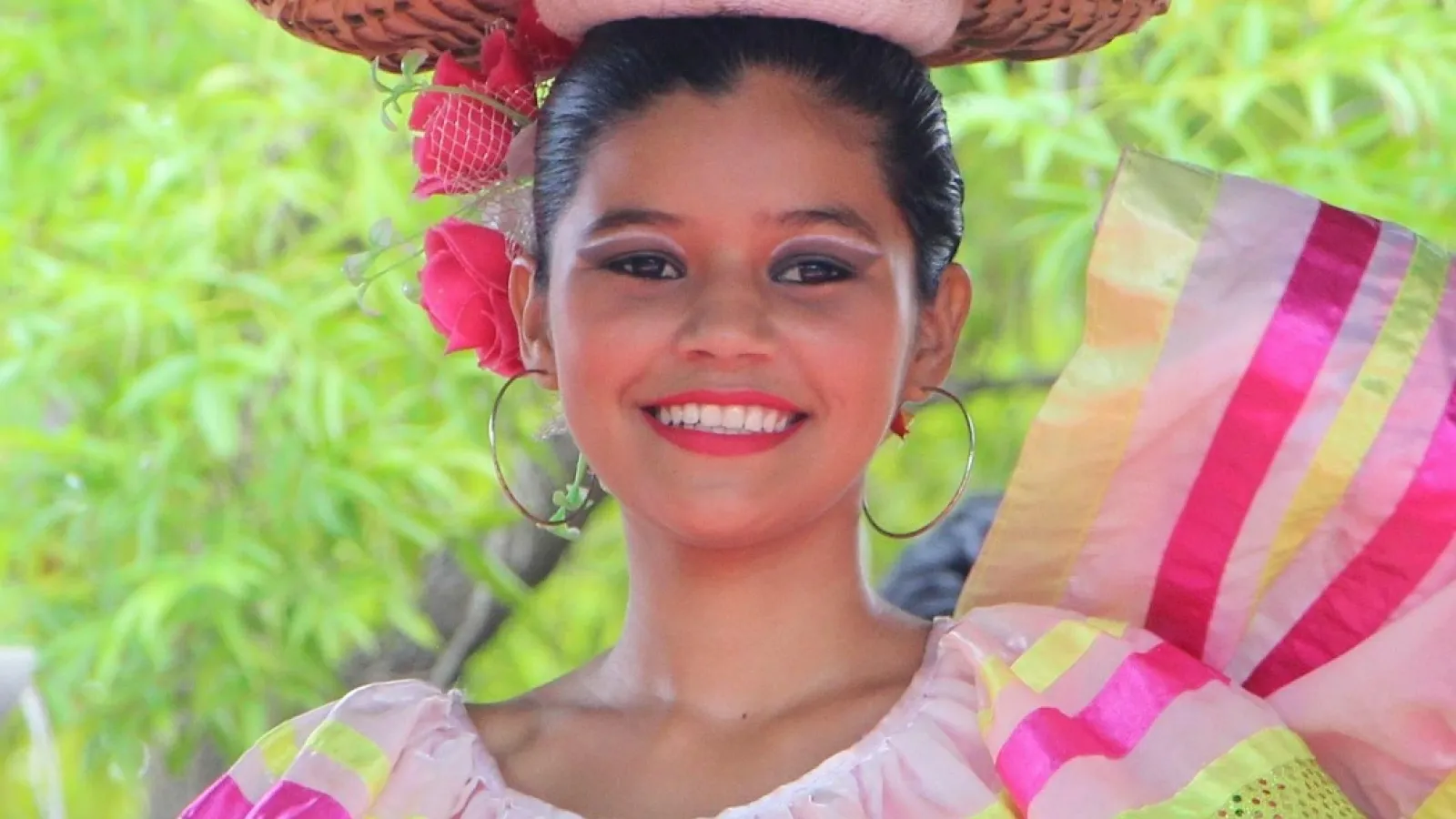
Nicaragua stuns with colonial Granada, fiery Masaya volcano, and Pacific waves in San Juan del Sur. On the Caribbean coast in Bluefields, African heritage thrives in Creole, Jamaican, and Garifuna communities. Join in the month-long celebration of Palo de Mayo, or explore local cuisine and music: experiences rooted in joy, resistance, and ancestral memory.
Top places to visit
Popular Attractions
in Nicaragua
-
Ometepe Island
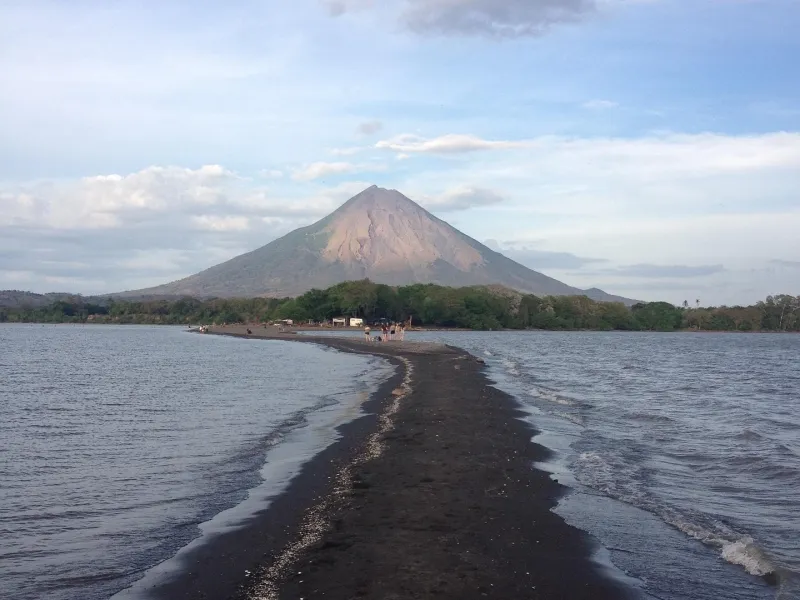
Formed by two majestic volcanoes rising out of Lake Nicaragua, Ometepe is more than a natural wonder. It’s a place of myth and meaning. Hike through cloud forests on Volcán Maderas, take in the dramatic views from Volcán Concepción, or swim in the healing waters of the Ojo de Agua spring. Visit ancient petroglyphs and stay in community-run eco-lodges that embody Nicaragua’s growing movement toward regenerative tourism.
-
Bluefields & the Caribbean Coast
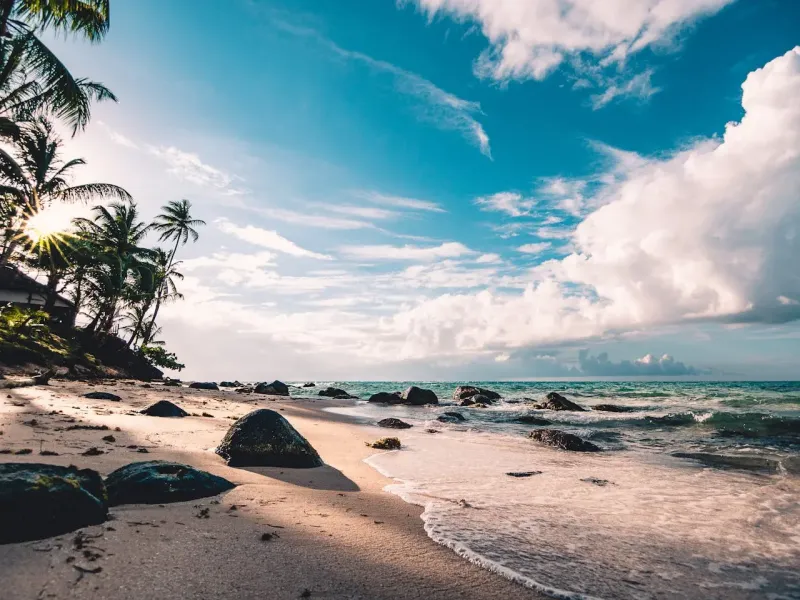
Bluefields and the surrounding towns of the Southern Caribbean Autonomous Region are the cultural soul of Afro-Nicaragua. Here, Garifuna and Creole traditions blend in vibrant harmony, seen in punta dancing, drumming ceremonies, and soulful cuisine. Visit during the Palo de Mayo festival in May (a month-long celebration of fertility, rhythm, and ancestral pride) or participate in cultural workshops that honor spiritual practices and language preservation efforts. This is travel that transcends tourism. It’s reconnection.
-
Granada
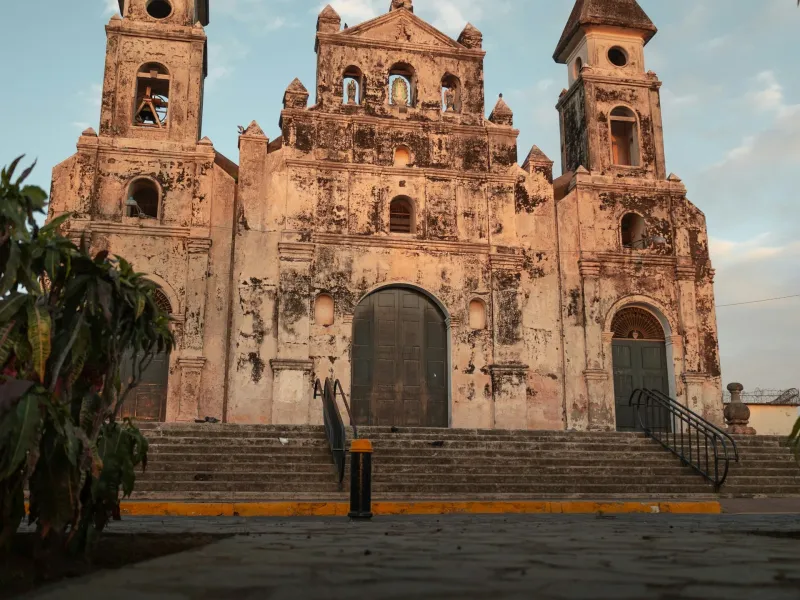
One of the oldest cities in the Americas, Granada enchants with its pastel-hued architecture, lively plazas, and views of the Mombacho Volcano. Ride a horse-drawn carriage through cobblestone streets, take a boat through the nearby Isletas (tiny islands), and engage with artisans keeping pre-Columbian and African-influenced craft traditions alive. At night, enjoy music spilling out of open-air cafés or attend a poetry reading: a nod to Nicaragua’s rich literary tradition.
The guide
Explore Nicaragua by Interest
Planning
Food and Culture
Heritage and History
Traveler Resources
Deep Expertise
At LABUSA Travel, our Nicaragua journeys are led by lived experience and trusted local partnerships. We work with Afro-Caribbean educators, Indigenous guides, and community leaders to ensure that your trip is both safe and culturally respectful. You’ll explore Nicaragua with insight that only comes from long-standing relationships and on-the-ground presence.
Purpose-Driven Travel
We craft experiences that foster exchange and empowerment. Whether you’re supporting coastal language schools, joining Afro-Indigenous youth dance collectives, or volunteering at reforestation projects in the north, your presence becomes part of something bigger: a journey that uplifts everyone it touches.
Affordable Luxury & Authentic Moments
With LABUSA Travel, you’ll experience Nicaragua’s richness without luxury’s price tag. Our itineraries combine boutique stays, community-based lodges, and immersive cultural experiences that bring comfort, meaning, and real value. It’s travel that feels grounded, generous, and unforgettable.
Common questions
Nicaragua Travel FAQs
- Do I need a visa to visit Nicaragua?
- This site does not publish an answer for United States passport holders, because the source cached for this cluster was written for a different nationality and its allowance does not transfer. Ask the Nicaraguan consulate responsible for where you live, close to your travel date. What that source does record, and what is worth knowing whatever your passport, is that your passport must have an expiry date at least 6 months after the day you arrive, that you may be refused entry if you do not hold an onward ticket, and that you must pay an arrival tax of 10 US dollars in cash. There is also a departure tax of 35 US dollars, which is normally included in the price of an air ticket.
- How does the CA-4 clock actually work?
- It runs from the first of the four countries you enter, and crossing a border does not give you a fresh one. The cited wording is unambiguous: the 90 day period starts when you enter any of these countries and does not restart when you cross borders, and you still go through immigration checks at every border. The agreement covers Nicaragua, Guatemala, El Salvador and Honduras. If you are expelled from one of them you are excluded from the other three. Nicaragua does allow you to extend your stay by up to 30 days by paying a fee, and the fee must be paid before the 90 days expires rather than after. Overstaying can mean a fine. The practical consequence is that a month in Guatemala and a month in El Salvador leave you a month, not three, so count from your first entry stamp and not from the Nicaraguan one.
- Do I need a yellow fever vaccination for Nicaragua?
- Almost certainly not, and this is the opposite shape to several of its neighbors. The CDC records that the vaccine is not recommended for Nicaragua, and that for direct travel from the United States it is not required. The requirement is narrow and is about where you have come from rather than where you are going: a certificate is required for travelers aged one year and over who are arriving from a country listed as having a risk of yellow fever transmission. So a visitor flying direct is outside it, and the same visitor routing through a country on that list may not be. Decide your route before your vaccinations, and ask a travel health professional early enough that the timing is not a problem.
- Is Granada a World Heritage Site?
- No, and it is the city most people assume is one. Nicaragua has two properties inscribed on the World Heritage List and Granada is neither: the Ruins of Leon Viejo, inscribed in 2000, and Leon Cathedral, inscribed in 2011. Granada appears on the Tentative List, which records sites a country has indicated it may nominate in future and which confers no inscription and no status. Several other Nicaraguan sites sit on that list, among them the Fortress of the Immaculate Conception, the Miskitos Keys and Volcan Masaya National Park. None of that makes Granada less worth going to. It simply is not the thing people think it is on paper.
- Are Leon Viejo and Leon Cathedral the same place?
- No, and the names make it easy to assume otherwise. They are two separate inscriptions, eleven years apart, and they are not in the same town. The Ruins of Leon Viejo are what is left of the original city, founded in 1524 and abandoned after the eruption of Momotombo in 1578 and an earthquake in 1610. The site sits about 68 kilometers from Managua. Leon Cathedral stands in the Leon that people live in today, which is a different settlement built after the old one was left. If you want to see both, treat them as two separate outings rather than one stop.
- Is malaria a risk in Nicaragua?
- In some parts of the country, and the cited guidance names them. The CDC recommends that travelers going to certain areas of Nicaragua take prescription medicine to prevent malaria, and it identifies the transmission areas as the Region Autonoma Atlantico Norte and the Region Autonoma Atlantico Sur, the two Caribbean coast autonomous regions, with rare cases elsewhere. This site publishes no drug name and no dose, because which medicine suits you depends on your health, your other medication and how long you will be in a transmission area, and because some of them have to be started days before you travel. Take the region names to a travel health professional and let them make that call. Mosquito bite avoidance matters on both coasts regardless, because dengue and Zika are separate risks that no tablet covers.
- What is the emergency number in Nicaragua?
- Call 911 and ask for an ambulance. Put it in your phone before you travel, and write it down somewhere that does not need a charged phone, together with your insurer emergency line and the address of where you are staying. Take travel insurance that covers medical treatment and repatriation and read what it excludes. Distances matter here more than the number does: the Caribbean coast and the Corn Islands are served by a small number of flights and boats, so evacuation cover is a practical matter on that side of the country rather than a formality.
- Is there anything a visitor can do here that is legal at home?
- Two things, and both catch people out. The first is political activity. It is illegal for foreigners to take part in any sort of political activity in Nicaragua, and the cited advice draws that line wide: it includes taking part in a protest, any activity seen as acting against the government including political meetings and campaigns, and using the national flag or its colors, blue and white, for campaigning or protesting. That last clause is the one worth reading twice, because it turns something most visitors would read as ordinary patriotism into something that is not. The second is drones. There is a prohibition on the possession and use of drones, introduced by Law 1230 in December 2024. That is a prohibition rather than a permit scheme, so the answer is to leave it at home rather than to look for a way to register it.
- How should I get around a city at night?
- In a taxi you have chosen rather than one that has chosen you. The cited advice records a risk of express kidnapping if you use an unauthorized taxi, in which someone is held and forced to pay cash for their release, and it is specific about how to reduce it: use a radio dispatched taxi or an authorized taxi with red plates, and make sure the driver identification number, name and photograph are clearly visible on the dashboard. The same advice asks you to keep car windows closed and doors locked, to avoid public transport after dark, and to take particular care around markets, bus stations, the area around the old cathedral in Managua and the poorer parts of towns.