
Why visit
Why visit Trinidad and Tobago?
T&T is a cultural powerhouse: from world-famous Carnival in Port of Spain to steelpan music, Caribbean cuisines, and birdwatching in Tobago’s serene nature reserves. Enjoy beach days at Maracas Bay, explore local street food, or dive into the dynamic nightlife. Beneath the revelry lies rich African-rooted traditions, including Orisha worship, stick-fighting, and the Spiritual Baptist faith. Through masquerade, music, and memory, travelers witness a living classroom of diasporic artistry and ancestral endurance.

Top places to visit
Popular Attractions
in Trinidad and Tobago
-

Trinidad Carnival: The Greatest Show on Earth
More than a festival, Carnival is a living, moving expression of freedom and identity. Masquerade bands, Soca music, elaborate costumes, and spirited parades take over the streets of Port of Spain in a crescendo of joy and artistry. To witness or participate is to feel the power of creativity, history, and community pulsing as one.
-

Tobago’s Nylon Pool & Buccoo Reef: Nature’s Hidden Spa
Just off Tobago’s coast, this shallow, crystal-clear lagoon is set in the middle of the sea, famed for its “youth-restoring” properties. Snorkel over vibrant coral gardens at nearby Buccoo Reef, glide in glass-bottom boats, or float in the silky waters of the Nylon Pool under the Caribbean sun.
-
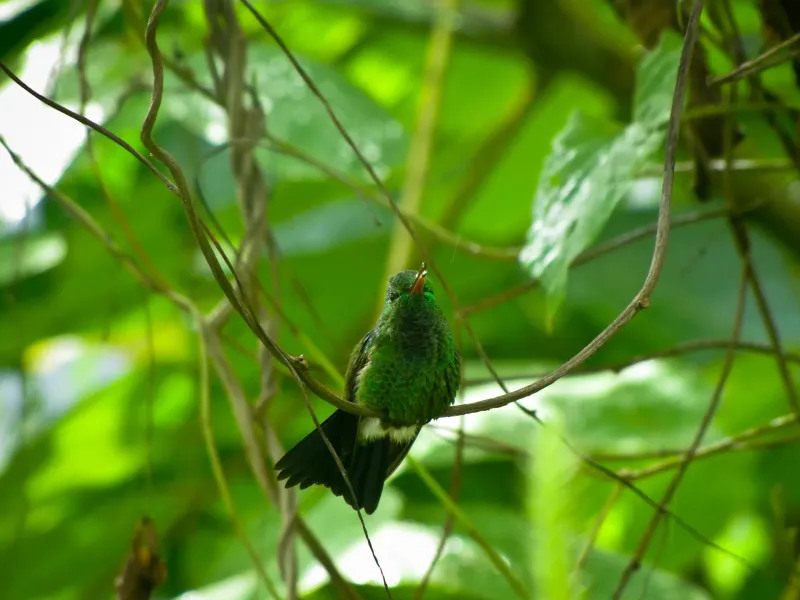
Asa Wright Nature Centre: A Sanctuary of Song and Science
Located in Trinidad’s Northern Range, this lush ecological reserve is a paradise for birdwatchers and nature lovers. Home to hundreds of bird species, including the rare oilbird and iridescent hummingbirds, Asa Wright offers guided walks through misty trails and verandas that overlook treetop canopies alive with sound and color.
The guide
Explore Trinidad and Tobago by Interest
Planning
Food and Culture
Heritage and History
Traveler Resources
Deep Expertise
LABUSA collaborates with Carnival designers, naturalists, calypsonians, and historians to deliver curated experiences that go far beyond the surface. Join a traditional drum session, take a cocoa estate tour in the hills, or explore the culinary crossroads of doubles, roti, and Creole cuisine with local chefs.
Purpose-Driven Travel
From reef preservation and rainforest protection to storytelling programs and artisan cooperatives, our itineraries are built around community benefit and cultural continuity. Your journey will uplift the places and people that make T&T remarkable.
Affordable Luxury & Authentic Moments
Our hand-selected accommodations include heritage homes in Port of Spain, beachfront villas in Tobago, and eco-lodges tucked into the rainforest. Each space balances comfort and character, designed to immerse you in island life with sophistication and soul.
Common questions
Trinidad and Tobago Travel FAQs
- How long can I stay in Trinidad and Tobago without a visa?
- Ninety days, and that is a different answer from either island in this batch. The UK Foreign, Commonwealth and Development Office states that you can visit without a visa for up to 90 days, and that you must have an onward or return ticket and proof of funds for your stay. The periods admitted across this region range from a few weeks to several months and none of them carries across, so a traveler arriving from a neighboring island may be working from a number that does not apply here. The ninety days can be extended by applying to the passport and immigration department, and one small thing protects that: make sure you get your passport stamped, because without an entry stamp an extension will be difficult. Your passport must also have an expiry date at least 6 months after the date you arrive, counted from arrival rather than from departure.
- Is there a State of Emergency in Trinidad and Tobago?
- Yes, and both halves of what the source says belong together. The official advice records that the government introduced a State of Emergency on 3 March, that it followed persistent violent crime and criminal activity, that it gives authorities additional powers of search, arrest and detention, and that no curfew or restrictions on movement have been imposed. Travelers are asked to follow the instructions of police and local authorities. The source gives no year for that date, so this page gives none either, and the only reliable way to know whether it is still in force is to read the live advice page before you book. A reader given only the powers imagines a country under lockdown, which it is not; a reader given only the absence of a curfew is unprepared for why the measure exists.
- What is the emergency number in Trinidad and Tobago?
- For an ambulance, dial 811. That is the number the official health advice publishes, in those words: call 811 and ask for an ambulance. It is worth writing down rather than assuming, because it is not the number used by either of the islands immediately to the north, and a card carried from a previous trip in this region will send you to the wrong place in the one situation where that matters most. The same advice notes that medical facilities can be limited in some areas, that private clinics can treat most ordinary problems, and that medical evacuation may be necessary in more serious cases, which is why travel health insurance covering evacuation is not a formality here.
- Do I need a yellow fever vaccination for Trinidad and Tobago?
- Possibly, and it is a recommendation rather than a condition of entry. TravelHealthPro states that there are no certificate requirements under International Health Regulations for this country, so nobody will ask you for a certificate at the border. Separately it states that vaccination is recommended for travelers aged 9 months and older traveling to densely forested areas on the island of Trinidad, and that it is not recommended for cruise ship passengers. Note both limits in that sentence: the island of Trinidad, and densely forested areas of it. On 24 March 2026 the Ministry of Health reported a confirmed detection of yellow fever in a deceased monkey with no human cases detected, and the last significant outbreak in Trinidad was in 1979. Take the question to a travel health professional with your actual itinerary in hand.
- Is Trinidad and Tobago affected by hurricanes?
- Rarely, and this is the one country in the region where the season is not the governing answer. The official advice states that the Caribbean hurricane season normally runs from June to November, and that Trinidad and Tobago is rarely affected by hurricanes but can have severe storms. These islands sit far enough south that most storm tracks pass to the north. Rarely is not never: UNESCO records that after the 1963 hurricane Flora many of the flora and fauna populations on the Main Ridge dwindled or disappeared, and a hummingbird there is still described as recovering from it. The hazard that is genuinely local is an earthquake. The advice records that earthquakes are a risk and that the last serious one was in 2018, and it names no volcano on either island.
- When is Carnival in Trinidad and Tobago?
- On the Monday and Tuesday immediately before Ash Wednesday, which means the dates move every year with Easter. The National Carnival Commission records that Carnival here is celebrated before the commencement of the Lenten season, and that in 1943 Carnival on the street was restricted to the Monday and Tuesday, having previously run over the three days preceding Ash Wednesday. The familiar two-day shape is therefore a twentieth century decision rather than an ancient custom. This guide publishes the rule rather than a date, because the Commission is the body that sets the calendar and its own published calendar is the place to read the year you want from. The weeks before are the season: panyards rehearsing, mas camps working, and the competitions building toward the final weekend.
- Does Trinidad and Tobago have any World Heritage Sites?
- None inscribed, and three candidates. UNESCO records that the country ratified the World Heritage Convention on 16 February 2005 and that it has no property inscribed on the World Heritage List. What it has is a Tentative List, the register of sites a country has put forward, carrying three entries submitted on the same day in 2011: the Banwari Trace Archaeological Site, La Brea Pitch Lake and the Tobago Main Ridge Forest Reserve. A place on a Tentative List is a candidate, not a designation, so calling any of them a World Heritage Site would be wrong today whatever happens later. The Main Ridge is the one a visitor actually walks in, and it carries a claim of its own: UNESCO records it as the oldest legally protected forest reserve set aside specifically for conservation, established by an ordinance on April 13th, 1776.
- Is Trinidad and Tobago safe to visit?
- The honest answer has two halves and both come from the same official source. The advice records that there is a high level of violent crime, including gang-related attacks and shootings, and that instances of homicides and armed robberies are common. We do not soften that wording. The same source does not advise against travel to the country, and it is unusually specific about where to be cautious, naming districts rather than leaving it vague, which makes the advice usable rather than frightening. The precautions it asks for are ordinary: avoid walking at night, plan routes in advance, keep valuables out of sight in a moving vehicle, use well-lit ATMs in daylight, and use well-established taxi firms recommended by locals or your hotel. Two laws catch visitors out. It is an offense for anyone, including children, to dress in camouflage clothing or bring any into the country. And the advice records that in March 2025 consensual same-sex activity was reinstated as a crime punishable by up to 5 years imprisonment, that it is also illegal for LGBT+ foreign nationals to enter the country, and that neither of these laws has been enforced in recent times. We publish all three of those clauses because a traveler is entitled to know their legal position before deciding to visit.