Leave the camouflage at home. All of it.
This is the single most important line on the page and it is quoted exactly: It is an offense for anyone, including children, to dress in camouflage clothing or bring any into the country.
Read what that covers. Not just wearing it: bringing it. Not just adults: children. A camouflage-print backpack, a child's cargo shorts, a fishing hat, a phone case, a swimsuit in a camo pattern. The prohibition is on the pattern, and the offense begins at the border rather than on the street.
This is a real and enforced rule in several countries in the region, and it catches families more often than anyone else, because a camo item in a child's bag is exactly the thing nobody thinks to check. Go through the bags before you leave. It costs ten minutes and it is the one packing instruction here that carries a legal consequence.
The islands ask for two different bags.
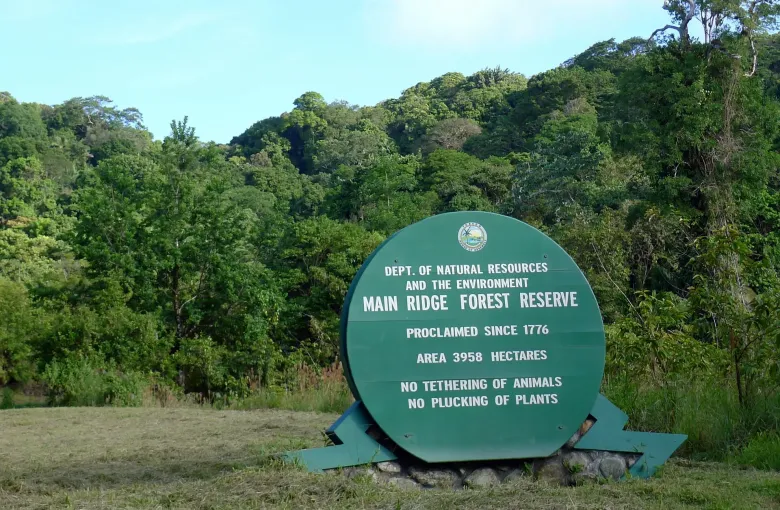
Trinidad and Tobago are not one destination packed for once. Trinidad's Northern Range is rainforest: humid, steep, wet underfoot, and the birding that draws people there happens early in the morning when the vegetation is soaking. Tobago's Main Ridge is the same in character and older in law. Between them you will want real footwear with grip, something that dries, and a light waterproof layer you can walk in rather than one that traps heat.
Tobago's coast asks for the opposite and much less of it: reef shoes if you plan to be in the water around coral, and sun cover you can keep on while swimming.
Mosquitoes are a packing decision, not a pharmacy one.
TravelHealthPro records that there is a risk of dengue in this country and that there is a risk of Zika virus in this country. For both, the prevention it gives is avoiding mosquito bites, and for dengue it notes the mosquitoes that spread it mainly feed during daytime hours.
That last detail changes what you pack. Daytime biters mean repellent is a daytime item, not an evening one, and long sleeves in the forest earn their place. The same page records that as of 2 April 2025 the Ministry of Health was investigating a cluster of five malaria cases on Trinidad, that it was unclear whether it was locally acquired, and that mosquito bite avoidance is recommended for all travelers. Bite avoidance is the instruction in every case.
Medicines.
The official advice notes that the legal status and regulation of some medicines prescribed or bought in the UK can be different in other countries, and the same applies from anywhere. Carry prescriptions in their original labeled packaging with a copy of the prescription, and check anything unusual before you fly rather than at the counter.
Pack enough for the whole trip plus a margin. Medical facilities can be limited in some areas and a specific medication may simply not be stocked outside the main centers.
The small things that matter here.
A power bank, because a phone used for maps, a torch and a camera in humid forest runs down faster than it does at home. A dry bag for boat crossings between the islands. Cash in small notes for the roadside food this country is known for. A printed copy of your insurance and emergency numbers, because the one time you need them is the time the phone is gone.
And the number itself, written down: 811 for an ambulance. It is not the number either neighboring island uses.
If you would like a kit list built around the specific trip you are taking, tell us where you are going.
Sources
- UK Foreign, Commonwealth and Development Office: Trinidad and Tobago travel advice, safety and security: that there is a high level of violent crime including gang-related attacks and shootings and that instances of homicides and armed robberies are common; the named areas in which to be cautious, including downtown Port of Spain east of Charlotte Street, Carenage, Sea Lots, Belmont, Laventille, Morvant, Barataria, Cocorite and the interior of the Queens Park Savannah; that a significant portion of violent crime is gang-related and the listed precautions, including avoiding walking at night, keeping valuables out of sight in a moving vehicle, and using well-lit ATMs during daylight; that criminals have used drugs, deception and sexual solicitation including via dating apps to facilitate robbery and sexual assault; that robberies and opportunistic crime may occur during the carnival period; that providers of recreational and adventure tourism may not meet UK safety standards; that it is an offense for anyone, including children, to dress in camouflage clothing or bring any into the country; that possession of up to 30g of cannabis or 5g of cannabis resin has been decriminalised, that smoking cannabis in public spaces or while operating a vehicle is not allowed, and that being stopped with those amounts can bring a fine of up to 50,000 Trinidad and Tobago dollars; that in March 2025 consensual same-sex activity was reinstated as a crime punishable by up to 5 years imprisonment, that it is also illegal for LGBT+ foreign nationals to enter the country, and that neither of these laws has been enforced in recent times; that entering private property without permission can bring a fine of up to 750,000 Trinidad and Tobago Dollars or imprisonment for up to 25 years and that legal occupants may use defensive and even deadly force against trespassers; that a UK photocard driving license may be used for up to 90 days and that an international driving permit is needed beyond that; that driving standards are mixed, that high-speed accidents on the main highways often result in fatalities, that some roads are narrow, winding and unlit and that pedestrians often walk on the roads; that Trinidad and Tobago is rarely affected by hurricanes but can have severe storms; that earthquakes are a risk and that the last serious earthquake was in 2018; and that travelers should monitor the alert level of Kick em Jenny, an underwater volcano located off the coast of Grenada and about 200km from Trinidad, which erupts every few years. Accessed 21 September 2026.
- UK Foreign, Commonwealth and Development Office: Trinidad and Tobago travel advice, health: that in an emergency a traveler should call 811 and ask for an ambulance; that at least 8 weeks before a trip a traveler should check the latest vaccine recommendations and where to get vaccines; that the yellow fever vaccination is recommended for some travelers if visiting Trinidad; that the 2022 UNAIDS Country Factsheet estimated around 12,000 adults aged 15 or over in the country were living with HIV; that the legal status and regulation of some medicines can differ from the country they were prescribed in; and that medical facilities can be limited in some areas, that private clinics can treat most ordinary problems but medical evacuation may be necessary in more serious cases, and that adequate travel health insurance and accessible funds are needed to cover treatment and repatriation. Accessed 21 September 2026.
- TravelHealthPro, the National Travel Health Network and Centre: Trinidad and Tobago country page: that there are no certificate requirements under International Health Regulations and that there is a risk of yellow fever transmission in parts of the country; that yellow fever vaccination is recommended for travelers aged 9 months and older traveling to densely forested areas on the island of Trinidad and is not recommended for cruise ship passengers; that there is a risk of dengue in the country and a risk of Zika virus in the country; that on 24 March 2026 the Ministry of Health reported a confirmed detection of yellow fever in a deceased monkey with no human cases detected, and that the last significant yellow fever outbreak in Trinidad occurred in 1979; that as of 2 April 2025 the Ministry of Health was investigating a cluster of five malaria cases on the island of Trinidad with the first case identified on 27 March 2025, that it was unclear whether it was locally acquired and that the species had not been confirmed, and that mosquito bite avoidance is recommended for all travelers; and that the capital is Port of Spain, the official language English and the monetary unit the Trinidad and Tobago dollar. Accessed 21 September 2026.
Other Articles
Trinidad and Tobago Travel Safety Guide
Trinidad and Tobago Weather Guide