
Why visit
Why visit New Zealand?
New Zealand stuns with natural marvels like the geothermal springs of Rotorua, the magical Waitomo Glowworm Caves, and the cinematic fjords of Milford Sound. Adventurers can hike through alpine trails in Queenstown, paddle through serene lakes, or enjoy city life in Auckland and Wellington, rich with galleries, culinary tours, and vibrant nightlife. The true heart of the country beats in its Māori culture: seen in traditional marae visits, powerful haka performances, and the art of storytelling deeply tied to land and lineage. While the Afro-Kiwi community is small, the shared themes of ancestry, resilience, and cultural pride resonate strongly with African diaspora travelers. Guided experiences by Māori hosts often provide meaningful insights into colonial history, making New Zealand not just a scenic escape but a place of cross-cultural reflection and learning
Top places to visit
Popular Attractions
in New Zealand
-
Rotorua
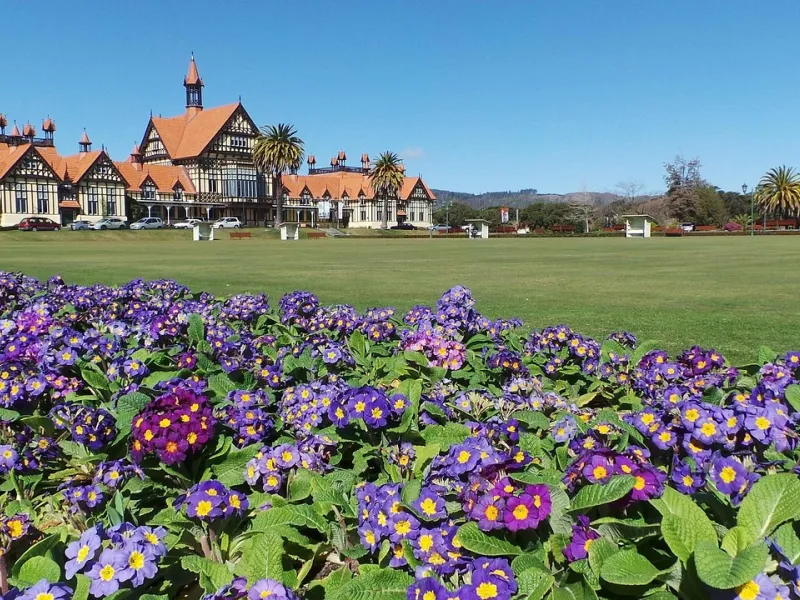
Located on the North Island, Rotorua is one of New Zealand’s most spiritually and geologically active regions. Witness bubbling mud pools, steaming geysers, and thermal lakes that reflect the Earth’s ancient power. Just as powerful are the local iwi (tribes), who welcome travelers to their marae (sacred meeting grounds) for storytelling, haka performances, and meals cooked in traditional hangi style. Rotorua is not just a place to visit. It’s a place to learn and listen.
-
Fiordland National Park
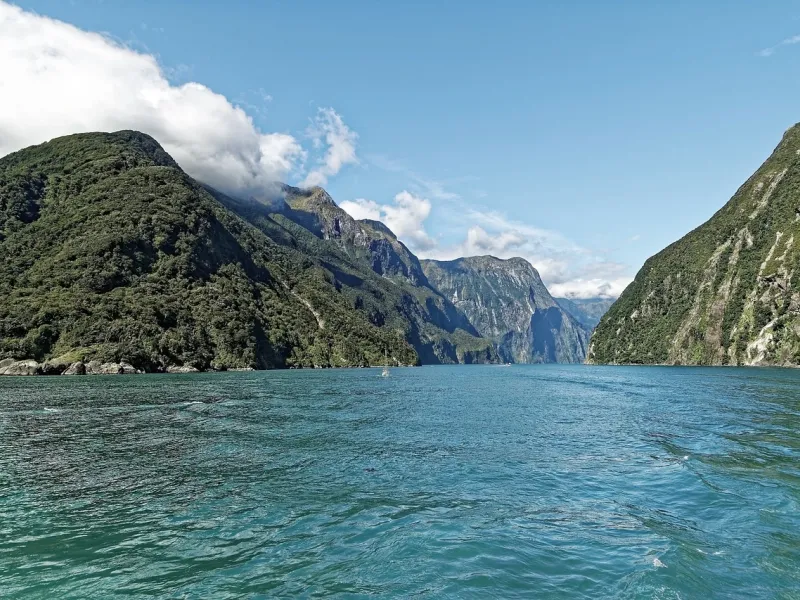
On the South Island, Fiordland is a cathedral of nature where glacier-carved cliffs plunge into deep fjords. Cruise through the iconic Milford Sound or hike part of the Kepler or Routeburn Tracks to experience raw, untouched beauty. With local Māori guides, you can explore ancestral knowledge of this land and its spiritual significance. This is a place that humbles and heals.
-
Waitangi Treaty Grounds
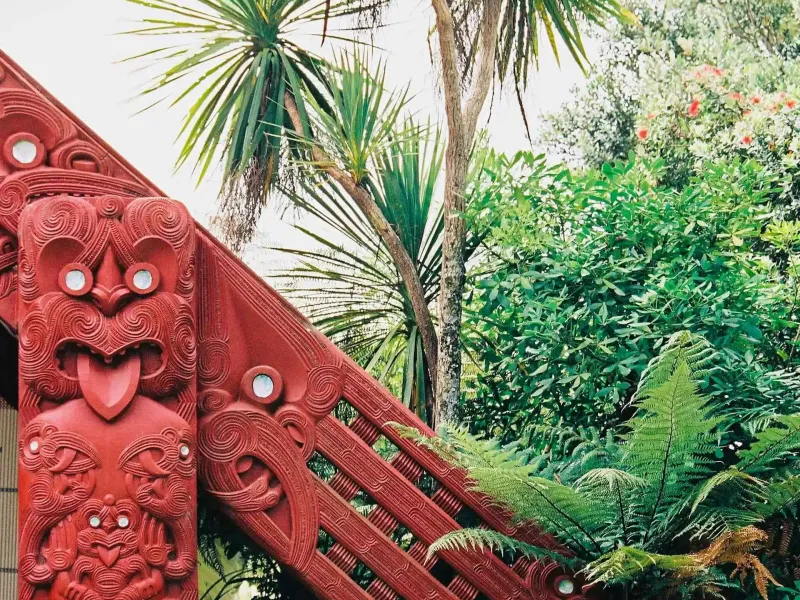
Located in the Bay of Islands, the Waitangi Treaty Grounds is the historic site where Māori leaders and the British Crown signed New Zealand’s founding document. Visit the museum, witness traditional waka (canoe) launches, and engage in conversations about sovereignty, identity, and justice. For travelers seeking to understand Aotearoa’s layered history, this site offers essential context and perspective.
The guide
Explore New Zealand by Interest
Planning
Food and Culture
Heritage and History
Traveler Resources
Deep Expertise
With long-standing connections to Māori tour guides, environmental stewards, and Afro-Kiwi creatives, LABUSA Travel curates journeys that are informed, immersive, and inclusive. From sacred sites to artistic enclaves, you’ll experience Aotearoa with guides who share real insight, not just information.
Purpose-Driven Travel
We believe travel should build bridges. LABUSA Travel itineraries in New Zealand include visits to Indigenous-led tourism projects, Afro-Pasifika cultural hubs, and social enterprises focused on sustainability and heritage. Whether you’re planting trees with conservationists or learning waiata (Māori songs), your journey supports healing, learning, and solidarity.
Affordable Luxury & Authentic Moments
With LABUSA Travel, travel is meaningful and mindful, not manufactured. We blend boutique lodges, cultural experiences, and natural wonders into high-value itineraries designed for curious travelers. Our goal is to make New Zealand’s richness accessible, offering soulful adventures without the premium price tag.
Common questions
New Zealand Travel FAQs
- Do I need a visa to visit New Zealand?
- For most short visits, no, and this is the point at which New Zealand parts company with the country next door. What a visa waiver visitor needs instead is an NZeTA, a New Zealand Electronic Travel Authority, which is not a visa and is requested online before you fly. The binding answer for your own situation depends on the passport you hold and belongs to Immigration New Zealand, which is the authority that decides it. The UK Foreign, Commonwealth and Development Office, whose entry advice is written for British passport holders and is attributed as such throughout this site, states that you do need a New Zealand Electronic Travel Authority. If you intend to work, study or settle rather than visit, that is a visa question and a different process.
- What is an NZeTA and how long does it take?
- It is a travel authority requested online before departure, and the two facts worth planning around are its validity and its lead time. Immigration New Zealand states that an NZeTA is valid for 2 years for travelers, or 5 years for crew members, and that checks can take up to 3 days. The FCDO entry advice puts the same instruction as allow up to 72 hours for it to be processed. Read both as the same practical rule: request it when the flights are booked, not the night before you fly. This page does not quote a firm price, because the only figure Immigration New Zealand publishes is a starting one, from NZD 17, and the separate International Visitor Conservation and Tourism Levy is named by the FCDO without a figure attached. Check both amounts at the moment you apply.
- How long can I stay?
- Three months per visit for most visitors, and the reason that sentence needs care is that two good sources look as though they disagree. Immigration New Zealand gives the general rule: an NZeTA allows stays, each visit, of 3 months, or 6 months for UK citizens. The FCDO entry page says six months, and for its own British readers that is correct. If you hold a United States passport the answer is three months. There is also a separate ceiling that applies regardless of nationality: Immigration New Zealand states you can only be in New Zealand for up to 6 months within any 12-month period. Those are two different limits. One is how long a single visit may run, the other is how much of the year you may spend in the country in total.
- What can I not bring into the country?
- Food, and a great deal more than food. New Zealand runs one of the strictest border biosecurity regimes anywhere and it is enforced rather than advertised. The FCDO entry advice states that it is illegal to import most food products, and that wood and leather products, golf clubs, tents and fishing equipment must be declared to a Biosecurity New Zealand official. Marked bins are available at the airport for anything you would rather surrender than declare. Failing to declare can bring a fine of up to 100,000 New Zealand dollars or a prison sentence. The practical rule is to declare anything you are unsure about, because declaring costs you a conversation. Clean the soil off your hiking boots before you pack them, and make sure a tent is dry and free of seeds.
- What is the emergency number?
- 111, for ambulance, fire and police. The FCDO gives it in exactly those terms and its health advice puts the instruction plainly: call 111 and ask for an ambulance. Learn it before you travel, because the number you already know almost certainly does not work here. Every other destination in this marketing region uses something different, and the closest of them is close enough to be genuinely confusing. The travel safety guide in this cluster names the specific numbers that reach nobody in New Zealand, so that page rather than this one is where that list belongs. The FCDO also names Healthline for free medical advice, which is the right call for something that needs an answer rather than an ambulance.
- Will my healthcare be covered?
- Almost certainly not, and the paragraph most often misread is a narrow one. The FCDO health advice states that British nationals who live in the UK and who are on a short-term visit to New Zealand are eligible for urgent healthcare treatment under a reciprocal agreement, and that this does not extend to routine, non-emergency medical treatment including prescriptions. Read the conditions rather than the headline: it reaches British nationals living in the UK and nobody else. A United States passport holder is not covered by it at all. The same advice tells every traveler to hold insurance for local treatment or unexpected medical evacuation, and evacuation is the word to notice in a country where a beautiful place can be a long way from a hospital.
- What about the national accident compensation scheme?
- This cluster does not describe it, and that is a deliberate refusal rather than an oversight. New Zealand operates a well known national scheme covering accidental injury, travelers hear about it constantly, and it is the single fact about New Zealand healthcare a visitor would most want explained. Its own authority published nothing readable when this cluster's sources were checked, so there is no citable text behind any account of what it does or does not reach. A paragraph written from memory would look exactly like a sourced one on the page and would be impossible for you to verify, which is worse than a gap. Take the question to the scheme directly, and carry travel insurance regardless of what you find.
- Do I have to declare cash?
- Yes, above a threshold. The New Zealand Customs Service states that you are required to complete a Border Cash Report if you carry NZ$10,000 or more in cash. That is a reporting duty rather than a limit: bringing the money is lawful, and not reporting it is the offense. Customs also states that Customs is the lead agency for the New Zealand Traveller Declaration, that it has the power to examine all goods crossing the border, and that this includes electronic devices. The last point is unusual enough to be worth saying out loud: a phone or a laptop counts as goods for this purpose. Border processing levies also apply.
- How much money will I be asked to show?
- Immigration New Zealand states that you must have at least NZD 1,000 a month, or NZD 400 a month if you have already paid for your accommodation. The FCDO puts the same requirement in general terms, noting that you may be asked for proof that you have enough money for your stay and for proof of a return or onward ticket. Both are evidence requirements rather than spending forecasts. If your accommodation is prepaid, the lower figure is the one that applies to you, and a booking confirmation is part of the answer rather than a separate thing. This page does not publish a daily budget for New Zealand, because no source in this cluster's research register carries one.
- What should I do in an earthquake?
- Drop, Cover, Hold. The FCDO records that New Zealand is in a major earthquake zone and gives that as the advice in the event of an earthquake: get down, get under or beside something solid, and hold on until the shaking stops. It names the National Emergency Management Agency as the source of official guidance and records that tsunamis can happen along the coastlines. The link between those two is what travelers miss most often. Near the coast, strong or long shaking is itself the warning, and moving inland or to higher ground without waiting to be told is the response. The same advice notes there are several active volcanoes on the North Island, where published alert levels and track closures are instructions rather than suggestions.
- Is the Tongariro Alpine Crossing safe to walk?
- It is an alpine route in every month of the year, and the Department of Conservation publishes the conditions in which to reconsider: an average wind speed of 55 kph or greater, or a wind chill of minus 10 degrees Celsius or colder. Those thresholds do not soften because it is summer at sea level. The Department also records that Manaaki Rangers greet visitors daily from November to April and that bookings are recommended for all visitors. Between those months there are people at the track who know what the mountain is doing that morning; outside them the route is open with nobody at the start to tell you the thresholds have been met. Give the walk a spare day in the itinerary, because the weather may take one.
- How should I approach Māori culture as a visitor?
- As a guest of a living culture in its own country, rather than as someone reconnecting with anything. Māori are tangata whenua, the people of the land, and the cluster page that carries this subject says so in its first paragraph because the content framework's own name for that slot is wrong here. The best guidance available is specific rather than general. Writing about Tongariro, the Department of Conservation records that the mountains are sacred to Ngāti Hikairo ki Tongariro of Ngāti Tūwharetoa, and asks visitors to honor the requests of Ngati Hikairo by staying safe and respecting their home. Those two requests are one request: an unprepared visitor becomes a burden on the people whose place it is. Choose experiences run by the people whose culture it is, and take the safety part as seriously as the rest.
- How many World Heritage sites does New Zealand have?
- Three, and the shape of the list is more interesting than the number. The UNESCO World Heritage Centre record shows 3 properties inscribed on the World Heritage List, of which Natural 2 and Mixed 1, with 8 sites on the Tentative List. There is no purely cultural property at all. That means the country's entire cultural World Heritage recognition is carried by a single mixed listing, Tongariro National Park, which is why the record gives it two dates, 1990 and 1993. The heritage guide in this cluster takes Tongariro and is explicit that it leaves the other two out: Te Wahipounamu in the south west, and the Sub-Antarctic Islands, which an ordinary itinerary cannot reach.