
Why visit
Why visit Greece?
Greece holds twenty-one World Heritage properties, about six thousand islands and islets of which a couple of hundred are inhabited, and the buildings on which Western architecture was argued out. It is also one of the easiest countries on this site to travel in: Schengen entry, the euro, short flights, and a ferry network that turns an itinerary into a sequence of arrivals by sea.
The safety picture is unusually simple, and stating it plainly matters more than hedging it. The United Kingdom carries no advisory against travel to any part of Greece: there is no restricted province, no border zone and no island to avoid. The whole of the standing warning on the front of that advisory is wildfires, at a high risk from April to October, which is a season to prepare for rather than a place to stay out of.
Three of the twenty-one carry this guide, and choosing three is an editorial decision rather than a ranking. The Acropolis of Athens and the Archaeological Site of Delphi were both inscribed in 1987; Meteora followed in 1988. Olympia, Delos, Mystras, Epidaurus, Mount Athos and the Minoan palatial centres of Crete are all inscribed too, and we would rather say that than let a selection of three read as a verdict on the rest. Santorini, for the record, is not inscribed at all, whatever a brochure implies.
Two practical things decide most itineraries. The first is that the 90 days in any 180 day period allowance is Schengen-wide, so time already spent in Italy or France counts against your Greek days and border officers do the sum properly. The second is that boats answer to weather and to strikes called at short notice, which is why we put a night of margin before any flight home. Both are set out on the visa and entry requirements page and in getting around.
Top places to visit
Popular Attractions
in Greece
-
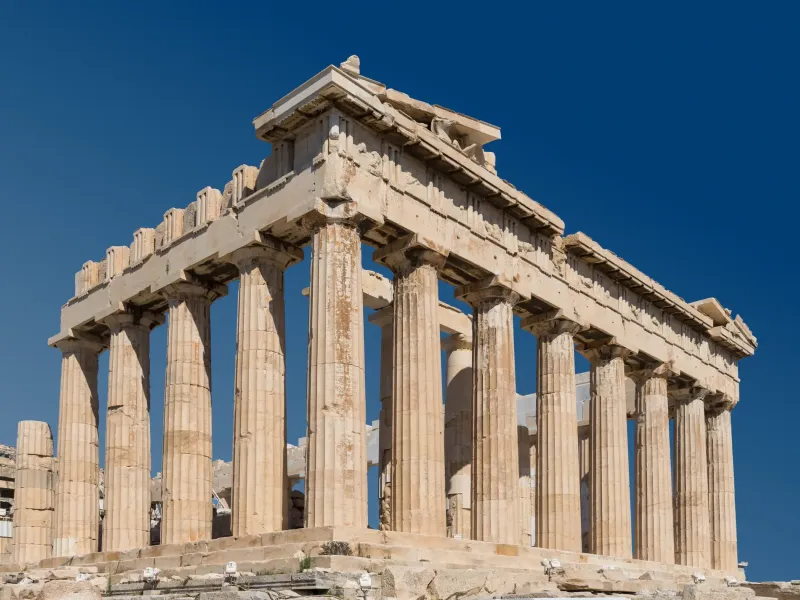
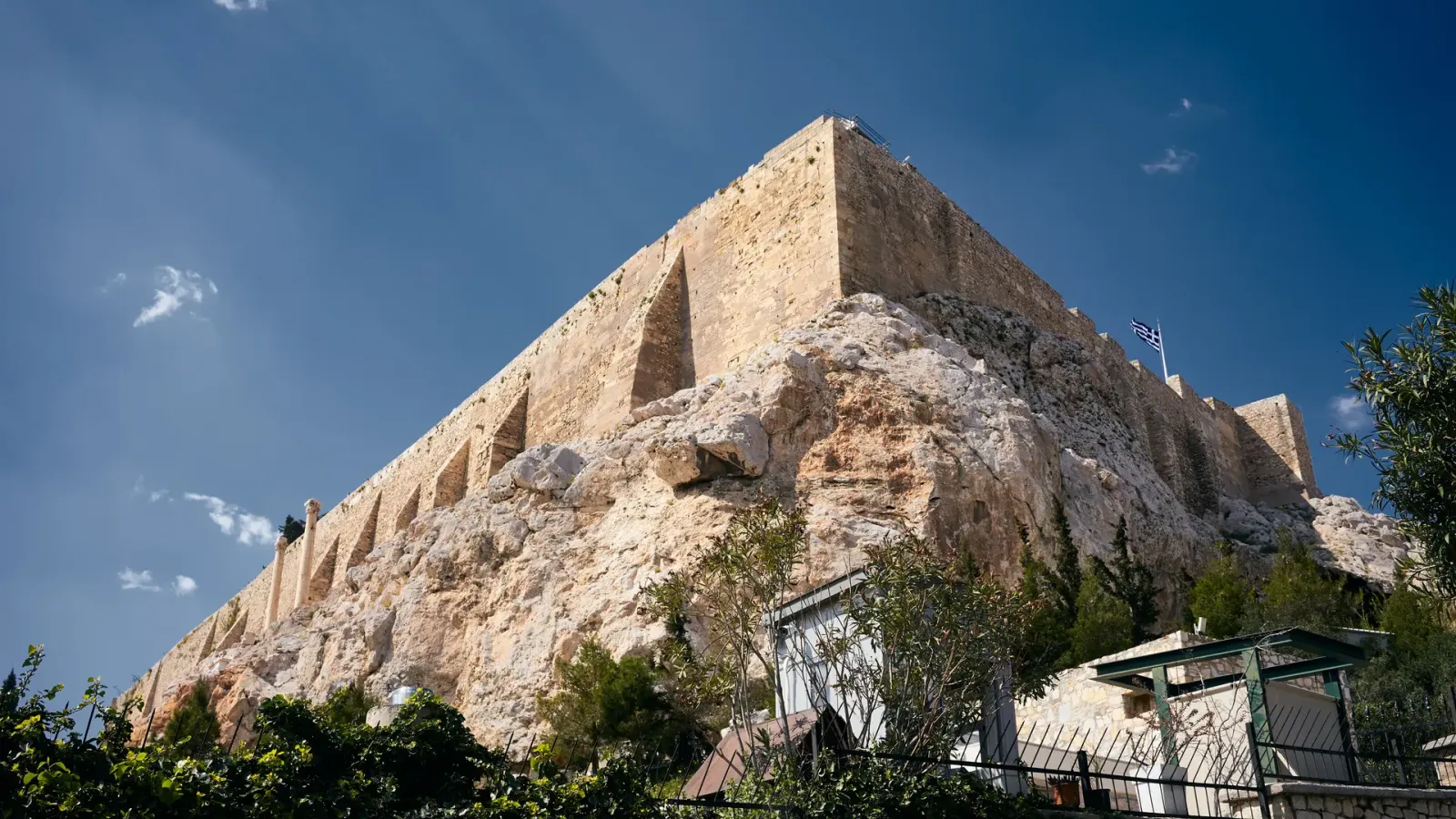
The Acropolis and Plaka
The most complete ancient Greek monumental complex still standing, inscribed in 1987, with the old quarter of Plaka running downhill from its northern slope. Four buildings on the summit were raised inside a single working lifetime. See the Acropolis guide.
-
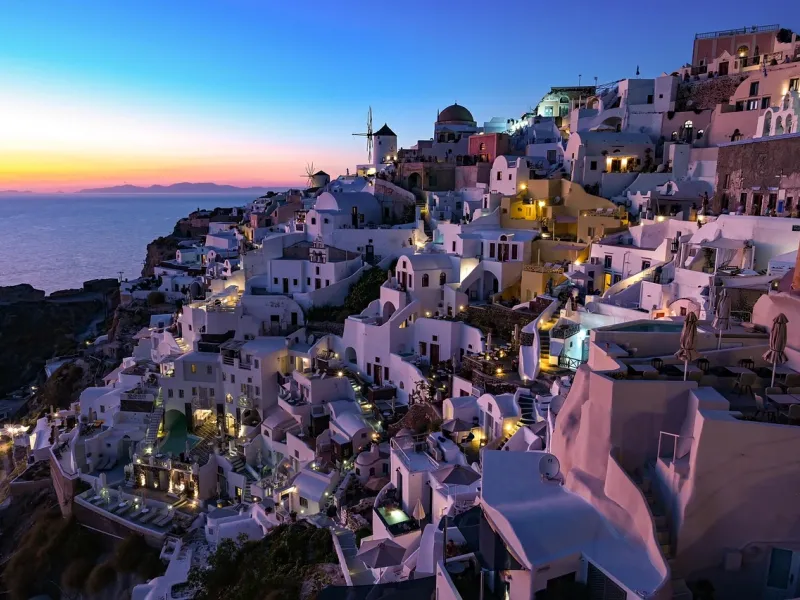
Santorini and the Cyclades
A drowned volcanic caldera with whitewashed towns along its rim, and the archipelago around it: Naxos, Paros, Milos, Folegandros. Ferries are the transport and the weather has a vote. See best time to visit, because the light, the crowds and the sailings all turn on the month.
-

Meteora
Monasteries built on sandstone pillars from the eleventh century onward, inscribed in 1988. Twenty-four of them by the end of the fifteenth century, and four still house religious communities today. See the Meteora guide.
-
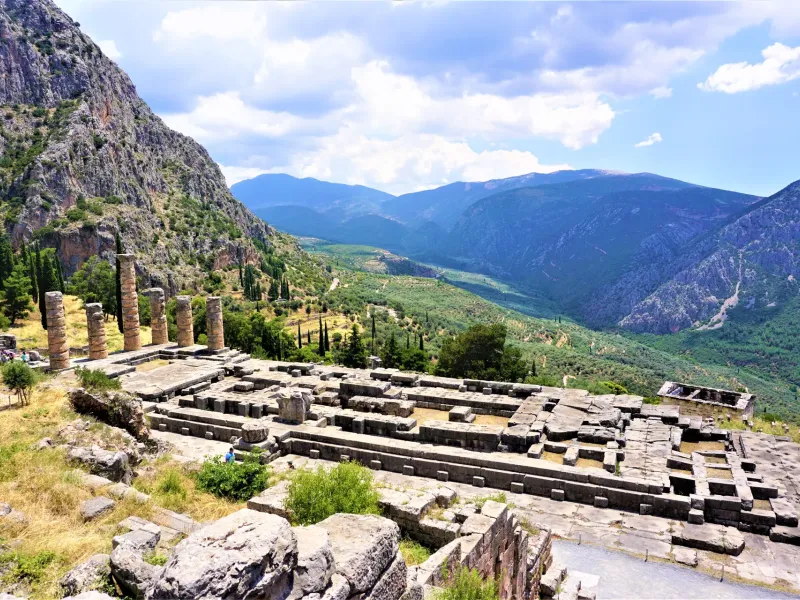
Delphi
The sanctuary and oracle of Apollo between the Shining Rocks of Mount Parnassus, inscribed in 1987, and the place antiquity treated as the center of the world. See the Delphi guide.
-

Crete
An island large enough to be its own country, with its own cooking, its own music and the Minoan Palatial Centres that carry their own World Heritage inscription. Start with the food guide, because Crete is where a Greek food trip should begin.
-
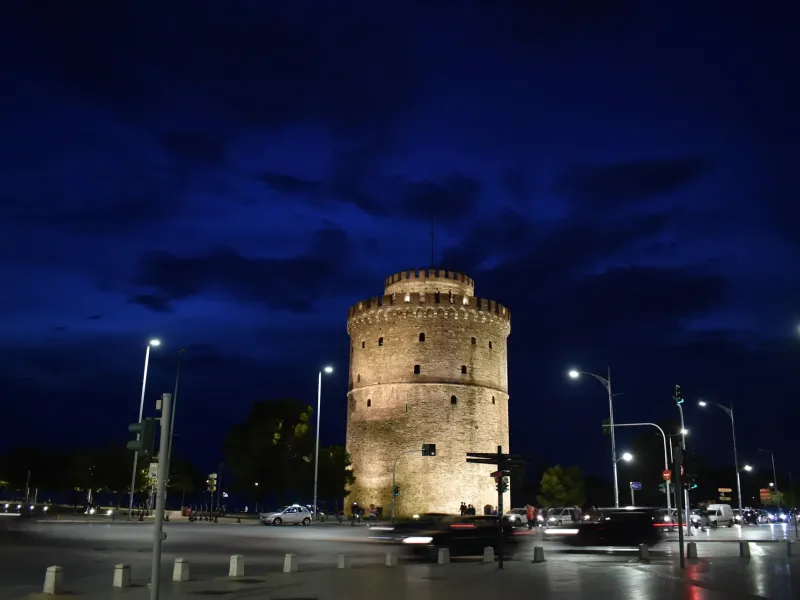
Thessaloniki
Greece's second city, whose Paleochristian and Byzantine monuments are inscribed, and whose Ottoman centuries, Asia Minor refugee arrivals and destroyed Jewish community are all still legible in the street plan. See Greece and diaspora reconnection.
The guide
Explore Greece by Interest
Planning
Food and Culture
Heritage and History
Traveler Resources
Before you go
Planning
a trip to Greece
-
Best Time to Visit Greece
April to June or September to October, and we will tell you plainly that this is an editorial recommendation rather than a sourced figure. High summer is hot, crowded and inside the fire season, and the great archaeological sites have almost no shade. See the best time to visit guide and the weather guide.
-
Entry, Money and Getting Around
Greece follows Schengen rules, so the allowance is 90 days in any 180 day period counted across the whole area rather than across Greece. Two separate passport tests catch people out. See visa and entry requirements, currency and money and getting around.
-
Before You Book
Two things, and the first is good news. There is no advisory against travel to any part of Greece: no restricted province, no border zone, no island to avoid. The second is the wildfire season, high from April to October, which is a reason to have your phone set for Greek emergency alerts rather than a reason to change the trip. Both are on the travel safety guide.
Signature experiences
Signature
Greece experiences
-

Lunch that takes the afternoon
Small plates arriving together, bread that is there to be used, and a bill nobody is trying to hurry. Greek cooking is regional rather than national: Cretan greens and rusks, Aegean fish and capers, mountain pies in Epirus. Start with the food guide.
-

A village feast, and a calendar that moves
Most towns keep the feast day of their own saint, and the night that follows is a long table, local musicians and dancing that starts late. The great Orthodox feasts move every year, which is why we give you dates for your year rather than printing them. See festivals and celebrations.
-
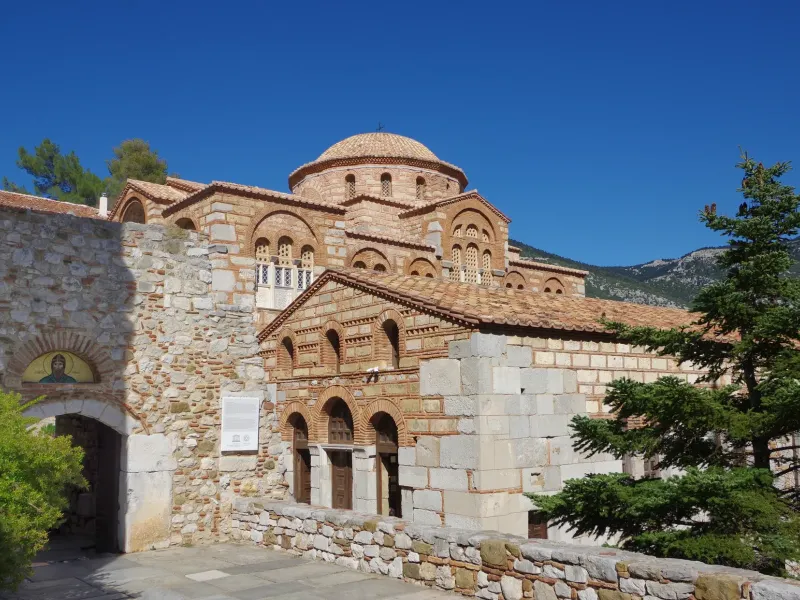
Monasteries that are still houses of prayer
Greece's inscribed properties include working religious communities, and being a good guest in one is a skill worth arriving with: covered shoulders and knees, a quiet voice, and asking before the camera comes out. See culture and etiquette.
Why choose LABUSA Travel for Greece
We say there is no restriction, because there is none
Greece carries no advisory against travel to any part of it, and an operator who leaves that vague is overstating a risk to sound careful. What we do brief you on is the fire season, the strike calendar and the three anniversary dates when central Athens fills, because those are the things that actually move a day.
The Schengen sum is ours to do
Ninety days in any rolling one hundred and eighty, counted across the whole Schengen area rather than across Greece, is the constraint that decides an itinerary combining Greece with anywhere else in Europe. We count it before we quote it, and we check both passport tests with it.
We build islands with margin
An Aegean itinerary is a chain of boats, and the last link is the one that meets an international flight. We put a night of slack before it, we plan around the shoulder seasons rather than through the middle of the fire season, and we confirm access at each ancient site for the date you are going rather than promising what a brochure printed last year.
Common questions
Greece Travel FAQs
- Do I need a visa for Greece?
- For a great many nationalities, including British and US citizens, no. Greece follows Schengen area rules, which allow travel without a visa for up to 90 days in any 180 day period as a tourist, to visit family or friends, to attend business meetings or cultural or sporting events, or for short term study. Working is a different matter. Visa free entry is not universal and the terms differ by passport, so confirm your own position with the Greek authorities rather than assuming the rule transfers.
- How does the 90 day rule actually work?
- The ninety days belong to the Schengen area as a whole, not to Greece. Time already spent in any Schengen country during the previous one hundred and eighty days counts against your ninety, and if your trip continues into Italy or France the whole visit has to fit inside the same limit. It is a rolling window counted backwards from whichever day you are standing on. Overstaying can bring a ban of up to three years from Schengen countries.
- What are the passport rules for Greece?
- Two separate tests, and both are easy to fail while holding a passport you think of as valid. The date of issue must be less than ten years before the day you arrive, which catches passports renewed before October 2018 that carry extra months. The expiry date must be at least three months after the day you plan to leave the Schengen area. You will be refused entry without a valid travel document, or with a passport reported lost or stolen.
- Is Greece safe to visit?
- There is no advisory against travel to any part of Greece. The UK Foreign, Commonwealth and Development Office names no restricted province, no border zone and no island to avoid, and the whole of the standing warning on the front of its advisory is wildfires. What is worth preparing for is the fire season, strikes called at short notice, and pickpocketing on the Athens metro and in crowded tourist places in the center of the city.
- What should I know about the wildfire season?
- The risk is high from April to October, which is longer than most visitors assume and covers both shoulder seasons as well as high summer. Set your phone to receive emergency alerts before you arrive so the Greek emergency service can reach you by location, follow 112 Greece for official updates, and call 112 if you are in immediate danger or see a fire. Causing a wildfire in Greece is a criminal offense even when it is an accident, so leave no litter and especially no glass, extinguish cigarettes properly and light no barbecues.
- When is the best time to visit Greece?
- April to June and September to October for almost every itinerary. Those months give you workable temperatures on open archaeological sites, which are bare rock with very little shade, and a country that is not running at capacity. High summer is hot, busy and in the middle of the fire season. Three recurring dates are worth planning around because demonstrations gather in central Athens: 1 May, 17 November and 6 December.
- Do I need to carry my passport in Greece?
- Yes. Greek police may ask for identification and may not accept a copy, so carry the document itself rather than a photograph of it. That matters more than it sounds for anyone who expects to be taken for a local, which on a roots trip is the point.
- How good is healthcare in Greece?
- Treatment and facilities are generally good on the mainland but may be limited on the islands. The public ambulance service is basic and there are serious shortages of ambulances on some islands. If you are uninsured you may not be able to get treatment or diagnostic tests from private doctors at all, only from public hospitals and primary healthcare centers. Cover for medical evacuation is the line item to confirm before you travel, because on an island it is the one that matters. For an ambulance, dial 112 or 166.
- Which World Heritage sites does this guide cover?
- Three of the twenty-one properties Greece has inscribed on the World Heritage List: the Acropolis of Athens, inscribed in 1987, the Archaeological Site of Delphi, also 1987, and Meteora, inscribed in 1988. Santorini, Mykonos and Nafplio are not inscribed, whatever a brochure may imply. Meteora is a working religious community rather than a monument, and our guide to it explains how to visit one.
- Is there anything a traveler of Greek descent should check first?
- Yes, and it is the one legal obligation a family connection creates. Men aged 19 and above who were born to a Greek national may have military service obligations in Greece regardless of any other nationality they hold, and the authorities can stop you leaving the country until the obligation is completed. That can apply to someone who has never lived in Greece and travels on a US passport. Establish your position with a Greek consulate before you book, and tell us at the planning stage so the check is part of the itinerary.