The short version
Greece divides fairly neatly into two access questions. Modern infrastructure, the Athens metro, new museums, newer hotels and the airports, is generally workable. Ancient sites are ancient: worn marble, slopes, steps cut into rock and long approaches without shade. The honest answer for any particular site is one we check for the date you are going, because arrangements change and a published promise ages badly.
What we do instead of promising
For every itinerary we confirm, per site and in writing: how the entrance is reached, whether there is a lift or a step-free route, how long the approach is, where the shade and the seating are, where a vehicle can actually wait, and what the surface underfoot is. We would rather tell you that one of three monasteries is reachable and two are not than take you to all three and discover it together.
Ancient sites, described plainly
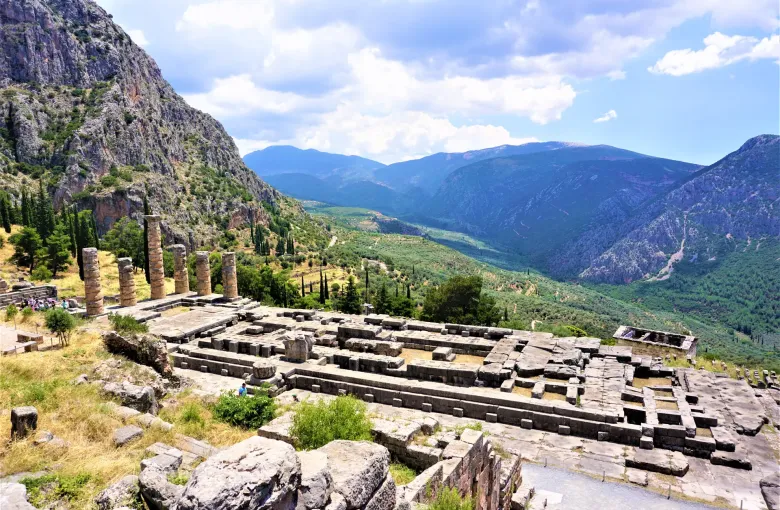
The Acropolis summit is bare rock and polished marble on a hill. Delphi is a continuous slope on uneven ancient paving. Meteora is steps cut into sandstone, often exposed. Those are the conditions, and they are not going to change, so the planning question is which parts of a site are reachable, at what time of day, and what the alternative is for anyone who is not going up.
The alternative is often excellent rather than consolatory. The Acropolis Museum is a modern building with the sculpture in it and a view of the rock from inside. Delphi's museum holds most of what was dug out of the site. A boat around a headland can be better than the walk over it.
Heat and shade are access issues
For a traveler with a mobility, cardiac or respiratory condition, the Greek sun is a bigger constraint than any staircase. The official guidance is to avoid the peak hours of sun, carry a hat, sunscreen and plenty of water, and expect sites and trails to lack shade. Our accessible itineraries front-load the morning, put the middle of the day indoors, and plan a second short outing in the evening rather than one long push.
Healthcare: the mainland and island difference
This is the part of Greek access planning most often missed, and it is stated plainly in the official guidance. Treatment and facilities are generally good on the mainland but may be limited on the islands. The public ambulance service is basic, and there are serious shortages of ambulances on some islands. Standards of nursing and aftercare, particularly in the state sector, are not what a UK or US patient will be used to.
For anyone traveling with a condition that could need urgent care, that shapes the itinerary rather than the packing list: which islands, how far from a hospital, and how you would actually get off the island. The FCDO keeps a list of medical providers in Greece where some staff speak English, and it notes that on some islands staff in bars or at airports may direct visitors to private first aid centers rather than to the public hospital. Know which you are being taken to.
Insurance is the other half. If you are uninsured you may not be able to get treatment or diagnostic tests from private doctors at all, only from public hospitals and primary healthcare centers. Cover for medical evacuation is the line item to check before you travel, because on an island it is the one that matters.
Medication
Bring what you need, in the original container with the prescription label, with a doctor's letter stating the quantity for your stay, and with the name on the prescription matching the name on your passport. Dispensing rules for some medicines, including antibiotics, are strict, and prescriptions for uninsured people are only dispensed by hospital pharmacies and pharmacies registered with EOPYY. Controlled medicines need to be cleared with the Greek drugs organization, OKANA, before you travel rather than explained at the border.
Getting around
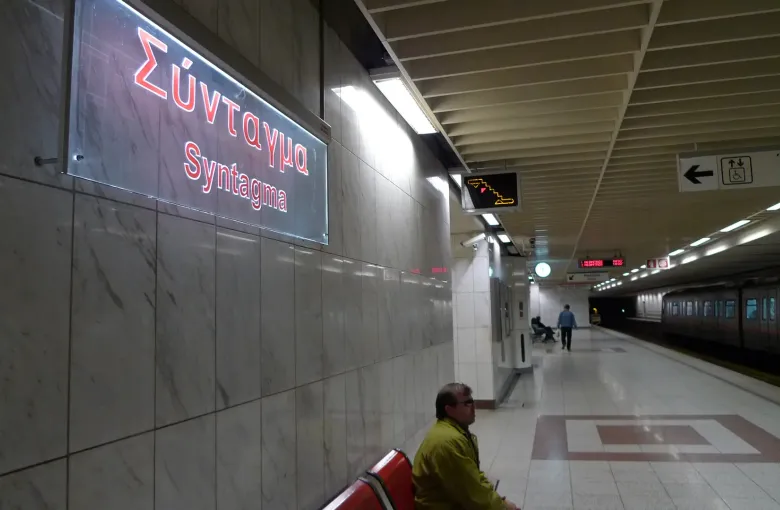
The Athens metro is the easiest way across the city, and it is also where theft is most common, so a traveler who cannot move quickly should travel outside the crush rather than in it. Pre-arranged transport is worth more here than a hailed taxi, both for the vehicle and for the driver knowing where he is actually dropping you. Pavements in older neighborhoods are narrow, parked on, and interrupted without warning.
Ferries are the transport between islands, and boarding arrangements vary enormously from one boat and one port to another. This is a question to settle before booking rather than at the ramp.
Emergency alerts
Set the phone up to receive Greek emergency alerts before you arrive, and keep it with you, since the alerts follow location. The steps are in our weather guide. For an ambulance, dial 112 or 166.
Read this with Greece for senior travelers and getting around.
Sources
- UK Foreign, Commonwealth & Development Office: Greece health: the emergency numbers, vaccine timing, prescription medicine rules, and healthcare that is good on the mainland and limited on some islands. Accessed 15 September 2026.
- UK Foreign, Commonwealth & Development Office: Greece safety and security: terrorism, strikes and demonstrations, theft on the Athens metro, water safety, road rules, wildfires and earthquakes. Accessed 15 September 2026.
- UK Foreign, Commonwealth & Development Office: Greece travel advice: no advisory against travel to any part of the country, and a high risk of wildfires from April to October. Accessed 15 September 2026.
Other Articles
Greece for Senior Travelers
Delphi: Visitor and Heritage Guide