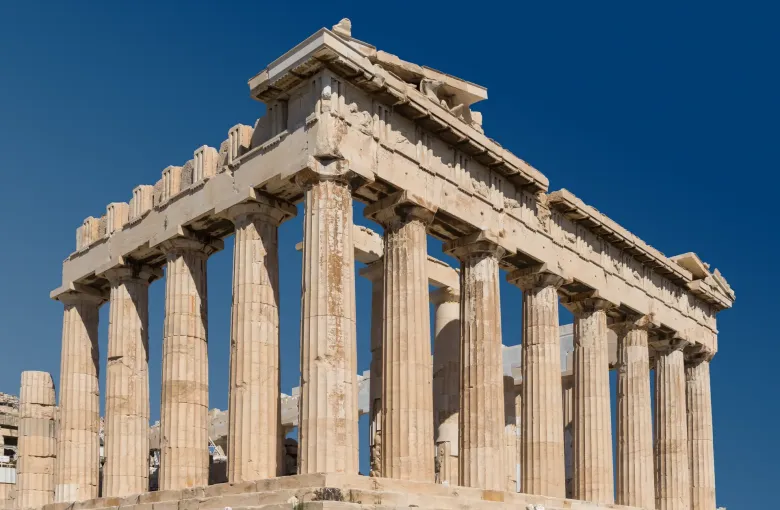
The short version
The FCDO's summary of Greek weather is a list of four things: the country can experience extreme natural phenomena such as earthquakes, wildfires, extreme heat and flash floods. That is the honest frame for a weather page. Everything below follows from it.
Do this before anything else
Set your phone to allow emergency alerts, so the Greek government's Emergency Communication Service can reach you by location. It takes a minute:
- iPhone: Settings, then Notifications, then enable Emergency Alerts at the bottom
- Android 11 and higher: Settings, Notifications, Advanced Settings, Wireless Emergency Alerts
- Samsung: Settings, Apps, Messages, Notifications, Emergency Notifications, then enable Emergency Alerts
Keep the phone with you, because the alerts follow the phone rather than the booking. Follow 112 Greece for official updates and call 112 in an emergency.
Wildfire season
The risk is high from April to October, which is longer than most visitors assume and covers both shoulder seasons as well as high summer. Fires are highly dangerous and unpredictable, and the situation can change quickly.
If you are near an affected area, follow the emergency services rather than social media, and contact your airline or operator about getting home. And do not become the cause: leaving litter, especially glass, is known to start fires, a badly extinguished cigarette will do it, barbecues are out, and causing a wildfire in Greece is a criminal offense even when it is an accident.
Extreme heat
Heat is the phenomenon most likely to affect your actual day. The FCDO's advice for walking in Greece is the right template for sightseeing too: check the forecast, avoid the peak hours of sun, carry a hat, sunscreen and plenty of water, and remember that trails and archaeological sites often lack shade and that route markings vary in quality.
Heat also interacts with medicine. The FCDO notes that changes to your routine when traveling, including coping with heat, can affect how your medication works. If you take anything daily, read our guide for senior travelers, which goes through this properly, whatever your age.
Flash floods
Adverse weather including floods can happen quickly. The practical response is the same as for fire: be registered for alerts, and do not treat a dry riverbed, a narrow gorge or a single mountain road as a safe place to be caught. Follow the official feed rather than the view from the window.
Earthquakes
There is a risk of earthquakes and tremors anywhere in Greece. Familiarize yourself with the safety procedure rather than improvising: drop, cover and hold on, know where the stairs are, and follow the instructions of local authorities afterward. Assembly points are published for anywhere in the country, and your hotel will know the nearest one. None of this should change whether you go.
Altitude, in a country people do not think of as high
The FCDO records that altitude sickness is a risk in parts of Greece. It is not a concern on an island or a classical tour, and it is worth knowing about if a mountain walk is in the plan. We publish no elevation figures here: the sources we cite give none.
Water and the sea
Sea conditions decide more of a Greek itinerary than rainfall does, because ferries are the transport. Sailings are weather dependent and can be canceled. On the beach, understand the flag system, take local knowledge seriously where there are no flags and no lifeguard, and follow local advice when jellyfish are present.
Read this with the best time to visit and travel safety.
Sources
- UK Foreign, Commonwealth & Development Office: Greece safety and security: terrorism, strikes and demonstrations, theft on the Athens metro, water safety, road rules, wildfires and earthquakes. Accessed 15 September 2026.
- UK Foreign, Commonwealth & Development Office: Greece travel advice: no advisory against travel to any part of the country, and a high risk of wildfires from April to October. Accessed 15 September 2026.
- UK Foreign, Commonwealth & Development Office: Greece health: the emergency numbers, vaccine timing, prescription medicine rules, and healthcare that is good on the mainland and limited on some islands. Accessed 15 September 2026.
Other Articles
Best Time to Visit Greece
Greece Packing List