
Why visit
Why visit Ecuador?
Ecuador delights with the Galápagos Islands, bustling Otavalo markets, and Andean towns like Cuenca. But on the northern coast in Esmeraldas, the pulse of Afro-Ecuadorian culture beats through marimba music, ancestral dance, and storytelling. In communities like La Tola and Borbón, travelers can experience local-led cultural projects preserving centuries-old African traditions in a South American setting.
Top places to visit
Popular Attractions
in Ecuador
-
The Galápagos Islands
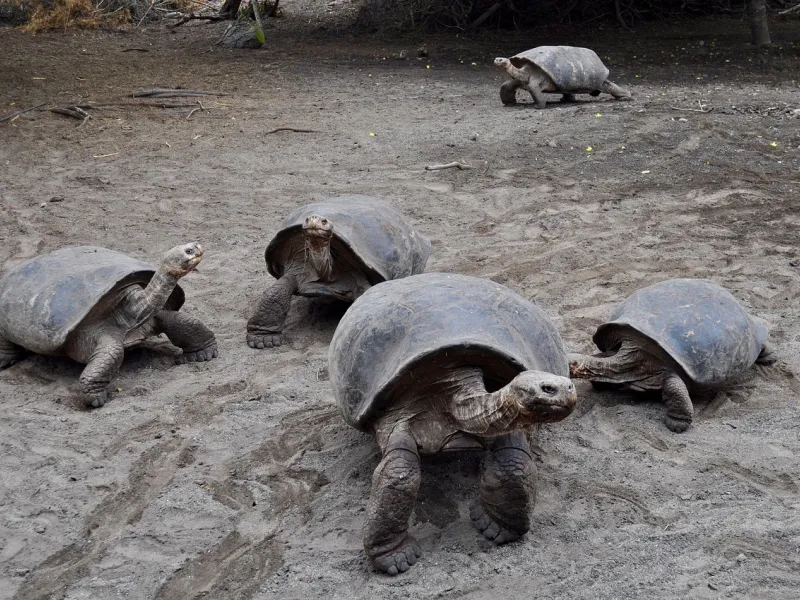
A natural wonder like no other, the Galápagos Islands are a UNESCO World Heritage Site and one of the world’s most sought-after eco-travel destinations. Walk alongside giant tortoises, marine iguanas, and blue-footed boobies in landscapes that feel untouched by time. Snorkel with sea lions, kayak through mangroves, and learn from naturalist guides who ensure that your presence supports the archipelago’s fragile ecosystem. This is more than a visit. It’s a conservation pilgrimage.
-
Quito & the Andean Highlands
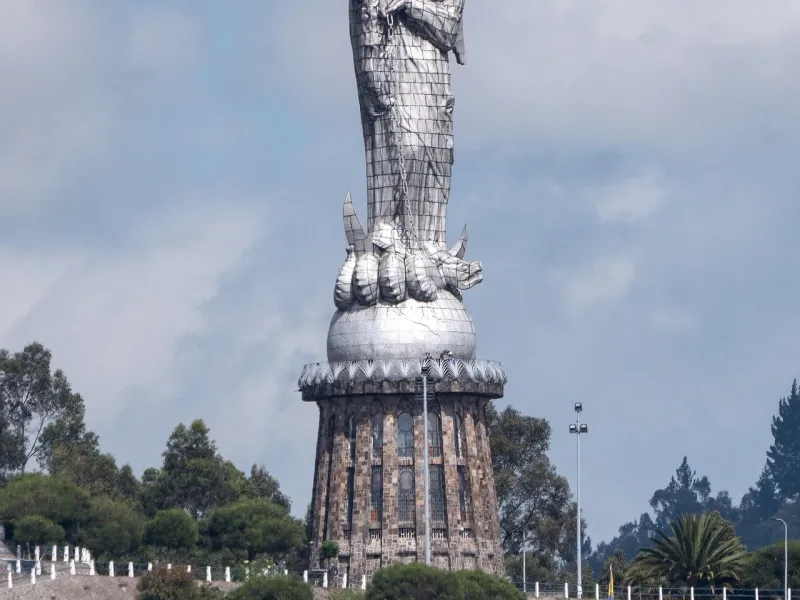
Quito, the capital city, sits high in the Andes and boasts one of Latin America’s best-preserved colonial centers. Visit centuries-old churches, bustling artisan markets, and lively plazas surrounded by snow-capped volcanoes. Just beyond the city lies the highland countryside: home to Indigenous communities, sacred lakes, and traditional textile villages like Otavalo. Here, you can learn about Andean cosmology, share a meal with local families, and hike through cloud forests where ancient spirits are said to dwell.
-
Cathedral of Cuenca
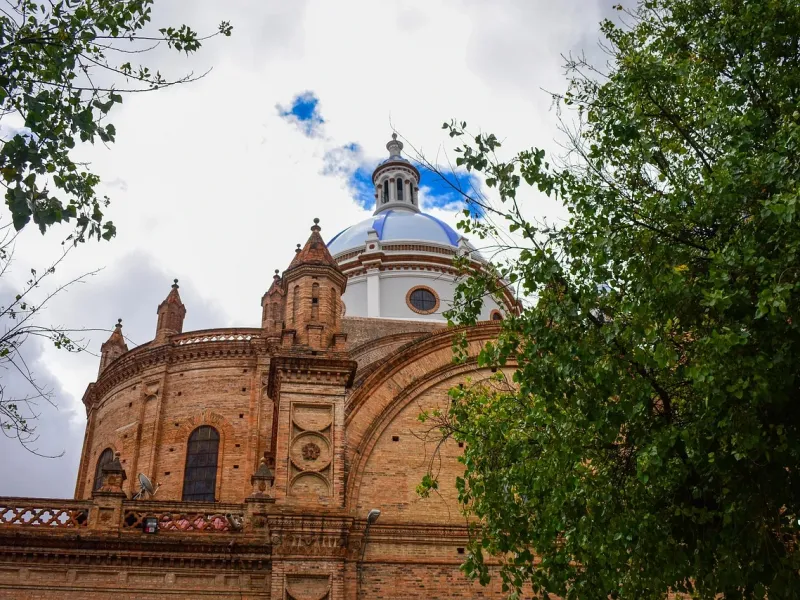
The Cathedral of Cuenca, officially known as the Cathedral of the Immaculate Conception, is a stunning symbol of Ecuador’s colonial heritage. Built from 1885 to 1975, it features towering blue domes, marble floors imported from Italy, and intricate stained-glass windows. Located in the heart of Cuenca’s historic center, this iconic landmark invites visitors to explore its grand interior or admire panoramic city views from its rooftop.
The guide
Explore Ecuador by Interest
Planning
Food and Culture
Heritage and History
Traveler Resources
Deep Expertise
LABUSA Travel partners with Indigenous and Afro-Ecuadorian communities, environmental leaders, and cultural educators to offer travel experiences that are respectful, impactful, and deeply personal. You’ll explore Ecuador with guides who live its stories and embody its spirit.
Purpose-Driven Travel
Your journey might include visiting traditional weavers in the Andes, supporting turtle conservation in the Galápagos, or joining a marimba celebration on the coast. We design every itinerary with intention, connecting you to Ecuador’s land and people in powerful, lasting ways.
Affordable Luxury & Authentic Moments
Stay in restored colonial inns, eco-lodges in the rainforest, or ocean-view guesthouses in Afro-Ecuadorian communities. Each accommodation is handpicked for its character, comfort, and community impact, offering a travel experience that’s both restorative and responsible.
Common questions
Ecuador Travel FAQs
- Do I need a visa to visit Ecuador?
- Ecuador sets and enforces its own entry rules, and this site does not publish an answer for United States passport holders, because the source cached for this cluster was written for a different nationality and its allowance does not transfer. Ask the Ecuadorean consulate responsible for where you live, close to your travel date. What applies more widely is the mechanics: the cited source records ninety days without a visa in any twelve month period, counted across the year rather than per visit, and a passport valid at least six months beyond the date you arrive. There is one condition that surprises almost everybody, and it is covered separately below.
- Is there really a criminal record check to enter Ecuador?
- Only if you arrive overland, and that distinction is the whole answer. The cited source records that entering Ecuador across a land or river border from Peru or Colombia requires a criminal record certificate from the country you have lived in for the last five years, legalized with the Hague Apostille and translated into Spanish. If you do not have one, you can ask Ecuadorean immigration at the border to run a check on their own system instead. Holders of a valid Ecuadorean visa, holders of diplomatic passports and anyone under eighteen are exempt. The same source then says plainly that there are no restrictions in place for anyone flying into Ecuador. So if you are arriving at an airport, none of this applies to you, and if any leg of your trip is a land crossing, start the paperwork weeks before you fly.
- Is it safe to travel in Ecuador?
- Ecuador carries two separate measures and they cover two different maps, which is the single most important thing to understand before reading anything else about it. The cited advisory advises against all but essential travel to the Coastal Region provinces of Esmeraldas, Manabi, Santa Elena, Guayas, El Oro, Los Rios and Santo Domingo de los Tsachilas, and to areas within twenty kilometers of the Colombian border with several named exceptions in Carchi province. Separately, the Ecuadorean government declared a state of emergency covering eight provinces, and one of those is Pichincha, which contains Quito. So the capital is not on the advise-against list and is inside the state of emergency, and both halves of that sentence matter. Measures of this kind are declared for a fixed term and are then renewed, narrowed or allowed to lapse, so read the live advisory for what applies on your dates rather than any summary of it.
- I am flying to the Galapagos through Guayaquil. Is that a problem?
- No, and the reason is worth reading carefully, because the exemption is narrow. Guayaquil is in Guayas, which is one of the seven provinces the cited advisory covers. The advisory then states that it does not apply to airside transit within Guayaquil Airport in Guayas province. Connecting airside on the way to the islands is exempt. Leaving the airport into the city is not, and if a schedule requires an overnight there, the honest answer is to change the schedule rather than the reading of the advice. The islands themselves are in no restricted area at all.
- Do I need vaccinations or antimalarials for Ecuador?
- It depends entirely on which part of the country you are going to, and the cited public health source draws the lines by altitude and by which side of the Andes you are on. Yellow fever vaccination is recommended for travelers aged nine months and over going below 2,300 meters east of the Andes, in the Amazon provinces. It is generally not recommended west of the Andes, and it is not recommended above 2,300 meters at all, which puts Quito at about 2,850 meters above the line. The same source records malaria transmission below 1,500 meters in six named provinces, rare cases below that altitude elsewhere, no transmission in the cities of Guayaquil or Quito, and none at all on the Galapagos Islands. What to take, if anything, is a question for your own clinician several weeks before you travel, and this site publishes no medication and no dose.
- What is the emergency number in Ecuador, and what about the Galapagos?
- Call 911. One number covers police, fire and ambulance, which is simpler than most of the region, and it is worth putting in your phone before you travel because a short number is exactly what nobody can recall under pressure. The more consequential health point is about the islands: the cited source records that medical facilities in the Galapagos are limited and that travel insurance should include air ambulance evacuation. On a trip that spends days several hundred kilometers offshore that is the line of small print that matters most, so check that your policy carries it and that it covers any condition you have declared.
- What is the money situation in Ecuador?
- Ecuador uses the United States dollar, and has done since 2000. There is no exchange rate to check and no conversion to do, which removes the largest practical friction in South American travel for a visitor from the United States. What replaces it is change: taxi drivers, market stalls, buses and small restaurants will often be unable to break a fifty and frequently not a twenty, so withdraw in amounts that produce small notes and break large ones at supermarkets and hotels while you can. United States coins circulate alongside Ecuadorian centavo coins of the same sizes and values, and both are used interchangeably. Cards work in hotels, larger restaurants and established operators in the cities; assume cash everywhere else, and assume cash entirely at the markets.