
Why visit
Why visit Barbados?
Barbados lures with stunning views at Bathsheba, tranquil waters at Carlisle Bay, and the excitement of Crop Over, the island’s most iconic festival. Discover the dramatic formations of Harrison’s Cave, tour historic Bridgetown, or sample rum at one of the oldest distilleries in the Caribbean. Deeply tied to the African diaspora, Barbados was one of the earliest sugar colonies and now stands as a republic reclaiming its identity. Travelers can visit the Newton Slave Burial Ground and explore local museums that chronicle the island’s path from plantation past to diasporic pride and Black cultural revival.
Top places to visit
Popular Attractions
in Barbados
-
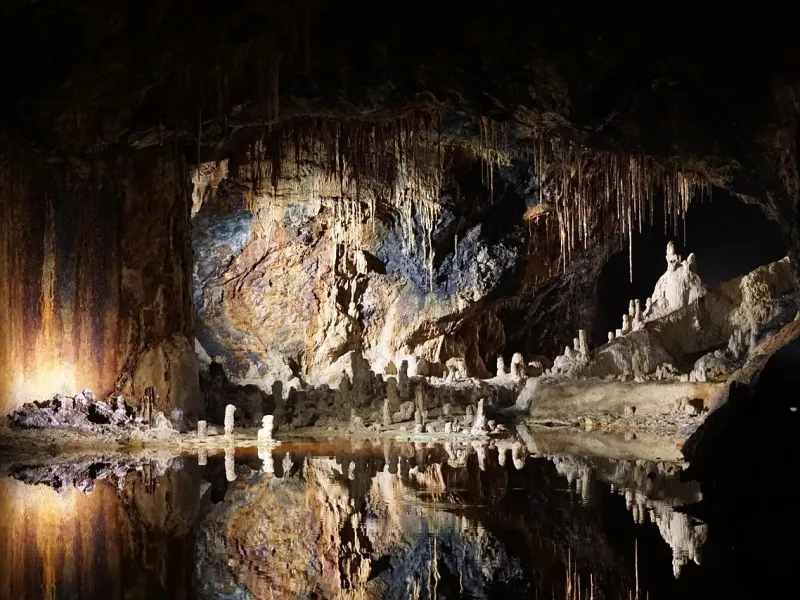
Harrison’s Cave: Nature’s Underground Cathedral
Venture beneath the island’s limestone surface to discover a network of crystallized caverns, flowing streams, and towering stalactites. Guided trams take you deep into this natural wonder, where subterranean beauty meets geological marvel. Harrison’s Cave is a stunning reminder of the island’s hidden depths.
-
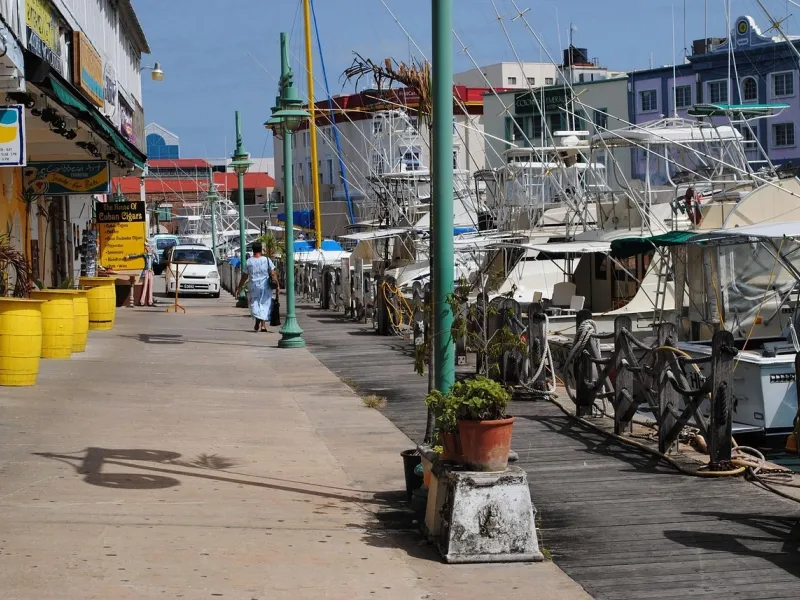
Historic Bridgetown & Garrison
A UNESCO World Heritage Site, Bridgetown blends British colonial architecture with Caribbean color and energy. Stroll the Careenage waterfront, visit the 17th-century Parliament Buildings, and explore the Garrison Savannah, once a British military stronghold, now alive with horse racing and national pride. It’s where the past stands proudly in the present.
-
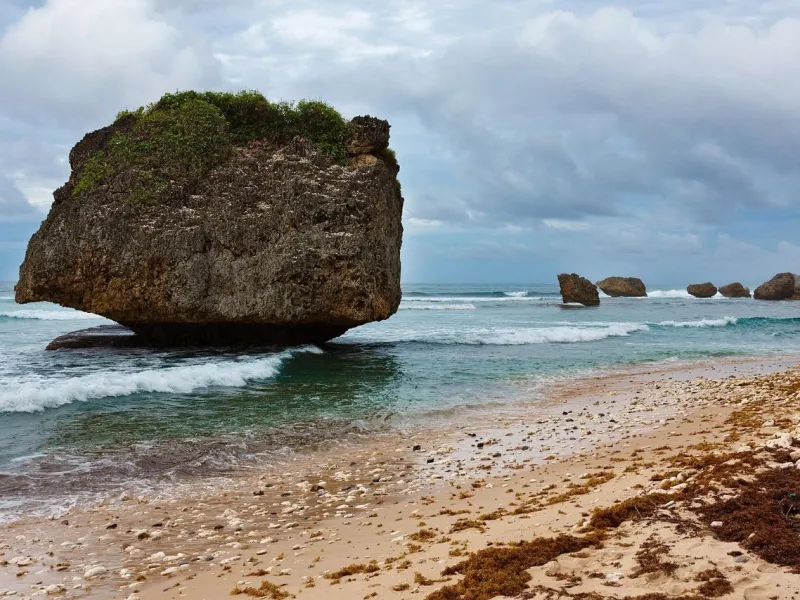
Bathsheba: Rugged Beauty & Surfer’s Paradise
On the island’s eastern edge lies Bathsheba, where the Atlantic crashes dramatically into rock formations and tide pools. Popular with surfers and photographers, this wild stretch offers a raw, untamed view of Barbados. Watch the waves, walk the cliff trails, and experience the island’s wilder soul.
The guide
Explore Barbados by Interest
Planning
Food and Culture
Heritage and History
Traveler Resources
Deep Expertise
LABUSA connects travelers with Bajan chefs, musicians, historians, and conservationists. Learn to cook flying fish and cou-cou with a local matriarch, join a tuk band rehearsal, or explore Afro-Caribbean healing traditions. Every itinerary is shaped to bring you into Barbados, not just around it.
Purpose-Driven Travel
Support coral restoration projects, tour fair-trade rum distilleries, or visit youth-led creative hubs. LABUSA’s Barbados experiences are designed to uplift local voices and protect the island’s cultural and environmental legacy.
Affordable Luxury & Authentic Moments
Our curated accommodations range from cliffside colonial estates to chic beachfront eco-villas. Expect luxury with local touches such as handwoven linens, Caribbean culinary flair, and the warmest of welcomes.
Common questions
Barbados Travel FAQs
- Do I need a visa for Barbados?
- Almost certainly not, and stopping there is the mistake this page exists to prevent. The UK Foreign, Commonwealth and Development Office states that you do not need a visa to visit Barbados, on a page written for holders of a full British citizen passport and explicitly about that document. But two further requirements apply whatever your visa position is. Everyone arriving must complete an immigration and customs form online before they arrive, and visitors must be able to show an onward or return ticket in order to enter the country. The second of those is a real constraint rather than a formality: a one way ticket will not do, so if you were planning to decide your departure date once you got there, decide it before you fly instead.
- How long can I stay in Barbados?
- Nobody will tell you before you arrive, and that is the honest answer rather than an evasion. The Foreign, Commonwealth and Development Office states that you will be told how long you can stay when you arrive. An officer at the border sets the period and no source in this guide register publishes a figure, so this guide publishes none either. That is worth taking seriously, because the islands either side of Barbados do publish a period and the two of them do not agree with each other, so a number carried across from a neighboring travel page would look entirely plausible and rest on nothing. If you need longer than you are given, the route is to apply and pay for an extension through the Barbados Immigration Department. It is illegal to overstay or to work without a work permit, and the authorities could fine or detain you for overstaying.
- How long does my passport need to be valid?
- For the planned length of your stay. That is the answer most travelers get wrong here, because the rule across much of this region is six months beyond your arrival date and the assumption travels with people. Barbados does not apply it. The Foreign, Commonwealth and Development Office states only that your passport must be valid for the planned length of your stay, so a document that a neighboring island would refuse may be perfectly acceptable on this one. Two things will still turn you away: arriving without a valid travel document, and trying to use a passport that has been reported lost or stolen. Check with your travel provider, because an airline applies the rule of the destination rather than the rule you remember.
- Can I drive on my own license?
- Not on its own, and unlike several islands nearby the paperwork that makes up the difference is obtained here rather than before you leave. The Government of Barbados states that a visitor or temporary resident may obtain a temporary driving permit by applying to the Licensing Authority, at its offices at The Pine in St. Michael, Oistins in Christ Church and Holetown in St. James, or at any approved hired car agency. You must already hold a valid driving license issued by the traffic authorities in your country of normal residence. The permit is valid for one year or until the expiry of your own license, whichever is the shorter time. The published fees are 10.00 for less than two months and 100.00 for two months and over; the government page does not name a currency for either figure, so neither does this guide. For most visitors the practical route is the last clause of the rule: an approved hire car agency can issue the permit, so it comes with the car.
- Does Barbados have a UNESCO World Heritage Site?
- Yes, one. UNESCO records that Barbados has one property inscribed on the World Heritage List, the cultural property Historic Bridgetown and its Garrison, inscribed in 2011. The name matters: the historic town and the military garrison beside it are a single inscription rather than two separate sites. Two further places stand on the country Tentative List, The Scotland District of Barbados entered in 2005 and The Industrial Heritage of Barbados: The Story of Sugar and Rum entered in 2014. A Tentative List is an inventory of properties a State Party intends to consider for nomination, so neither of those is inscribed and neither is a World Heritage Site. This guide is careful with that distinction because two of its three heritage pages are about candidates rather than inscriptions.
- What is the emergency number?
- It is 511, and this guide cites no other number. The UK Foreign, Commonwealth and Development Office gives it for a medical emergency and says to ask for an ambulance. Put it in your phone before you travel, and be deliberate about it: islands in this sea do not share an emergency number, and a three digit number remembered from a previous trip is a number that will not reach an ambulance here. On facilities, the same source names Queen Elizabeth Hospital, states that it can cope with many types of treatment but that serious cases may need emergency evacuation, and notes that there is a hospital helpline for speaking to a healthcare professional. Arrange insurance that covers treatment and repatriation before you travel.
- Do I need to worry about hurricanes?
- You need to plan around the season rather than fear it, and the official position here is plainer than on some islands nearby. The Foreign, Commonwealth and Development Office states that the hurricane season normally runs from June to November and then tells you to monitor local news and check the World Meteorological Organization and the National Hurricane Center. It adds no such reassurance about storms usually passing by, which the advice for some neighboring islands does, and this guide does not supply that sentence on its behalf. The National Hurricane Center gives the season more precisely as June 1 to November 30 and adds that activity sometimes occurs before and after those dates. Two other hazards are named in the same advice: earthquakes are a potential risk with occasional tremors, and there is an underwater volcano to check the alert level of, called Kick em Jenny, which is 5 miles off the coast of Grenada rather than here.
- What does this guide refuse to tell me?
- Five things, and each absence is a measurement rather than a gap in the search. No length of stay, because the border sets it and nothing official predicts it. No exchange rate, because the central bank answers normally and publishes none this guide can read: its rate table is assembled by script in the browser rather than written into the page. No currency for the driving permit fee, because the government page gives the figures and names no currency, while giving the bus fare on the same page in named currency a few lines further down. No dish, because not one source in this register names one, and this island is well known for its food, which makes the silence conspicuous rather than comfortable. And no temperature or rainfall figure, because no source here publishes one. We would rather leave each of those out than publish something you cannot trace back to anybody.