
Why visit
Why visit France?
France holds fifty-six World Heritage properties, more than all but two countries on earth, and the reason to come is that almost none of them is in the same France. The Atlantic west is as green and wet as Ireland. The Mediterranean south is the driest, hottest part of the country and burns most summers. Alsace cooks like a German province and Brittany like an Atlantic one, and the cooking changes with the fat it uses: butter and cream in the north and west, olive oil in the south. A trip that treats France as Paris plus day trips gets a smaller country than the one that is there.
The safety picture is simple in one direction and not in the other, and both halves matter. The United Kingdom carries no advisory against travel to any part of France: no restricted region, no border zone, no island to avoid. Its advisory does open with a seasonal warning, and it is a long one: a high risk of wildfires during the summer season from April to October, highest along the Mediterranean coast, in Corsica and in parts of the south west. That is six months rather than a fortnight, and it is worth reading before you book rather than after.
Three of the fifty-six carry this guide, and choosing three is an editorial decision rather than a ranking. Paris, Banks of the Seine was inscribed in 1991, the Loire Valley between Sully-sur-Loire and Chalonnes in 2000, and Mont-Saint-Michel and its Bay in 1979. Versailles, Fontainebleau, Chartres, Reims, Amiens, Bourges, Carcassonne, Strasbourg, Lyon, Bordeaux, Avignon, Arles and Nice are all separately inscribed too, and we would rather say so than let a selection of three read as a verdict on the rest.
Two French specifics are worth carrying before you arrive, because neither has an equivalent in most visitors' home law. You must be able to prove your identity when asked, or within four hours at a police station. And covering your face in a public place is illegal, a law the advisory states applies to tourists. Both sit on our travel safety guide, along with the wildfire season and the strike calendar that is the single most likely thing to break a French itinerary.
Top places to visit
Popular Attractions
in France
-
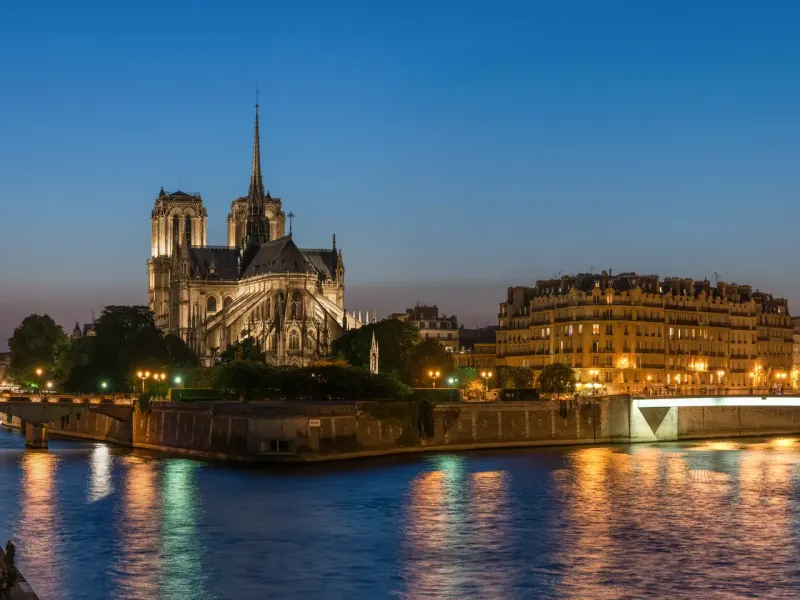
Paris and the Banks of the Seine
The inscription is the river, not the monuments: a stretch of bank from the Louvre to the Eiffel Tower, inscribed in 1991, with Notre-Dame and the Sainte Chapelle named in the record. Reading it that way turns a list of sights into one walk. See the Paris, Banks of the Seine guide.
-
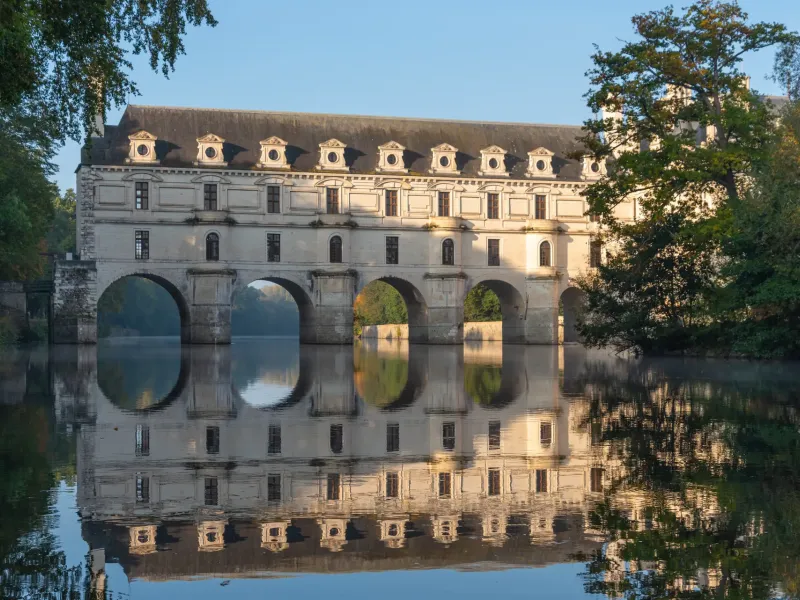
The Loire Valley
A cultural landscape of 86,021 ha inscribed in 2000, and the one French property you tour over days rather than visit in an afternoon. The châteaux are inside it rather than being it. See the Loire Valley guide.
-
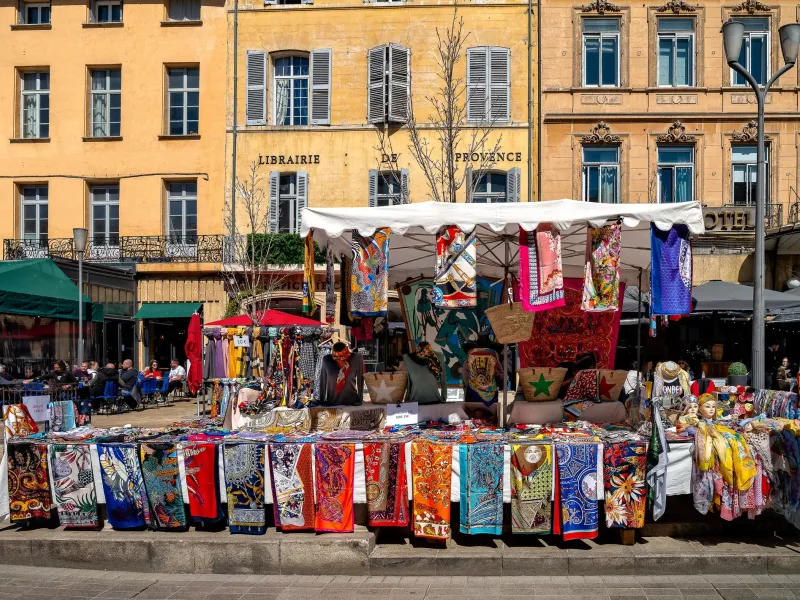
Provence and the French Riviera
Olive oil, markets, lavender and a light people moved here for. Arles, the Pont du Gard, Avignon and Orange are each separately inscribed, and Nice is inscribed as a winter resort town, so this is a region of several properties rather than one. See our guide to when to go, because summer here carries both the heat and the fire risk.
-
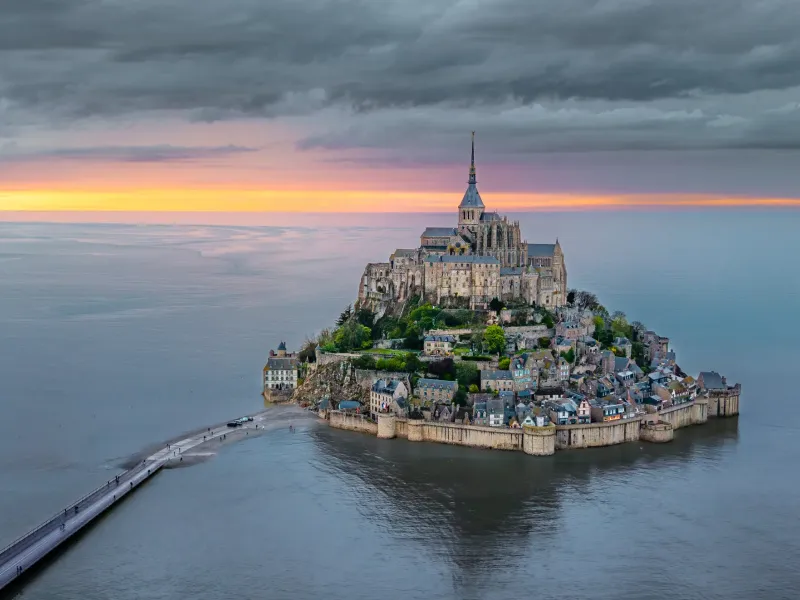
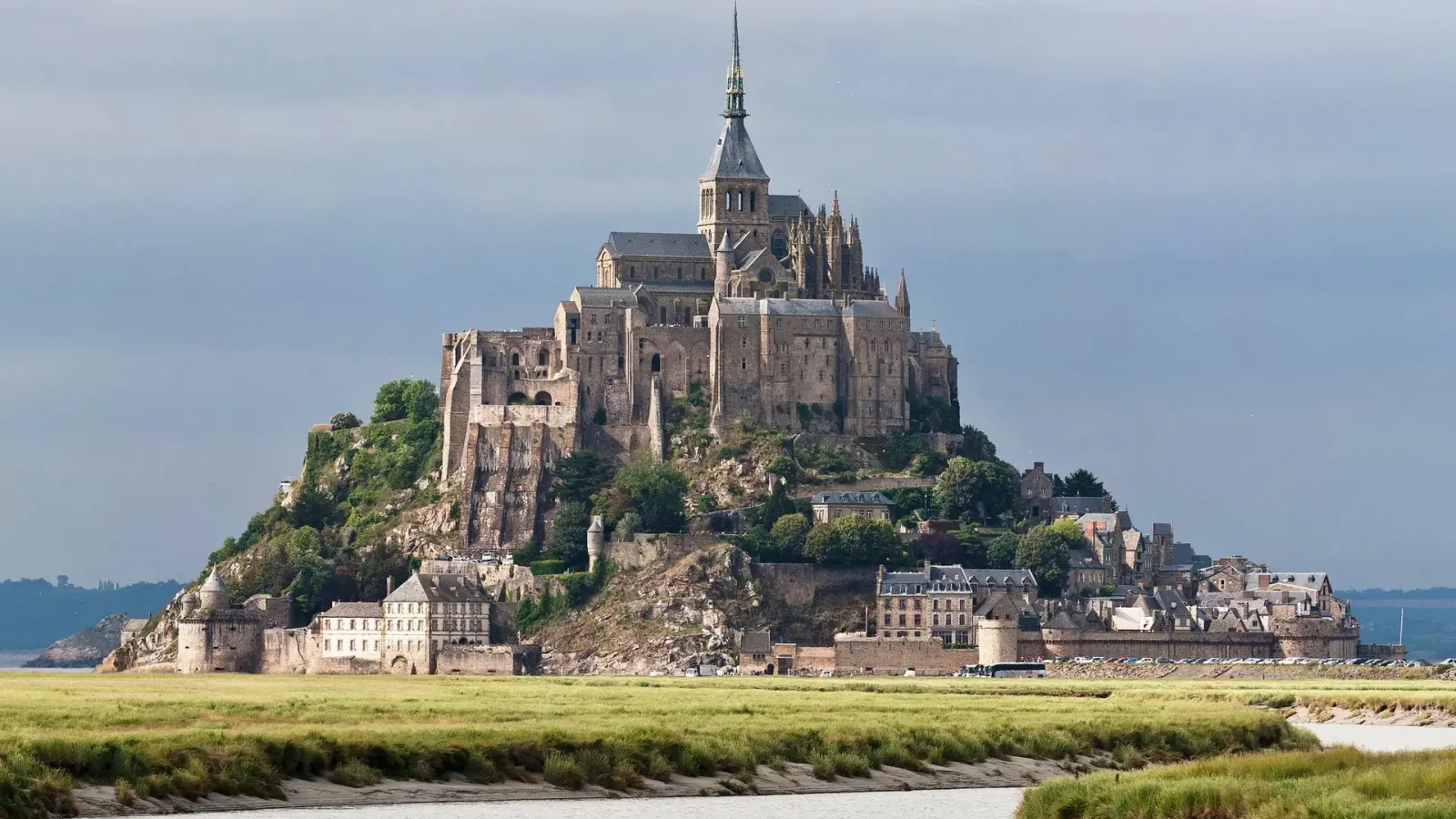
Mont-Saint-Michel
Inscribed in 1979 as the Mont and its Bay, which is why the tide is part of the plan rather than a detail. An abbey built between the eleventh and sixteenth centuries on a rock in the sea, and the hardest site in this guide to reach. See the Mont-Saint-Michel guide.
-
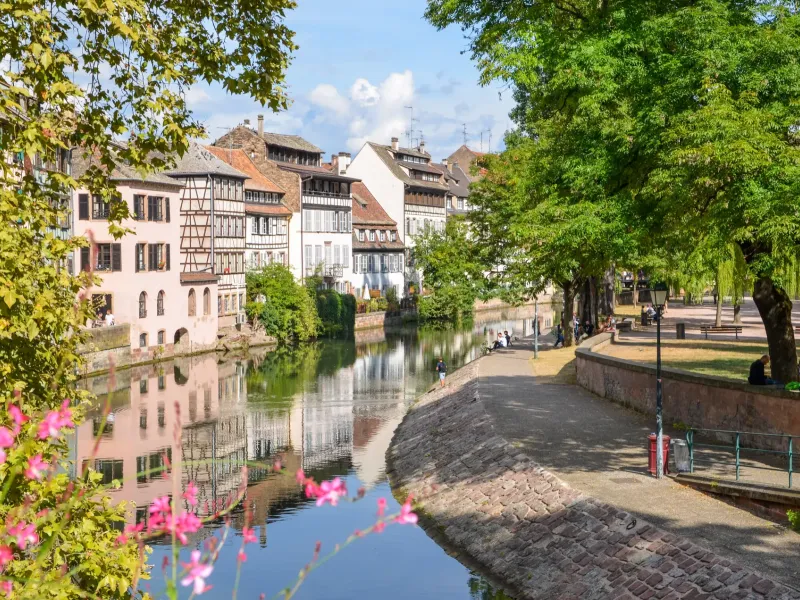
Strasbourg and the Rhine
Alsace reads German because the border crossed it repeatedly, and the cooking, the wine and the timber-framed houses all say so. The Grande-Île and Neustadt are inscribed. It is also where the best Christmas markets in France are. See our food guide.
-

Lyon and the Table
The Historic Site of Lyon is inscribed, and the city is the argument that French cooking is regional before it is national. Its covered market and its bouchons are the reason to stop rather than pass through on the way south. See our food guide.
The guide
Explore France by Interest
Planning
Food and Culture
Heritage and History
Traveler Resources
Before you go
Planning
a trip to France
-
Best Time to Visit France
April to June or September to October, and we say plainly that this is an editorial recommendation. Two things push against high summer: the advisory's wildfire warning runs from April to October, and August is when France itself closes for the holiday. See the best time to visit guide and the weather guide.
-
Entry, Money and Getting Around
France follows Schengen rules, so the allowance is 90 days in any 180 day period counted across the whole area rather than across France. Two separate passport tests catch people out, and staying with a French host may need a document your host collects in person. See visa and entry requirements, money in France and getting around.
-
Before You Book
There is no advisory against travel to any part of France, and the advisory still opens with a wildfire warning. Three things are worth knowing in advance: theft on the Metro and the RER works by distraction, you must be able to prove your identity on request, and covering your face in public is illegal and the law applies to visitors. All three are on the travel safety guide.
Signature experiences
Signature
France experiences
-
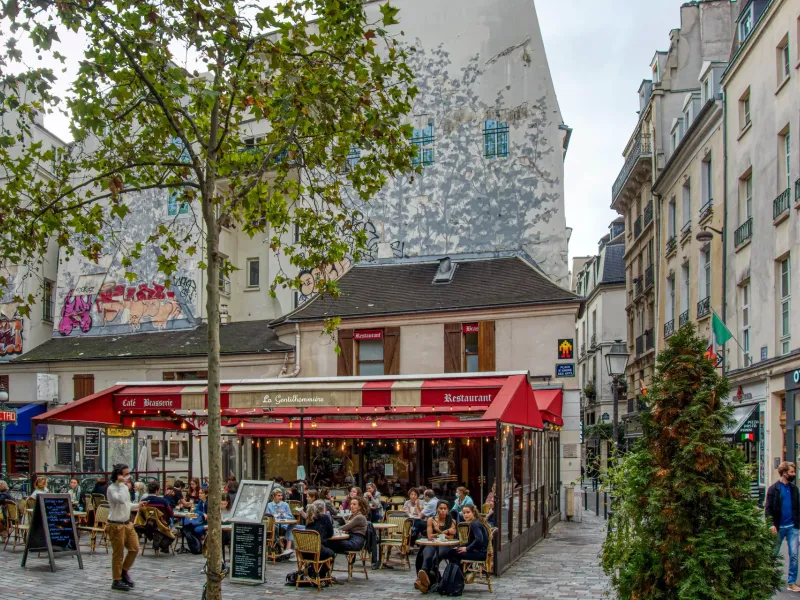
A table on a square, for as long as you like
Nobody hurries you and nobody brings the bill until you ask. The greeting at the door is what makes the difference between a good afternoon and a flat one, and it is four words long. See culture and etiquette.
-
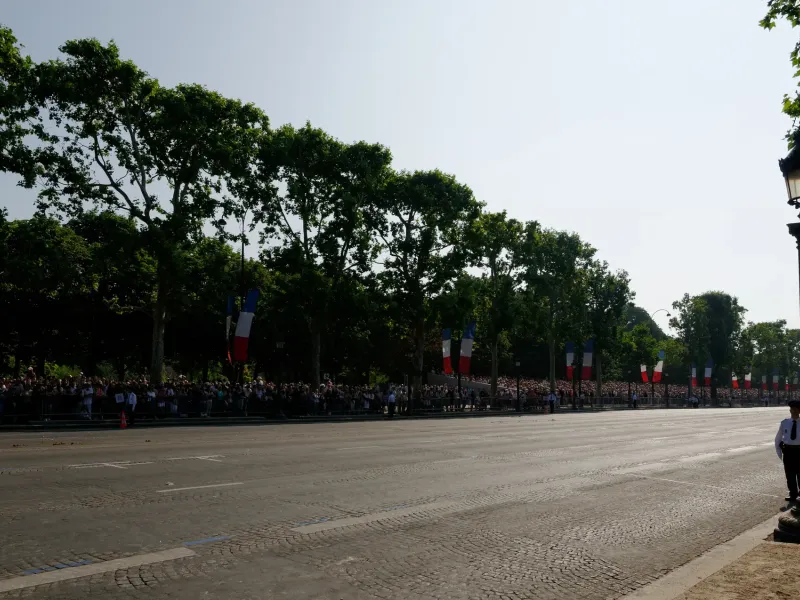
A country that hands its streets to a festival
The fourteenth of July is fixed and the parade closes an avenue. Four other public holidays move with Easter every year, and the whole country takes the Friday when one lands on a Thursday, which is why we give you the rule rather than a date. See festivals and celebrations.
-

A commune, a register and a reading room
French records are held by the department, not nationally, so a family history trip works from the commune outward. Most departments have already digitized their registers, which frees the visit for the things a browser cannot give you. See French roots and family history travel.
LABUSA Travel plans group and private travel to France for travelers who want the country rather than the postcard: the regional trains, the market mornings, the commune your family came from, and the three World Heritage properties this guide covers in detail. We will tell you when a month is wrong for what you want, and we publish the wildfire season and the holiday closures rather than working around them.
Tell us what the trip is for and we will build it in the order that works.
Common questions
France Travel FAQs
- Do I need a visa to visit France?
- France follows Schengen area rules, so many nationalities can visit without a visa for up to 90 days in any 180 day period. The allowance belongs to the whole Schengen area and not to France: time spent in any other Schengen country in the previous 180 days counts against it, so a trip that also touches Spain or Italy is spending the same ninety days. Your passport must have a date of issue less than ten years before you arrive and an expiry date at least three months after you plan to leave the Schengen area. Overstaying can mean a ban of up to three years.
- Is there an advisory against travel to France?
- No. The UK Foreign, Commonwealth and Development Office carries no advisory against travel to any part of France: no restricted region, no border zone and no island to avoid. Its advisory does open with a seasonal warning, which is a high risk of wildfires during the summer season from April to October, highest in the south, in Corsica and in parts of the south west. The practical effect is that access to forests, countryside and tourist sites can be restricted at short notice.
- What is the best time to visit France?
- April to June and September to October. Both give mild weather, long days, open institutions and cities that are working rather than emptied. July and August bring heat, the wildfire season across the south, and the French holiday month, when a good deal of the small restaurants, bakeries and independent shops a visitor came for are closed for two or three weeks.
- How many World Heritage sites does France have?
- Fifty six properties are inscribed on the World Heritage List. This guide carries three of them in detail: Paris, Banks of the Seine, inscribed in 1991; the Loire Valley between Sully sur Loire and Chalonnes, inscribed in 2000; and Mont Saint Michel and its Bay, inscribed in 1979. Choosing three from fifty six is an editorial decision rather than a ranking, and the guide says which properties were left out and why.
- Do I have to carry identification in France?
- You must be able to prove your identity by providing documents when asked, or within four hours at a police station. What counts is a passport, a photo driver license, or other documentation issued by a government body. Many visitors carry a photo driver license rather than the passport they would rather leave in the room, and keep a photograph of the passport page as a fallback.
- What is the Entry Exit System and when does it start?
- The European Union Entry Exit System is being implemented across the Schengen area. We publish no start date for it and none for the separate ETIAS scheme, because our sources carry none. What the advisory does state is that registration has no cost, that you may be asked for fingerprints and a photograph, that children aged eleven or younger will not have fingerprints scanned, that a digital record is valid for three years, and that travellers entering through Dover, Folkestone or St Pancras have their details taken before leaving the United Kingdom. Allow more time at the border.
- Do cards work everywhere in France?
- Almost everywhere a visitor spends money, including for small amounts by contactless. Carry a little cash anyway for market stalls, which are frequently cash only, for small bakeries and rural shops that set a card minimum, and for coin operated lockers and parking. Service is included in a restaurant bill by law, so tipping is rounding up rather than a calculation.
- How safe is the Paris Metro?
- Thieves and pickpockets operate on the Metro, on the RER lines and at mainline stations, and they work in gangs using distraction. Keep valuables in separate pockets, carry a bag across your body, and stay alert at attractions and at cash machines. The advisory also notes several cases of serious assault on RER line B, which serves Charles de Gaulle, Orly and the Gare du Nord Eurostar terminus, and on RER line D. None of that is a reason to avoid the network, which is excellent, and all of it is a reason to be awake on it late at night.
- Will strikes disrupt my trip?
- They can. There is frequent industrial action across France, affecting roads and public transport, and it is the single most likely thing to break a French itinerary. Strikes are usually announced in advance, so the habit that solves it is checking your operator the evening before you move between cities and again before a connecting flight. Build long connections rather than tight ones on travel days.
- How much French do I need?
- Four words carry most of it: bonjour, merci, pardon, and asking whether someone speaks English rather than assuming. Almost everything visitors read as French coldness is a response to a missing greeting. An exchange that opens in French, even badly, and then moves to English goes well; one that opens in English is the one that goes flat. In cities the answer to the question is usually yes.