The short version
Take the train. France built its high-speed network to move people between city centers rather than between airports, and on most of the routes a visitor wants the train beats flying once you count the journey to the airport at both ends.
Two things complicate that. Industrial action is frequent, and it is the single most likely thing to break a French itinerary. And where the train does not go, driving brings legal requirements that carry fines.
Strike days, which are a planning problem
The advisory is direct: there can be frequent industrial action across France, leading to disruption and delays on roads and public transport. The advice is to monitor the media, check your operator's advice, and follow the authorities.
What that means in practice is a habit rather than a worry. Check your operator the evening before you move between cities, and check again before a connecting flight, which the advisory calls out specifically. Build a day with a long connection rather than a tight one where a strike would cost you the trip rather than an afternoon. Strikes in France are announced in advance far more often than not, which is what makes checking worth doing.
The trains
The high-speed services run from city center to city center and reward booking early, because fares rise as seats sell rather than being fixed. A reserved seat is part of the ticket on high-speed services, so there is no question of standing.
The regional network is the part visitors underuse. It reaches the places the high-speed lines pass at speed, and the Loire châteaux, the Normandy coast and most of Provence are regional-train country with a short taxi or bus at the end. Regional services are usually turn-up-and-go rather than reserved, which is the opposite habit from the high-speed network and worth knowing.
Validate a paper ticket before boarding where a machine is provided. A digital ticket on a phone needs no validation and needs a charged phone.
Cities
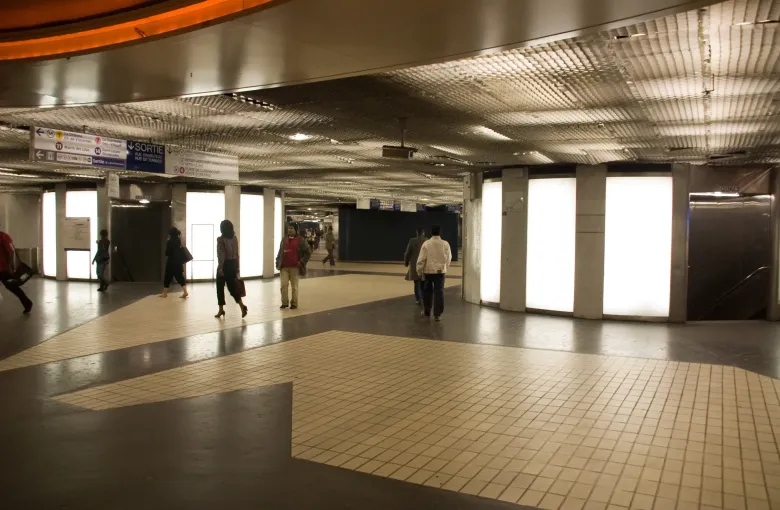
Paris, Lyon, Marseille, Lille and Toulouse all run metro or tram systems that make a car unnecessary and usually slower. In Paris the Metro is dense enough that walking plus one or two stops beats planning a route, and the RER covers the longer distances including the airports.
Our safety guide covers the theft question on these networks in detail. The short form is that pickpockets work the Metro, the RER and mainline stations, and that there have been serious assaults on RER line B, which is the airport line, and RER line D. Be awake rather than anxious, particularly late.
Driving, and four things that carry a fine
A car earns its place in the Loire, in rural Provence, in Brittany and in the mountains, and is a liability in any city. If you drive, these are the ones visitors miss:
- The drink-drive limit is a third lower than the limit for England and Wales. Police carry out roadside checks for alcohol and drugs regularly, and penalties include fines, loss of license and prison. A single glass with lunch is a different decision here.
- Winter tires or chains are required in certain mountain regions from the first of November to the end of March. The French public services website sets out which vehicles, which equipment and where, and not complying carries a fine.
- An air pollution sticker is required in central Paris, Lyon and Grenoble, from eight in the morning to eight at night, Monday to Friday. Checks can happen at any time. Some older vehicles do not qualify for a sticker at all and must not be driven in central Paris in those hours. Other cities also limit access to centers and main roads.
- On-the-spot fines are normal for driving offenses including speeding, and they are collected at the roadside.
Two other things the advisory raises. On motorways, orange emergency telephones are the way to call for help at an accident. And on roads toward the Channel ports there have been attempts by people to enter private vehicles, particularly camper vans, while stationary or in slow traffic, including by placing obstacles on the road to the Port of Calais. Keep doors locked, keep moving where it is safe, and if it is not safe to proceed, stop and call 112.
What we do not publish
No fares, no journey times and no ticket prices. They change, our sources carry none of them, and a number here would be a remembered figure. Check the operator.
Read this with our safety guide for the network theft question, and our accessibility guide, which covers what the rail network does well and what it does not.
Sources
- UK Foreign, Commonwealth & Development Office: France safety and security: terrorism, industrial action and demonstrations, pickpocketing on the Metro and the RER, assaults on RER lines B and D, drink spiking, the identification requirement, the face-covering ban and its fines, swimming and riptides, driving law, winter equipment, pollution stickers, extreme heat and wildfires. Accessed 16 September 2026.
- UK Foreign, Commonwealth & Development Office: France travel advice: no advisory against travel to any part of the country, and a wildfire warning at the head of the advisory covering the summer season from April to October. Accessed 16 September 2026.
Other Articles
France Travel Safety Guide

Best Time to Visit France