
Why visit
Why visit Spain?
Spain holds fifty World Heritage properties, more than almost any country on earth, and it is not one place. Castilian Spanish is official across the state while Catalan, Galician and Basque are co-official in their own communities, the Atlantic north is as green and wet as Ireland while the southeast is the driest land in western Europe, and the cooking changes every few hundred kilometers. A trip that treats it as one country gets a smaller country than the one that is there.
The safety picture is unusually simple, and stating it plainly matters more than hedging it. The United Kingdom carries no advisory against travel to any part of Spain: no restricted region, no border zone, no island to avoid. Unlike most destinations we cover, its advisory carries no standing warning at the head of it at all. What is worth preparing for is distraction theft in crowds, a set of local laws that vary by region and carry fines, and inland summer heat.
Three of the fifty carry this guide, and choosing three is an editorial decision rather than a ranking. The Alhambra, Generalife and Albayzin in Granada, the Works of Antoni Gaudi in Barcelona and the Historic Centre of Cordoba were all inscribed in 1984. Toledo, Segovia, Salamanca, Avila, Cuenca, Santiago de Compostela, Seville's cathedral ensemble and the Paseo del Prado in Madrid are all inscribed too, and we would rather say that than let a selection of three read as a verdict on the rest.
Two practical things decide most itineraries. The first is that the 90 days in any 180 day period allowance is Schengen-wide, so time already spent in France, Portugal or Italy counts against your Spanish days and border officers do the sum properly. The second is that Spain is a rail country: the high-speed network links Madrid to Barcelona, Seville, Malaga, Valencia and Cordoba from station to station in the middle of each city, which beats flying once airport time is counted. Both are set out on the visa and entry requirements page and in getting around.
Top places to visit
Popular Attractions
in Spain
-
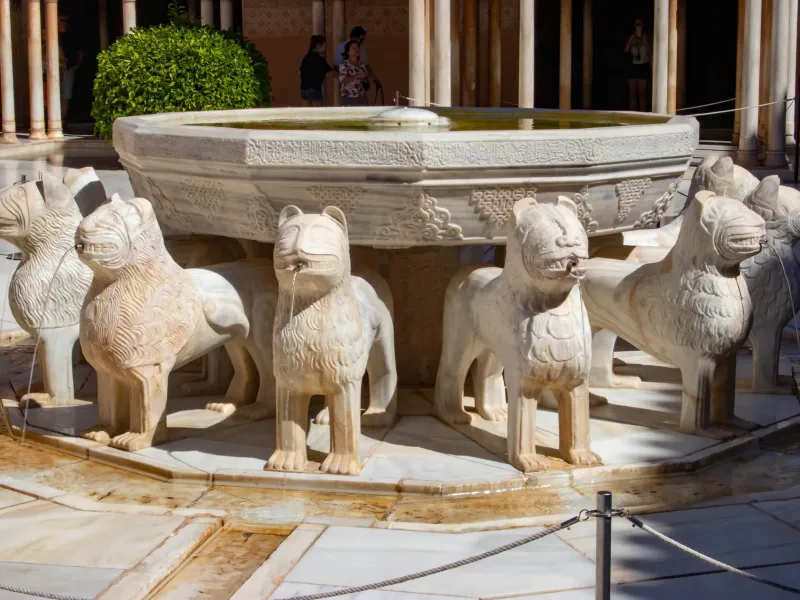
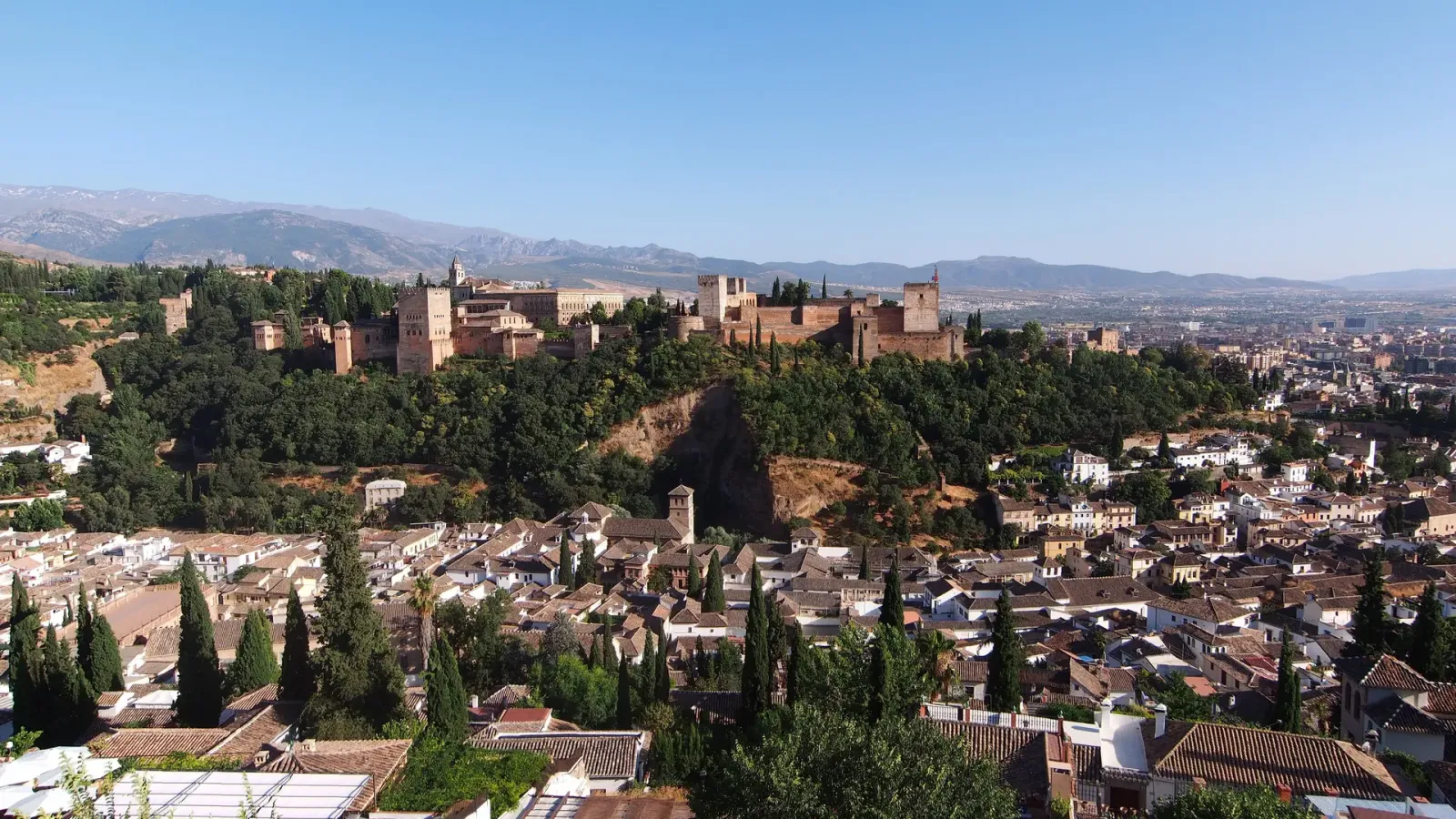
The Alhambra and the Albayzin
Inscribed in 1984 as one property across two hills: the palatine city of the Alhambra, the Generalife gardens and the Albayzin quarter facing them. UNESCO calls the Alhambra the only preserved palatine city of the Islamic period still standing. See the Alhambra guide.
-

Barcelona and the Works of Gaudi
A serial World Heritage listing of seven buildings, inscribed in 1984. Of the Sagrada Familia it covers the Nativity facade and the Crypt, the parts Gaudi himself built, and construction on the rest continues. See the Gaudi guide.
-
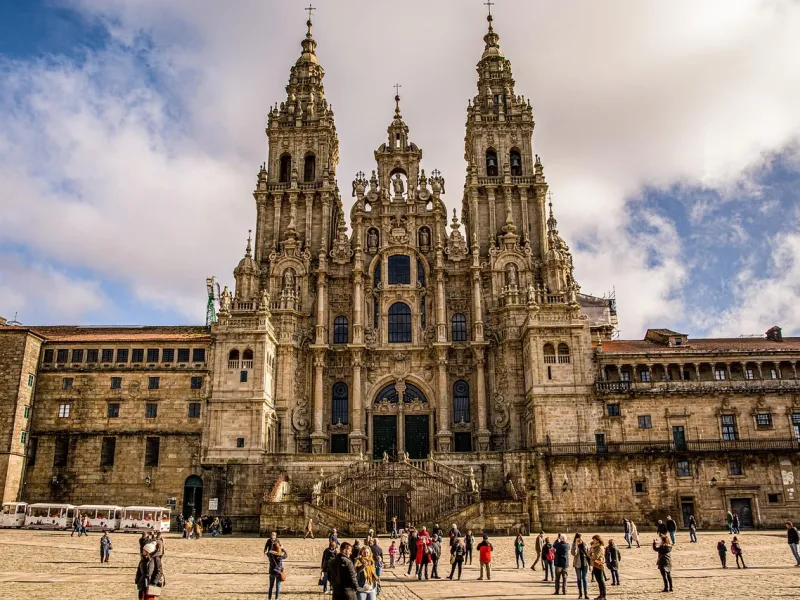
Santiago de Compostela and the Camino
The end of a walk that starts wherever you decide it does. The old town is inscribed, and so are the routes that lead to it. Galicia is also the wettest and greenest part of Spain, which changes what you pack. See our packing list.
-

Cordoba
A Roman capital that became a caliphate, inscribed in 1984 as a historic center rather than as a monument. At its heart the Mosque-Cathedral, a hypostyle hall of red and cream arches with a Renaissance cathedral inserted into the middle of it. See the Cordoba guide.
-
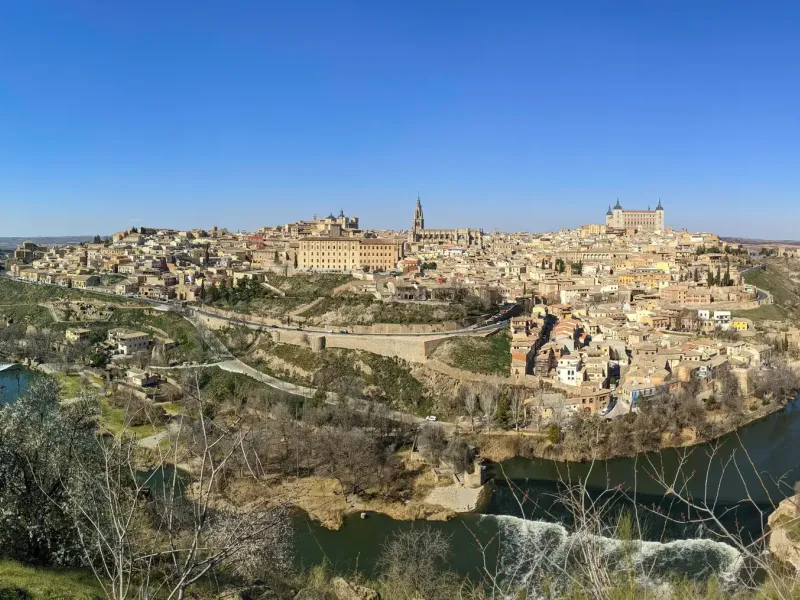
Toledo
A separately inscribed World Heritage city, built on rock inside a bend of the Tagus and reached in half an hour from Madrid by high-speed train. Public escalators carry people up the hill, which tells you what the walk is like. See our guide for older travelers.
-

Bilbao and the Atlantic North
The other Spain: green, wet, Basque-speaking, and home to what many people consider the country's best cooking. The Guggenheim turned a working port city into a destination. See our food guide and our culture guide.
The guide
Explore Spain by Interest
Planning
Food and Culture
Heritage and History
Traveler Resources
Before you go
Planning
a trip to Spain
-
Best Time to Visit Spain
April to June or September to October, and we will tell you plainly that this is an editorial recommendation rather than a sourced figure. Inland summer is genuinely demanding and the great walking cities are built on hills and cobbles. See the best time to visit guide and the weather guide.
-
Entry, Money and Getting Around
Spain follows Schengen rules, so the allowance is 90 days in any 180 day period counted across the whole area rather than across Spain. Two separate passport tests catch people out. See visa and entry requirements, money in Spain and getting around.
-
Before You Book
There is no advisory against travel to any part of Spain, and no standing warning at the head of the advisory either. What is worth knowing in advance is that street theft works by distraction, that you must be able to show photo identification to a police officer, and that several local laws carry fines. All three are on the travel safety guide.
Signature experiences
Signature
Spain experiences
-

A meal that is a crawl rather than a table
One drink and one plate in a bar, then the next bar. Spanish cooking is regional before it is national, and the walk between counters is the meal. Start with the food guide, which covers what a racion is before you order three of them.
-
A city that hands its streets to a festival
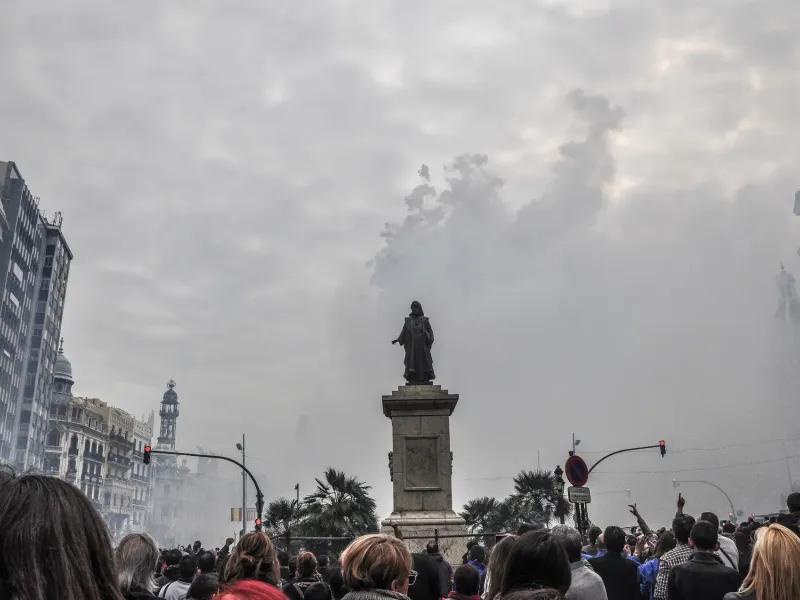
Valencia fills with smoke and percussion in March, Seville reorganizes itself around Holy Week, and every town keeps its own patron saint's day. Several of the largest move every year, which is why we give you dates for your year rather than printing them. See festivals and events.
-

An archive, a parish register and a town hall
Spanish records are held locally, so a family history trip works from the municipality outward rather than from the country inward. For a story that crosses the Atlantic in the colonial period, the archive in Seville is the institution. See Spanish roots and family history travel.
Why choose LABUSA Travel for Spain
We say there is no restriction, because there is none
Spain carries no advisory against travel to any part of it, and an operator who leaves that vague is overstating a risk to sound careful. What we brief you on instead are the things that actually change a day: that you must be able to show photo identification, that several municipal rules on alcohol and swimwear carry on-the-spot fines, and that a passenger using an unlicensed taxi is the one who is fined.
The Schengen sum is ours to do
Ninety days in any rolling one hundred and eighty, counted across the whole Schengen area rather than across Spain, is the constraint that decides an itinerary combining Spain with anywhere else in Europe. We count it before we quote it, and we check both passport tests with it.
We plan around the heat and the ground, not around a brochure
The cities people come to Spain for are built on hills and cobbles, and inland summer is demanding rather than merely warm. We build itineraries on two or three bases with rail between them, we put the walking in the morning, and we confirm the access and the timed entry at each monument for the date you are going rather than repeating what was true last year.
Common questions
Spain Travel FAQs
- Do I need a visa for Spain?
- For a great many nationalities, including US and British citizens, no. Spain follows Schengen area rules, which allow travel without a visa for up to 90 days in any 180 day period as a tourist, to visit family or friends, to attend business meetings or cultural or sporting events, or for short term study or training. Working is a different matter and needs its own permission. Visa free entry is not universal and the terms differ by passport, so confirm your own position with the Spanish authorities rather than assuming the rule transfers.
- How does the 90 day rule actually work?
- The ninety days belong to the Schengen area as a whole, not to Spain. Time already spent in any Schengen country during the previous one hundred and eighty days counts against your ninety, and if your trip continues into France, Portugal or Italy the whole visit has to fit inside the same limit. It is a rolling window counted backwards from whichever day you are standing on. Overstaying can bring a ban of up to three years from Schengen countries, and an extension for an exceptional reason such as a medical emergency has to be applied for to the immigration authorities rather than simply taken.
- What are the passport rules for Spain?
- Two separate tests, and both are easy to fail while holding a passport you think of as valid. Under Schengen area rules the date of issue must be less than ten years before the day you arrive, which catches a passport renewed early that carries extra months. The expiry date must be at least three months after the day you plan to leave the Schengen area. You will be refused entry without a valid travel document, or with a passport reported lost or stolen. These two tests come from the UK advisory, which writes for British citizens, so an American traveler should expect the same shape of check and confirm it with the Spanish authorities.
- Is Spain safe to visit?
- There is no advisory against travel to any part of Spain. The UK Foreign, Commonwealth and Development Office names no restricted region, no border zone and no island to avoid, and it carries no standing warning at the head of its Spain advisory at all. What is worth preparing for is street theft, which is done by distraction and by teams and concentrates where your hands are full, a set of local laws that vary by region and carry fines, falls from balconies, and summer heat.
- Do I need to carry identification in Spain?
- Yes, and this surprises American visitors more than anything else on the page. You must provide photo identification if a police officer asks for it, including to the Guardia Civil and the national, regional and local forces, and the police may hold you at a station until your identity is confirmed. Ignoring a direct request from an officer can be treated as disobedience, which is a criminal offense. You may also be asked for identification when paying by card, and hotels and car rental companies have a legal duty to register your passport details.
- When is the best time to visit Spain?
- April to June and September to October for almost every itinerary. Those months make the historic cities walkable, and they matter more in Spain than in most of Europe because Granada, Toledo, Cuenca and Ronda are built on hills and cobbles. Inland summer is genuinely demanding, the advisory records extreme weather affecting many parts of Spain particularly in summer, and August is when Spain itself goes on holiday and family restaurants close. Winter suits Andalusia and the Canary Islands and does not suit the plateau.
- Which World Heritage sites does this guide cover?
- Three of the fifty properties Spain has inscribed on the World Heritage List: the Alhambra, Generalife and Albayzin in Granada, the Works of Antoni Gaudi in Barcelona, and the Historic Centre of Cordoba, all inscribed in 1984. One distinction is worth carrying: the Gaudi listing is a serial property of seven buildings, and of the Sagrada Familia it covers only the Nativity facade and the Crypt, the parts Gaudi himself built. The World Heritage listing does not cover the basilica as a whole, and construction continues.
- What should I know about driving in Spain?
- More than most countries ask. Children under 1.35 m in height must use an approved child safety seat on the back seat. To drive a car or a motorcycle over 125cc you must be at least eighteen. Using a mobile phone while driving is illegal even if you have pulled over to the side of the road, and an earpiece is illegal too. Police can issue on the spot fines, and paying within 20 days reduces the fine by 50 percent. Several inner city areas run low emission zones whose stickers are not issued to foreign registered vehicles. Use only licensed taxis: a passenger caught using an unlicensed service is liable for a fine of up to 600 euros.
- How does healthcare work for a visitor?
- Dial 112 for an ambulance. The state healthcare cards that appear on the UK advisory, the GHIC and the EHIC, are British and European, and a US passport holder has no equivalent reciprocal arrangement in Spain, so comprehensive travel insurance with medical cover and medical repatriation is the whole answer. The advisory notes you are more likely to receive appropriate care in public facilities, that some tourist areas have no public facility nearby, and that a hotel may call a private doctor whose treatment a state card will not cover. Pharmacies are on almost every high street and pharmacists advise on minor problems as a matter of course.
- Is there anything a traveler of Spanish descent should check first?
- Two things, and the first is practical. Spanish records are held locally, so the useful unit of research is the municipality and its parish rather than the country, and almost nothing can be searched from a browser before you know that place name. The second is legal, and this guide deliberately states no rule about it: routes to Spanish nationality by descent exist, they have changed materially in recent years including time limited windows, and the answer depends on which ancestor and which date. Ask the Spanish consulate responsible for where you live, and ask early, because consular appointments are the slowest step in any of it.