
Why visit
Why visit Malaysia?
Malaysia invites travelers with street food in Kuala Lumpur, UNESCO-listed George Town in Penang, and eco-adventures in Borneo’s rainforests. Relax in the cool climate of the Cameron Highlands, or dive into the island bliss of Langkawi and Perhentian Islands. The country’s vibrant blend of Malay, Chinese, Indian, and Indigenous cultures is reflected in its architecture, cuisine, and community life. Along the Straits of Malacca, centuries of maritime exchange also included African traders and enslaved peoples, especially during the colonial era. Though traces are subtle, Malaysia’s deep multiculturalism offers diaspora travelers an inviting atmosphere to reflect on connection, identity, and shared cultural landscapes shaped by the Indian Ocean world.
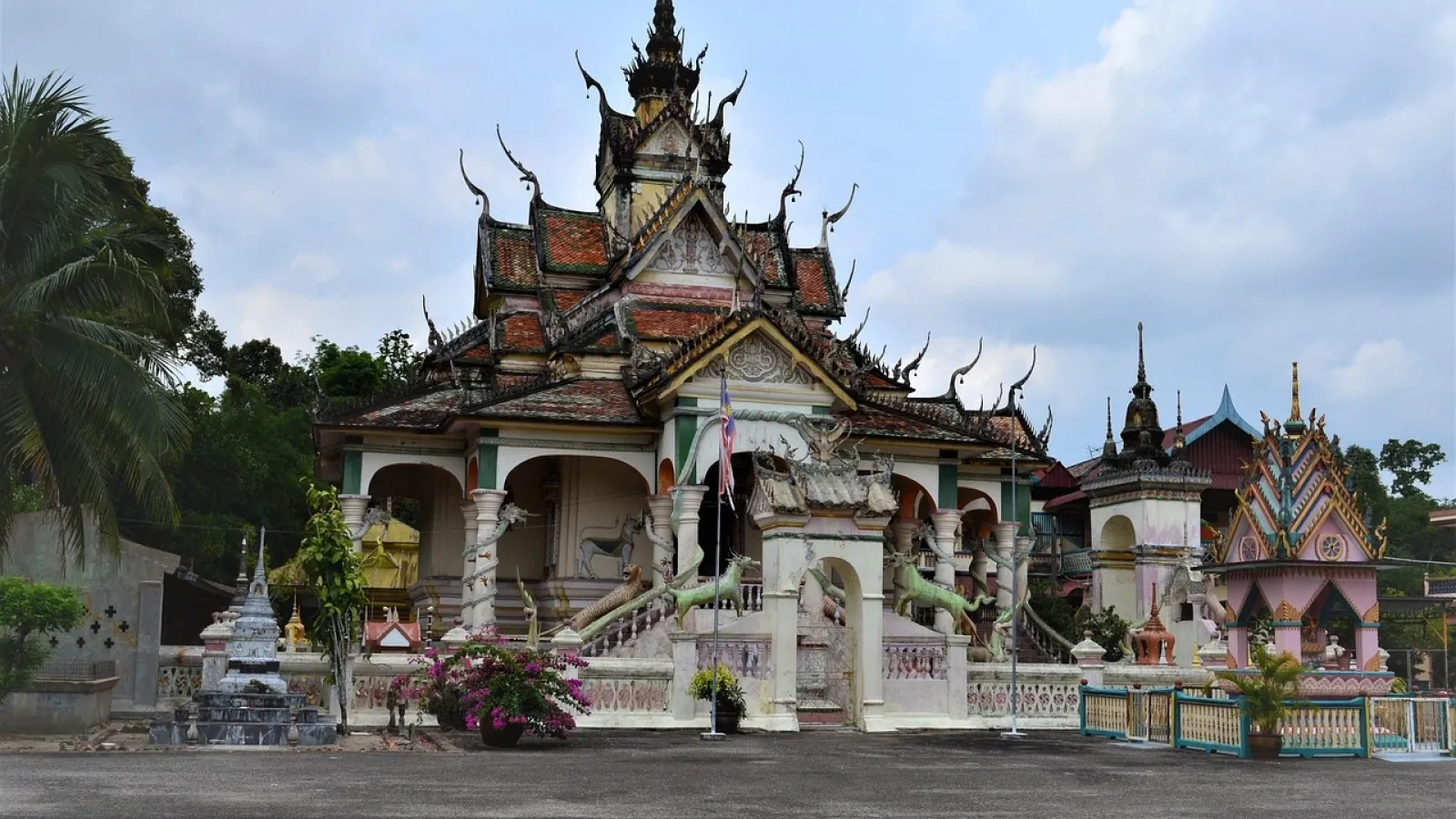
Top places to visit
Popular Attractions
in Malaysia
-
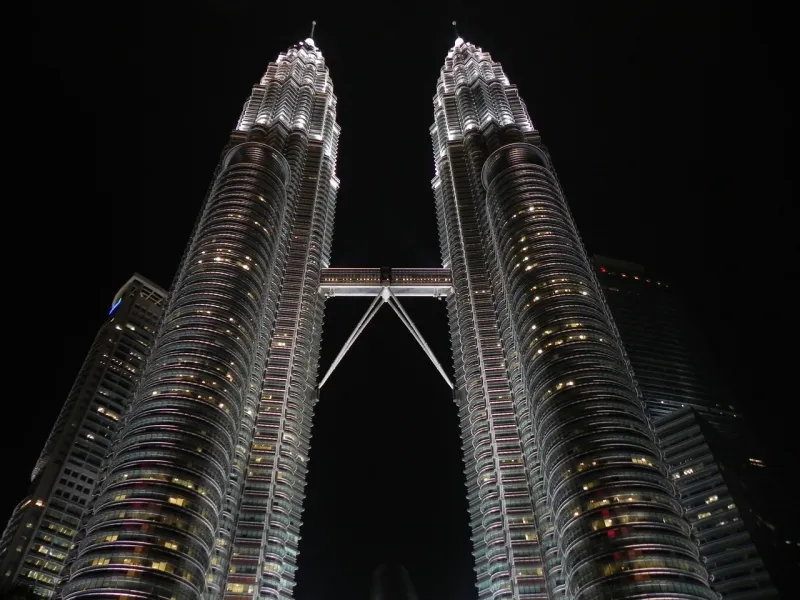
Petronas Towers: Kuala Lumpur
Standing tall in the heart of Malaysia’s capital, the Petronas Twin Towers are a symbol of progress and unity. Once the tallest buildings in the world, they now serve as a striking gateway to Kuala Lumpur’s cosmopolitan energy. Visit the skybridge for sweeping views of the city or explore the upscale shopping and cultural venues nearby. At night, the towers light up the skyline, a must-see moment on any Malaysian journey.
-
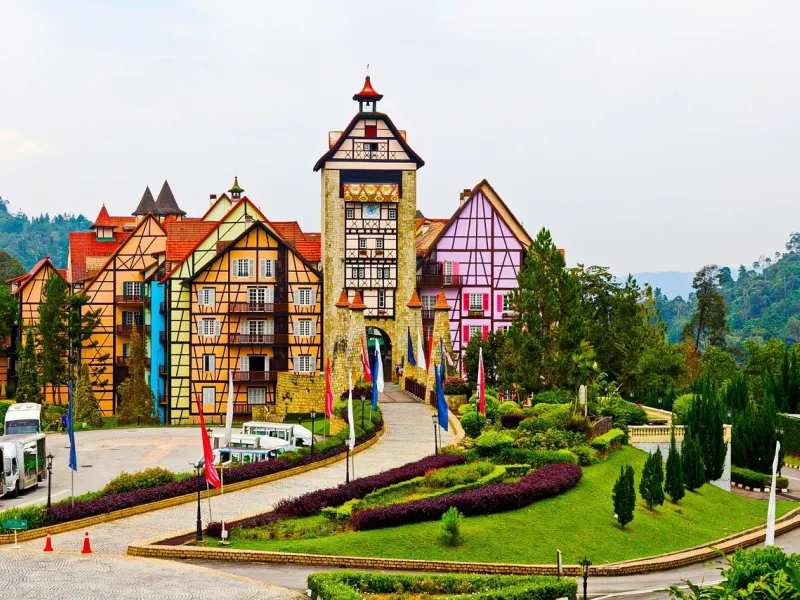
George Town: Penang Island
A UNESCO World Heritage Site, George Town is a living museum of Malaysia’s multicultural past and creative present. Wander through its color-splashed streets adorned with famous street art, visit traditional Chinese clan houses, and sample local hawker food that’s won international acclaim. From nasi lemak to Penang laksa, every meal tells a story. The island also offers beautiful beaches and forest reserves, making it an ideal cultural and coastal escape.
-
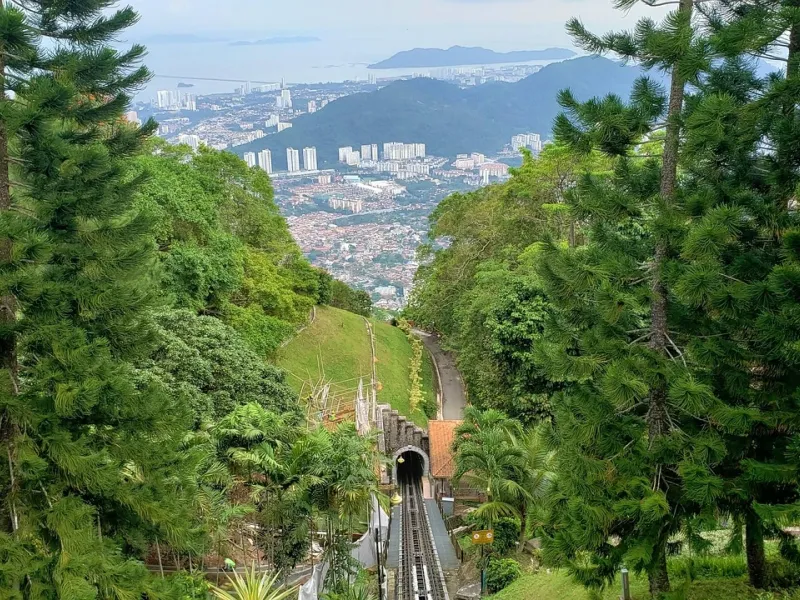
Borneo Rainforest & Mount Kinabalu: Sabah
For nature lovers and adventurers, Malaysian Borneo is an unparalleled experience. Trek through some of the world’s oldest rainforests, home to orangutans, pygmy elephants, and rare orchids. Climb Mount Kinabalu, Southeast Asia’s highest peak, for breathtaking vistas and spiritual insight. Whether you're exploring caves in Sarawak or joining a river safari in Kinabatangan, this side of Malaysia brings you face to face with Earth’s raw beauty and biodiversity.
The guide
Explore Malaysia by Interest
Planning
Food and Culture
Heritage and History
Traveler Resources
Deep Expertise
LABUSA Travel works with trusted guides and partners across Malaysia to ensure your journey is immersive, safe, and personalized. We help you move beyond tourist hotspots to access authentic cultural exchanges and nature-based adventures with meaning.
Purpose-Driven Travel
Your Malaysia trip can be about more than sightseeing. It can be about insight and connection. We design experiences that might include heritage tours with local families, rainforest stays that support conservation, or spiritual retreats influenced by Buddhist and Islamic teachings. Every step is intentional, and every experience is curated to leave you feeling more grounded and inspired.
Affordable Luxury & Authentic Moments
Whether you're unwinding at a beach resort in Langkawi, dining in a historic mansion hotel in Penang, or camping under the stars in Borneo, LABUSA Travel blends comfort with culture. Our itineraries prioritize high-value, high-impact experiences that celebrate Malaysia’s richness without sacrificing ease and elegance.
Common questions
Malaysia Travel FAQs
- Do I need a visa to visit Malaysia?
- Whether you need one is decided by the passport you hold, so the honest answer is to check with your own government rather than to take a figure off a travel page. What this cluster can tell you is the shape of the rule Malaysia applies, as described by the UK Foreign, Commonwealth and Development Office, whose entry advice is written for British passport holders and is attributed as such throughout this site. That advice states that you can visit Malaysia without a visa for tourism, and that you will normally be allowed to stay for 90 days on arrival. The word normally is the source's own and it is doing work: the figure describes what is usually granted, not an entitlement, and the officer at the counter sets the stay. Two limits sit alongside it. Ninety days is for tourism, so a conference, a piece of paid work or anything that is not a holiday is a different question with a different answer. And if you want longer, the same advice is clear that you apply to the nearest Malaysian diplomatic mission before you travel rather than arranging it once you are there. Do not carry a neighboring country's allowance across the border with you. Several countries within an hour's flight of Kuala Lumpur publish visa-free periods that are nothing like this one, and the only figure that governs your stay in Malaysia is Malaysia's. This page will not print another country's number even as a comparison, because a number no source in this cluster research register covers is one it cannot stand behind.
- How long does my passport need to be valid, and does Malaysia allow dual nationality?
- The entry advice this cluster cites states that your passport must have an expiry date at least 6 months after the date you arrive, that it must be undamaged, and that no pages may be missing. Count the six months forward from your arrival date rather than from the day you book, because a trip planned far enough ahead can slip under the line while the passport sits in a drawer looking fine. The damage condition is the one people overlook: a passport that has been through a washing machine or has a torn laminate can be refused even though the date is years away. The second half of this question has an unusual answer and it is worth reading twice. The same advice records that Malaysia does not recognize dual nationality, and that you can be refused entry if you are found carrying a Malaysian passport alongside one of a different nationality. If you hold two passports, neither of them Malaysian, the guidance is to enter and leave on the same one throughout. Nothing here is a substitute for confirming your own position with your own government, and an American passport holder should raise it with the U.S. Embassy in Kuala Lumpur rather than with a travel page.
- Do I have to complete an arrival card before I travel to Malaysia?
- Yes, and it is done online before you go. The entry advice this cluster cites states that you must submit an arrival card online to enter Malaysia, and that you should do it before you travel because airlines may ask for it at check-in. That last clause is the practical one: the consequence of skipping it is usually met at a departure desk at home rather than at a counter on arrival. The card is the Malaysia Digital Arrival Card, published by the Immigration Department of Malaysia, and this page names its official site rather than quoting from it. The reason is worth knowing. That site is built almost entirely in the browser and serves very little readable text to anything that fetches it, so most of what it displays cannot be verified by the research register behind this cluster. One part of it can, and it is repeated in the money answer below. There is a narrow exemption. The same advice records that if you are not passing through immigration you do not need to complete a card, which covers a transit that never crosses the border. Register on the official government site only, because a search will surface intermediaries charging a fee for something that is free.
- Is flying from Kuala Lumpur to Borneo a domestic flight?
- It is a domestic flight and it is also a border crossing, and Malaysia is the only destination on this site where both are true at once. The entry advice this cluster cites states that if you are traveling between Peninsular Malaysia and East Malaysia, which is Malaysian Borneo and is made up of the states of Sabah and Sarawak, you must carry your passport, you will pass through immigration control, and you must get entry and exit stamps. Sabah and Sarawak set their own immigration rules and have done since federation, which is why an internal flight behaves like an international one. What that means in practice is ordinary once you expect it and disorienting if you do not. Carry the passport in your hand luggage on the day rather than in a case you have checked. Allow for the line at immigration on both legs, out and back, because the return is a second crossing and not a formality. Check that the stamps actually went in before you leave the hall, since an exit stamp you never received becomes your problem later and not the officer's. And if your stay in Malaysia is close to its limit, remember that this leg is counted and stamped like any other.
- Do I have to carry my passport around in Malaysia?
- Yes. The safety advice this cluster cites is short and unambiguous on the point: by law you must carry identification, and it tells you to always carry your passport. That is a legal obligation rather than a precaution, and it is the opposite of the habit many travelers bring from elsewhere, where the usual advice is to leave the document somewhere secure and carry a copy. Here the law asks for the document. Two things follow. Carry it in a way that survives the crime the same advice describes, because bag-snatching by thieves on motorbikes is named in the same source and a passport in an outside pocket on the road side of the sidewalk is the worst of both positions. And photograph or scan every page before you travel, and keep that copy somewhere you can reach without your bag, because a copy is no substitute for the document at a checkpoint but it is what makes replacing a lost one possible. Note that this answer does not travel across a border. What a country requires you to carry, and what it warns you never to hand over, are set separately by each one, and several of Malaysia's neighbors answer both questions differently. A habit formed on a previous trip is not a guide here, and this page describes only what Malaysian law and the advice cited above actually say.
- How much cash can I bring into Malaysia?
- There is no limit on what you may carry, and there is a threshold at which you must tell customs about it. The entry advice this cluster cites states that when you enter or leave Malaysia you must declare cash in any currency, or travelers checks, worth 10,000 US dollars or more. The Immigration Department of Malaysia publishes the same reminder alongside its arrival card, phrasing it as cash or bearer negotiable instruments above that value. The penalty is not a formality. The same advice records that undeclared money can be seized by customs officials, and that you could face a fine of up to 3 million Malaysian ringgit and up to 5 years in prison. Read the threshold carefully, because two details catch people out. It is measured across everything you are carrying in any currency rather than per note or per person, so a couple traveling together should work it out between them. And it applies on the way out as well as the way in. Malaysian ringgit is treated separately: the same advice states that taking ringgit worth 10,000 US dollars or more into or out of the country needs approval in advance from Bank Negara Malaysia, which is the central bank and not something arranged at the airport.
- Is Malaysia safe for visitors?
- The official advice does not answer that as a yes or a no, and its opening position is worth taking seriously: no travel can be guaranteed safe, and you should get appropriate travel insurance. What follows are the specific warnings the safety advice this cluster cites actually publishes, rather than a general impression. Bag-snatching is described as common, particularly in major cities, and thieves on motorbikes are named as targeting tourists, cutting straps or pulling at a bag carried on the shoulder closest to the road. The same source records that people have been pulled to the ground and killed or injured trying to hold on, which is why the only sensible response is to let go. Walk with your bag on the side away from traffic and carry as little as the day needs. Credit card and ATM fraud is described as widespread, so watch your card and check statements while you are still traveling. Drink spiking is recorded in bars and restaurants that look entirely reputable, so watch your drink being poured and do not leave it unattended. Methanol in adulterated alcohol is a separate warning and a worse one, because the source is explicit that even small amounts can kill and that it cannot be identified by taste or smell. One legal point belongs here rather than in a section about customs: it is illegal under Malaysian law for foreign nationals to take part in demonstrations or protests, and the advice is to avoid all of them.
- Is it safe to dive or island-hop off Sabah?
- This is the one question about Malaysia where the geography is the whole answer, and where a page that gives half of it does real damage. The FCDO advises against all but essential travel to all islands and dive sites off the coast of eastern Sabah from Sandakan to Tawau, including Lankayan Island, because of the threat of kidnapping. The safety advice this cluster cites describes a threat to foreigners from terrorist groups in coastal areas of eastern Sabah, names the Abu Sayyaf Group, based in the Philippines, as having previously kidnapped foreigners from that coast, and records the threat as particularly high on islands close to the Sulu Archipelago in the southern Philippines. Now the half that matters just as much: the same advisory states plainly that it does not apply to the mainland of Sabah. Kota Kinabalu, Kinabalu Park and the mountain itself are not covered by it, and a page that lets the warning bleed across a whole state tells you to avoid somewhere the source does not. So the practical shape is to read the advisory by coastline rather than by state name, to check it again close to departure because advisories move, and to ask any dive operator exactly which waters a trip enters. And note that an advisory of this kind commonly voids travel insurance for the area it covers, which turns a risk into an uninsured one.
- What is the emergency number in Malaysia?
- There are three and you want all of them, because they are not interchangeable. The advice this cluster cites gives 999 for police and ambulance, 994 for fire, and 112 for an ambulance from a mobile. The health advice separately tells you to call 999 and ask for an ambulance, which is the same number reached from a landline. In practice the one to save first is 112, because it is the number that works from a mobile phone and a mobile is what you will be holding. Put all three in your phone before you fly rather than looking them up during the thing you need them for, and write them somewhere that does not depend on a charged battery. Two further points. Do not carry a number here from somewhere else you have traveled, because this site has tracked several different emergency numbers across the destinations it covers and a run of neighboring countries sharing one makes the habit feel safer than it is. And an emergency call is the moment your travel insurance details matter, so keep the policy number and the emergency assistance line with the numbers above. The official advice is blunt that no travel can be guaranteed safe and that appropriate travel insurance is what makes a bad day survivable.
- What vaccinations do I need for Malaysia, and is there malaria?
- Both questions are answered by a clinician and not by a web page, and the useful thing a page can do is tell you what is on the list and when to start. The U.S. Centers for Disease Control and Prevention names hepatitis A, typhoid, Japanese encephalitis and rabies among the health topics travelers to Malaysia should raise, and recommends that travelers going to certain areas take prescription medicine to prevent malaria. Malaria is on that list, so nothing here will describe this country as free of it, and the CDC record names knowlesi specifically, which is a form carried by macaques and found in this part of the world rather than the species most people have in mind. Risk is not uniform across a country and a single sentence either way would be wrong somewhere, which is why the advice is organized around discussing your own itinerary. Timing is the part that actually goes wrong. The health advice this cluster cites is clear that you should act at least 8 weeks before your trip, because some courses take time to finish. Take your itinerary to that appointment, including rural stays, forest and anything involving animals: the same advice names rabies risk in the states of Perlis, Kedah, Penang and Sarawak. Two further health facts are worth planning around. Forest fires in Indonesia can cause haze between June and October, which the source records as worsening respiratory conditions and disrupting regional flights. And altitude sickness is named as a risk in parts of Malaysia including Mount Kinabalu, which matters if a climb is on your itinerary.
- What happens if I am carrying or have used drugs before arriving in Malaysia?
- This is the answer on this page with the widest gap between what a visitor expects and what the law does, and it is written plainly for that reason. The entry advice this cluster cites states that the Malaysian authorities could ask you to take a urine test on arrival if they suspect drug use, and that if they find drugs in your system they could detain or deport you and ban you from returning to Malaysia. Read the next sentence twice, because it is the one nobody anticipates: the same advice states that you could face those penalties even if you took the drug outside Malaysia, including in a country where it is legal. For an American reader traveling from a state where cannabis is lawful, that is the sentence that matters. Legality at home has no bearing at this border, the test is of your body rather than your luggage, and the consequence attaches to your passport rather than your wallet. Nothing on this page will attempt to describe penalties for possession or trafficking, and the reason is deliberate rather than squeamish. Those are among the most serious offenses in Malaysian law, no source in this cluster research register publishes a figure this page could reproduce and verify, and a number recalled from memory is the worst possible thing to publish about a criminal penalty.
- Does Malaysia have World Heritage sites?
- It does. The UNESCO record lists six World Heritage properties in Malaysia, four of them cultural and two natural, and three further sites on its Tentative List. That count was read off the record while this cluster was being written rather than recalled, and the reason is concrete: two of the six were inscribed within the last couple of years, so any figure carried from memory is now out of date. The one this cluster covers in full is Melaka and George Town, Historic Cities of the Straits of Malacca, inscribed in 2008. Read that title carefully, because it is a single inscription covering both cities together, in two different states, roughly four hundred kilometers apart. Treating them as two separate listings is the most common error about this entry, and treating them as one place is the other. The cluster heritage guide covers how to visit each and what makes them different. The rest are spread wide and none of them is a day out from the other. The Archaeological Heritage of the Lenggong Valley sits in the north of the peninsula, the Niah caves complex and Gunung Mulu National Park are in Sarawak, Kinabalu Park is in Sabah, and the newest addition is a forest park in Selangor. This page cites the national record for the inscription names and years and does not quote the individual property pages, because those pages cannot currently be fetched and verified, and a citation this cluster cannot reproduce is not one it will publish.