The honest opening.
None of the nine sources this cluster cites covers accessibility in Malaysia. There is no assessment here of step-free access at a station, of accessible rooms, of pavements, or of which historic quarters can be managed with a wheelchair, because no source in this register supports one.
That is a statement about this register rather than about Malaysia. Writing a confident paragraph about ramps and lifts from general impressions would be exactly the kind of sentence a reader would reasonably act on and could not check, and the consequence of getting it wrong falls on the person who trusted it.
What can be established, and it is structural rather than reassuring.
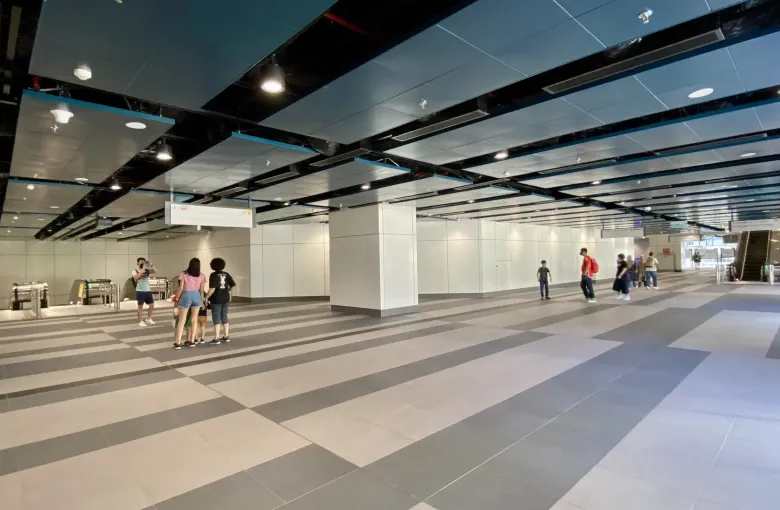
Kuala Lumpur's newer rail lines are built with platform screen doors and level boarding, which is visible in the stations themselves. That is an observation about infrastructure rather than a sourced accessibility assessment, and it does not extend to older lines, to stations without lifts, or to the journey between a station and where you are going.
Two things this cluster can evidence do bear on planning. The health advice records that government and private hospitals charge for all services, that private care is expensive, and that travelers should have adequate travel health insurance and accessible funds to cover treatment and repatriation. And it records that haze from forest fires in Indonesia between June and October may make respiratory conditions worse, which is a direct planning constraint for anyone whose access needs include air quality.
The parts of this country that are hard, and why saying so is useful.
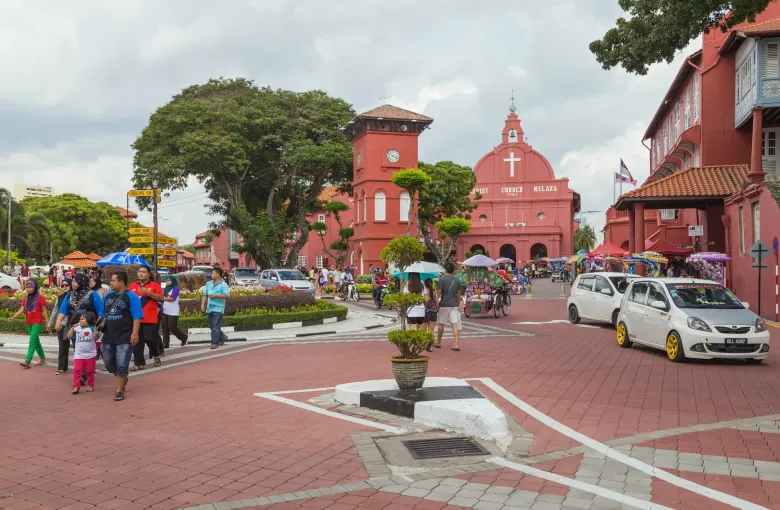
Two of Malaysia's principal attractions are a historic quarter walked on narrow streets and a set of natural properties in Borneo reached by terrain. Melaka and George Town are walked because that is what they are; their surfaces are old and uneven and their buildings were not built with access in mind. The health advice separately records altitude sickness as a risk including on Mount Kinabalu.
None of that means a trip does not work. It means the questions are specific and have to be asked of the people who actually know.
Who to ask, and what to ask them.
Ask the airline about assistance at both ends and about the crossing between the peninsula and Borneo, which is an immigration control rather than a domestic transfer and therefore involves a queue and a document check. Ask the hotel for measurements rather than for the word accessible: door widths, the height of the bed, whether the bathroom has a step, whether there is a lift and whether it reaches your floor. Ask tour operators directly what the ground is like and how far it is from where a vehicle can stop.
Ask your insurer explicitly about pre-existing conditions and about equipment, and get the answer in writing. Given what the health advice says about the cost of private care, that is the single most important call on this page.
What this cluster owes.
If a Malaysian authority publishes accessibility guidance that this fetcher can read, it belongs in this register and this page should be rewritten around it. Until then this page is short on purpose. An honest gap is more useful than a confident paragraph that turns out to be wrong at a doorway.
Sources
- UK Foreign, Commonwealth and Development Office: advises seeing a health professional at least 8 weeks before travel, names malaria, dengue and rabies in the states of Perlis, Kedah, Penang and Sarawak among the health risks, records altitude sickness as a risk including on Mount Kinabalu, and notes that forest fires in Indonesia can cause haze between June and October. Accessed 22 September 2026.
- UK Foreign, Commonwealth and Development Office: sets out Malaysia's entry rules as the UK government understands them: a passport valid for at least 6 months after arrival, normally 90 days on arrival for tourism without a visa, an arrival card submitted online before travel, immigration control between Peninsular Malaysia and East Malaysia, and a customs declaration for cash worth 10,000 US dollars or more. Accessed 22 September 2026.
- UK Foreign, Commonwealth and Development Office: advises against all but essential travel to parts of Malaysia, and states that no travel can be guaranteed safe and that travelers should get appropriate travel insurance. Accessed 22 September 2026.
Other Articles
Malaysia for Senior Travelers
Getting Around Malaysia