
Why visit
Why visit Costa Maya?
Located on the southern Yucatán coast, Costa Maya blends natural beauty with cultural depth. Snorkel along the Mesoamerican Barrier Reef, the second largest in the world, or relax on Mahahual’s golden sands. Venture inland to Chacchoben or Kohunlich, where towering pyramids and intricate carvings reveal the ingenuity of the Maya. In coastal villages, Afro-Mexican and Garifuna communities keep music, food, and language alive, offering Diaspora travelers a powerful reminder of shared resilience across the Caribbean.
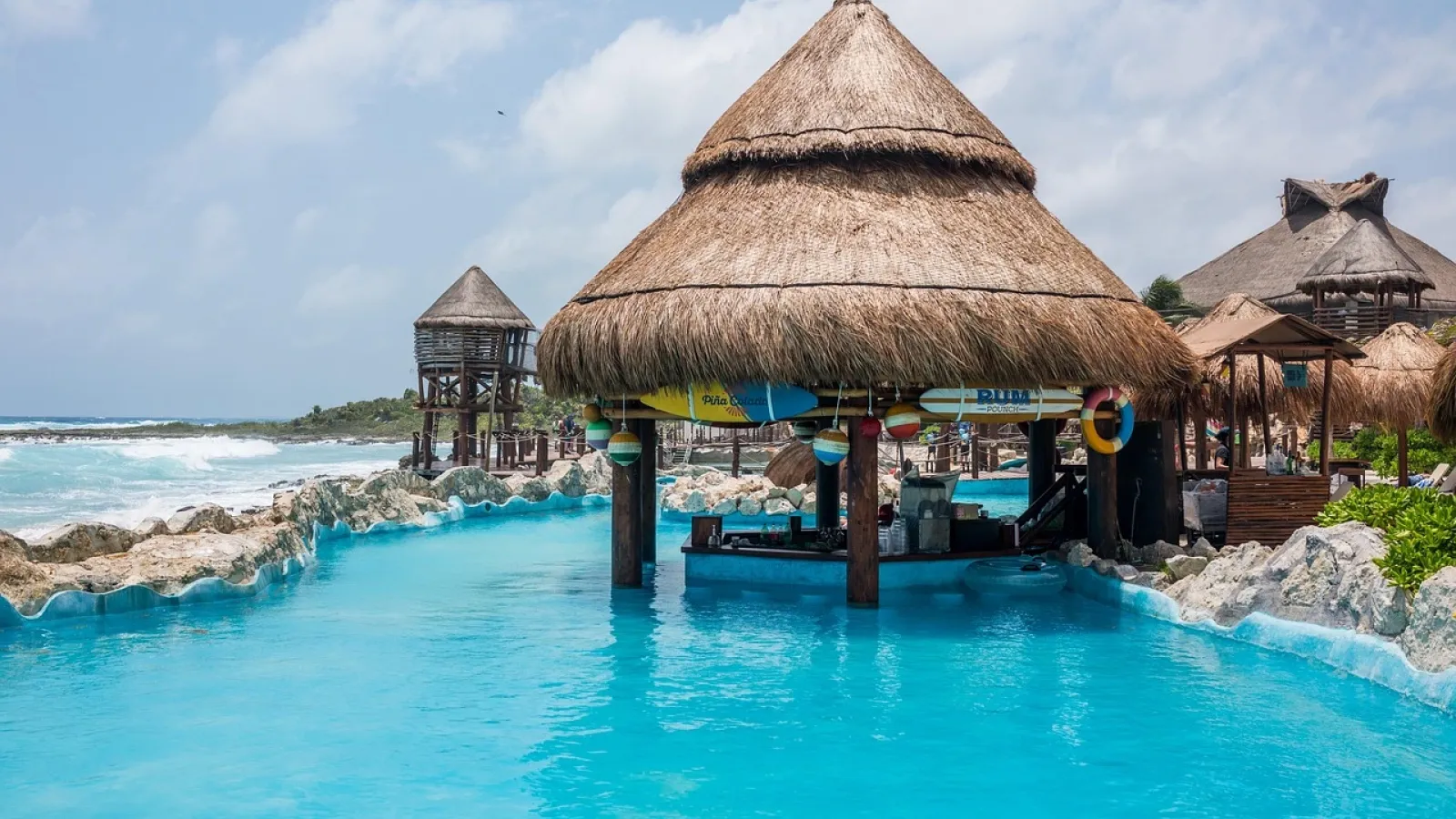
Top places to visit
Popular Attractions
in Costa Maya
-
Chacchoben: Ancient Maya Echoes
These jungle-wrapped ruins tell the story of Maya spiritual life and community. Guided tours share both archaeological insight and living Indigenous traditions tied to the land.
-
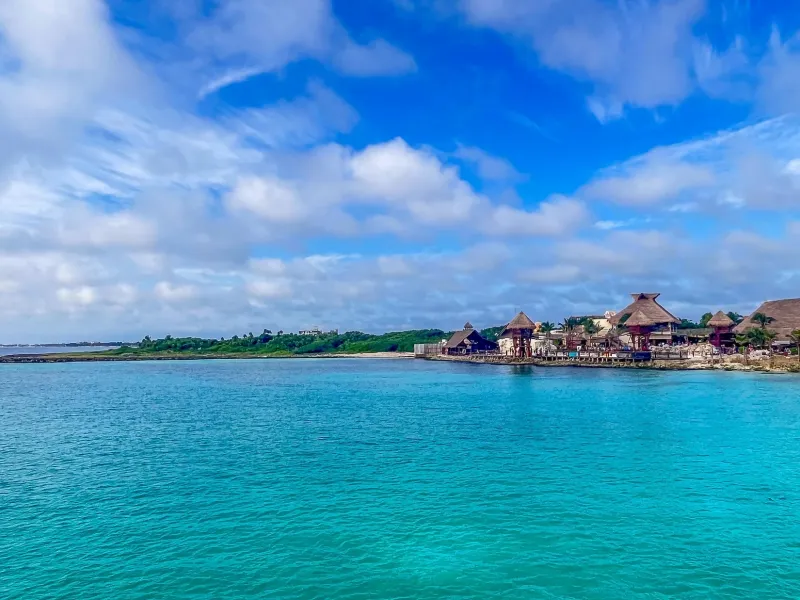
Mahahual: Gateway to the Caribbean
This charming fishing village offers beaches, boardwalk cafés, and cultural encounters with local artisans. It’s the perfect place to experience both relaxation and authentic community life.
-
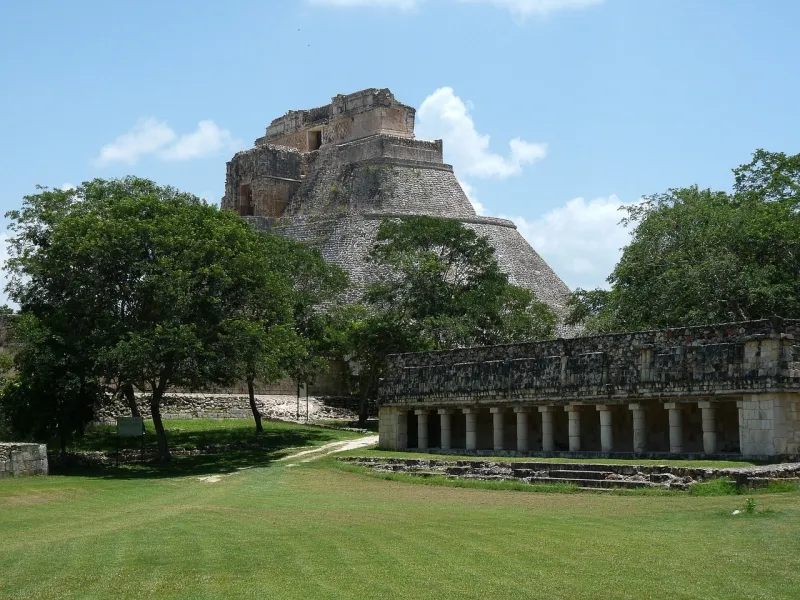
Kohunlich: Faces of the Past
Known for its Temple of the Masks, Kohunlich preserves striking stone carvings that honor Maya deities and ancestors. Visiting here is a journey into artistry and spirituality that still resonates today.
The guide
Explore Costa Maya by Interest
Planning
Food and Culture
Heritage and History
Traveler Resources
Deep Expertise
We collaborate with Maya guides, Afro-Mexican cultural leaders, and community hosts to ensure every journey is grounded in history and identity. From temple tours to music workshops, LABUSA takes you beyond the surface.
Purpose-Driven Travel
Our itineraries uplift local economies, cultural preservation, and environmental sustainability. Whether joining a community cooking class, supporting artisans, or exploring conservation projects, your presence makes a lasting impact.
Affordable Luxury & Authentic Moments
Stay in boutique beachfront eco-hotels, jungle lodges near heritage sites, or family-run guesthouses. LABUSA blends comfort with authenticity, ensuring every stay is as meaningful as it is memorable.
Common questions
Costa Maya Travel FAQs
- Do I need a visa to visit Costa Maya on a cruise?
- This page cannot tell you, and the reason is worth understanding before you go looking for an answer elsewhere. The entry advice this cluster cites is published by the UK Foreign, Commonwealth and Development Office, and it opens by saying that the information is for people traveling on a full British citizen passport from the UK. Everything on that page is the British position. This site writes for readers in the United States, so repeating it here as though it described your obligations would be wrong in the most consequential way available on an entry question. The visa question is decided by the passport you hold and not by the port you arrive at, it genuinely differs by nationality, and the only authority on it is your own government. Check their advice for your own passport. What is worth settling before you sail, whatever your nationality, is the shape of your day: going ashore and returning before the last tender is one arrangement, and staying on after the ship leaves is a different one that has to be made in advance rather than decided at the pier. The Mexico guide on this site covers the country level entry picture in more depth than a port page should.
- How long does my passport need to be valid for Mexico?
- There is no fixed number of months, which is what makes this question worth asking rather than assuming. The official entry advice states that your passport must be valid for the duration of your stay. That is the requirement, and for a cruise call it is a low bar. Separately, and this is the part people miss, the same advice records that the Mexican Embassy recommends passports be valid for at least 180 days, because 180 days is the longest a tourist may stay. A requirement and a recommendation are different things: one is what the rule says, the other is a margin the issuing authority suggests you keep. Both belong in the answer and neither is a substitute for the other. The practical trap is arriving with a number in your head from somewhere else in the region. Several nearby countries do set a fixed period, three months in one case and six months plus blank pages in another, and none of those figures is the Mexican rule. Check the pages in your passport too while you are looking, since pages are not something that can be resolved at a pier.
- Is there an entry tax for the state of Quintana Roo, and does it apply to a cruise call?
- There is a tax, and whether it reaches a passenger arriving by sea for a few hours is not something this page can settle honestly. The official entry advice states that you must pay an entry tax to visit the state of Quintana Roo, and that you can pay the entry tax online before or during your stay. This port is in Quintana Roo, so the tax is not a distant piece of trivia. Here is the limit. The same advice goes on to describe the charge entirely in airport terms: help with paying online is described as available at Cancun Airport, and proof of payment is described as something you show at the airport before leaving. It says nothing about arriving by ship, and nothing else in this cluster research register does either. So the position is exactly this: the tax exists, the source describes an air arrival, and the question of whether it is collected from your call, included in something you have already paid, or not applied at all is one your cruise line can answer and this page cannot. Ask them before you sail. Asserting either way here would be a conclusion of ours dressed up as the source.
- Do I need malaria tablets for Costa Maya?
- The state this port sits in is not among the areas the CDC names, and the wording of that sentence is deliberate. The CDC recommends that travelers going to certain areas of Mexico take prescription medicine to prevent malaria, and it names those areas as Campeche, Chiapas, and the southern part of Chihuahua state, with rare transmission recorded in a handful of others. Quintana Roo is not among them. What this page will not do is turn that into a promise. Reading a guarantee out of a state absent from a list is an inference, and the inference would be ours rather than the CDC position. The useful version is the one above: the list names those states, and this is not one of them. Two further things are worth knowing. A prescription decision is made in advance with a travel health professional and not on arrival, so if you want it settled you need to raise it before you travel. And the answer is genuinely different elsewhere in this region, including at another port some itineraries call at in the same week, so a traveler carrying an answer from a neighboring country has not necessarily brought the right one. Bite avoidance is sensible wherever you are.
- What is the emergency number at Costa Maya, and what medical care is available?
- Dial 911 and ask for an ambulance. The official health advice says exactly that, and it is the single most useful sentence to have before you go ashore anywhere. The second half of the question is one this page answers by admitting a limit. Nothing in this cluster research register describes the medical facilities in this village or how far the nearest hospital is, so this page does not describe them either. Mahahual is a small coastal settlement, which is worth holding in mind without turning it into a claim nobody here has sourced. What follows for a traveler is concrete regardless. The general travel advice for the country asks you to get appropriate travel insurance, and on a port call the part that matters is cover for medical evacuation rather than local treatment alone, because moving someone is the expensive scenario and it is the one a small place is least equipped to absorb. Bring the medicines you take with you, in their original packaging and in enough quantity for the whole trip, rather than planning to buy them on arrival. And if you are diving or snorkeling, ask your operator directly what their plan is for an incident, because that is a question they should be able to answer immediately.
- Is Costa Maya safe for visitors?
- The state is not named in the advisory that names fifteen others, and that is an absence rather than an assurance. The UK advice does advise against all but essential travel to parts of Mexico, and its regional risks page works through the country state by state, naming Guerrero and Sinaloa among them. Quintana Roo, where this port is, does not appear on that list. It is worth being precise about what that means: a state can be absent from an advisory list without anyone having declared it safe, and the advice written for the country as a whole still applies to you here. The Mexico guide on this site carries that wider picture. That advice is direct. Crime is described as a risk to foreign nationals in Mexico, particularly in major cities and tourist resort areas, which is a description of exactly the kind of place a cruise port is. Pickpocketing and theft are described as common. And unlicensed taxi drivers are recorded as having robbed and assaulted passengers, with the advice being to use sitio taxis from authorized ranks rather than whatever is waiting. For a day ashore that translates into something short: book through your ship or a known operator, keep what you are carrying on you rather than set down, and use an official rank. The same advice notes, plainly, that no travel can be guaranteed safe.
- Does Mexico have World Heritage Sites, and can I see one from Costa Maya?
- Mexico has more than any other destination this site has built a cluster for, and the ruins most excursions from this port visit are not among them. Both halves of that are true and the second is the one worth stating first. UNESCO records 36 properties inscribed on the World Heritage List for Mexico and 23 sites on its tentative list. Chacchoben, the Maya site most commonly offered from this pier, does not appear on that record at all, and neither do Kohunlich, Dzibanche, Mahahual or Costa Maya itself. One inscribed property is in this state: Sian Kaan, inscribed in 1987 under criteria seven and ten. The property itself covers 528,148 hectares along roughly 120 kilometers of coastline. Whether it can be reached and returned from inside the hours a ship is docked is not answered by any source in this register, so this page does not tell you that it can or that it cannot. Ask your line what their excursions actually reach. The thing worth holding on to is that an inscription records a property outstanding universal value; it is not a ranking of what is worth a day of your life. A Maya site without one is not a lesser site, and the pyramids inland from this port are substantial on their own terms.
- What money does Costa Maya use?
- The Mexican peso. The health and travel profile this cluster cites records the monetary unit as the Mexican peso, abbreviated Mex$, and that is what prices ashore are set in. This page publishes no exchange rate, and that is a deliberate limit rather than an oversight: no source in this cluster research register gives one, a rate printed on a page goes stale the week after it is written, and your own bank will tell you the real figure on the day at the rate you will actually get. What is more useful than a number is a handful of habits for a short call. Carry enough small cash ashore that a card problem is an inconvenience rather than the end of your afternoon, since a village is not a place to discover a card has been declined. Expect to be quoted in pesos and be wary of a quote that has been converted for you, because the conversion is rarely in your favor. And treat the taxi advice on this page as a money question as well as a safety one: an unlicensed taxi is the classic way a small saving turns into a large problem. The Mexico guide on this site goes further into the country level picture.