
Why visit
Why visit Seychelles?
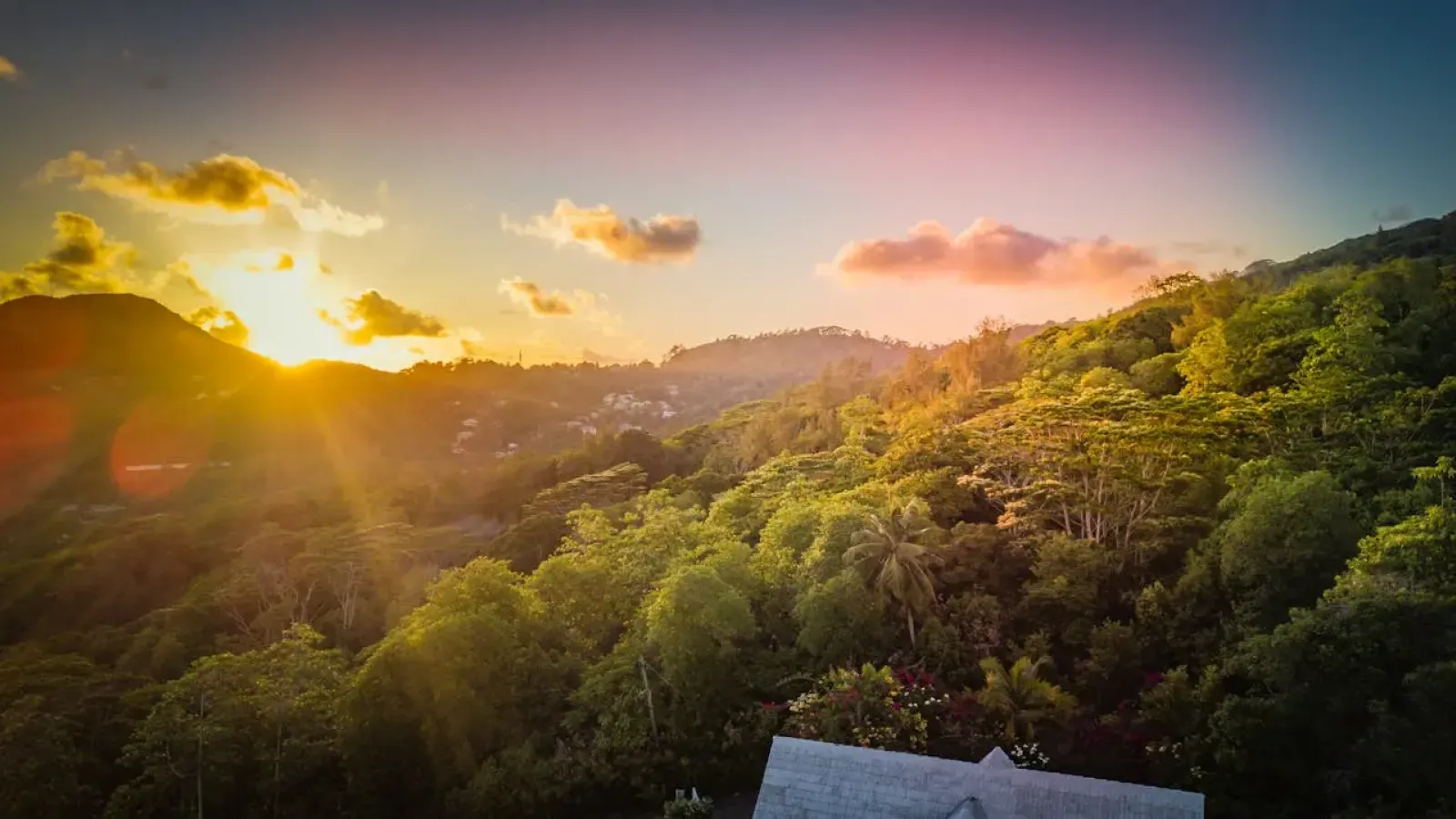
Seychelles is a hundred and fifteen islands of granite and coral, and it is the only country in the world whose inner islands are the exposed peaks of a submerged continental fragment rather than coral or volcano. That is why the beaches look the way they do: the boulders are ancient granite, not reef.
There are two World Heritage properties and they could hardly be less alike. The Vallée de Mai on Praslin is nineteen and a half hectares of endemic palm forest, walked in a morning, holding the world's largest population of coco-de-mer and the largest seed in the plant kingdom. Aldabra Atoll is a raised coral atoll over a thousand kilometers away with the largest giant tortoise population on earth, and it is one of the least visited places in the world: every visitor needs prior authorisation and an escort, and there is no airstrip, harbor or hotel.
The country had no indigenous population. It was uninhabited until the eighteenth century, and everybody here descends from someone who arrived, including the liberated Africans landed by Royal Navy patrols through the nineteenth century. The culture that came out of that is genuinely Creole rather than plural, and its one UNESCO-inscribed tradition, the Moutya, was inscribed as recently as 2021.
The practical picture is the mildest in this program. The United States rates Seychelles Level 1, Exercise Normal Precautions, the lowest of the four levels, and the United Kingdom advises against travel to no part of it. The two things that genuinely catch visitors out are the sea, which is unsafe on one coast or the other depending on the season, and a drug law that reaches life imprisonment. Both are on the travel safety guide, plainly, rather than left for you to find.
Top places to visit
Popular Attractions
in Seychelles
-
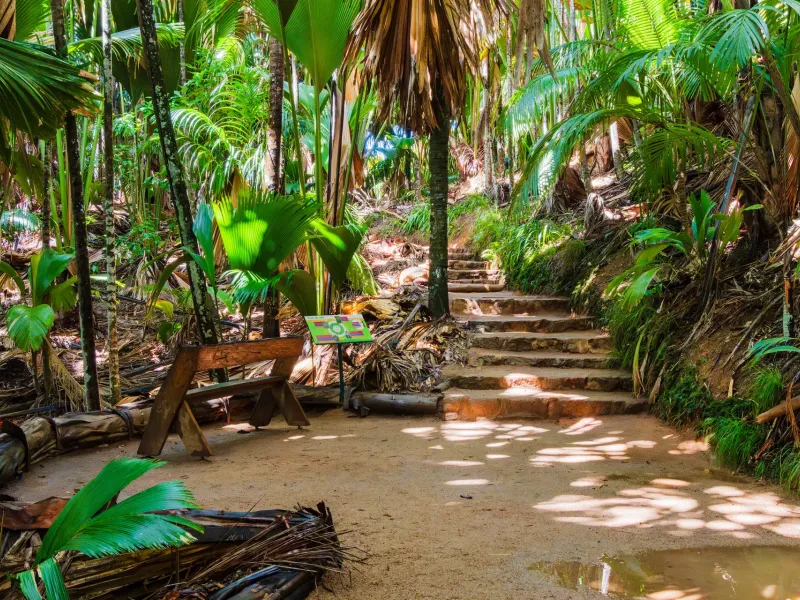
Vallée de Mai, Praslin
Nineteen and a half hectares of endemic palm forest on Praslin, inscribed by UNESCO, holding the world's largest population of coco-de-mer, which bears the largest seed in the plant kingdom. It is small enough to walk in a morning and there is almost nothing else like it. See the Vallée de Mai guide.
-
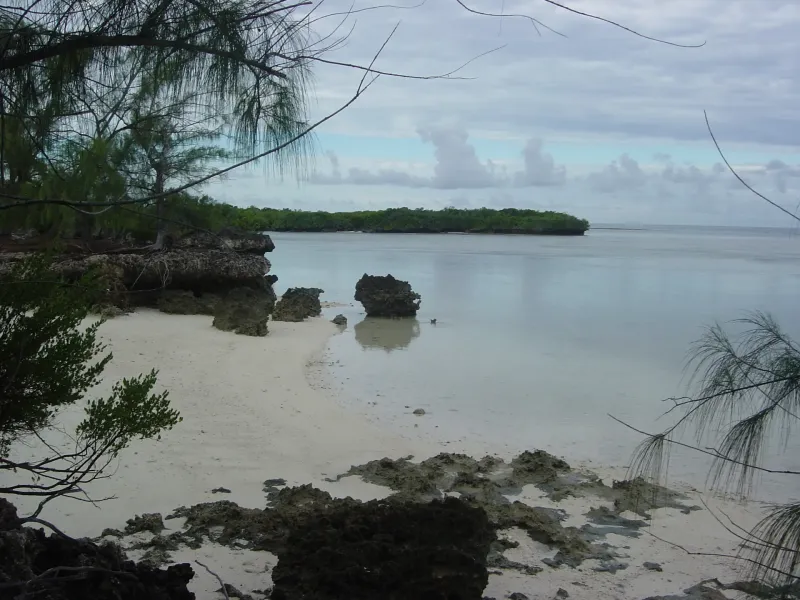
Aldabra Atoll, the Outer Islands
The second inscribed property: a raised coral atoll holding the largest giant tortoise population on earth. ⚠ It is not a destination you can book. Every visitor needs prior authorisation from the Seychelles Islands Foundation and an SIF escort at all times, and there is no airstrip, harbor or hotel. See the Aldabra guide.
-
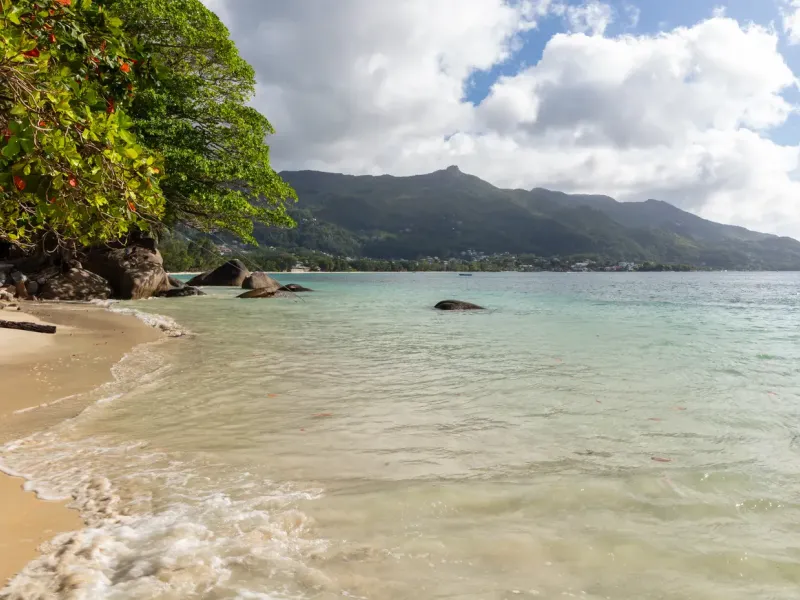
Mahé and Beau Vallon
The main island, where the airport, the capital and most of the accommodation are, and where the interior rises into forest and cloud within twenty minutes of the beach. Beau Vallon is the most popular stretch of sand in the country and can carry strong rip currents when the sea is rough. See travel safety.
-
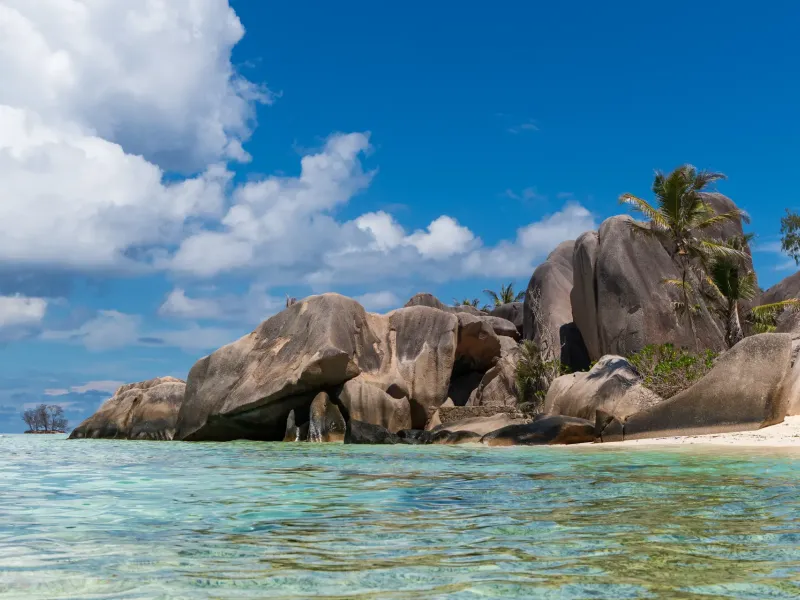
La Digue and Anse Source d'Argent
The small island that runs on bicycles, with a scattering of taxis and ox carts still in use. The granite boulders standing in shallow water at Anse Source d'Argent are the image most people carry of Seychelles. Flat along the west, steeper across the middle. See getting around.
-
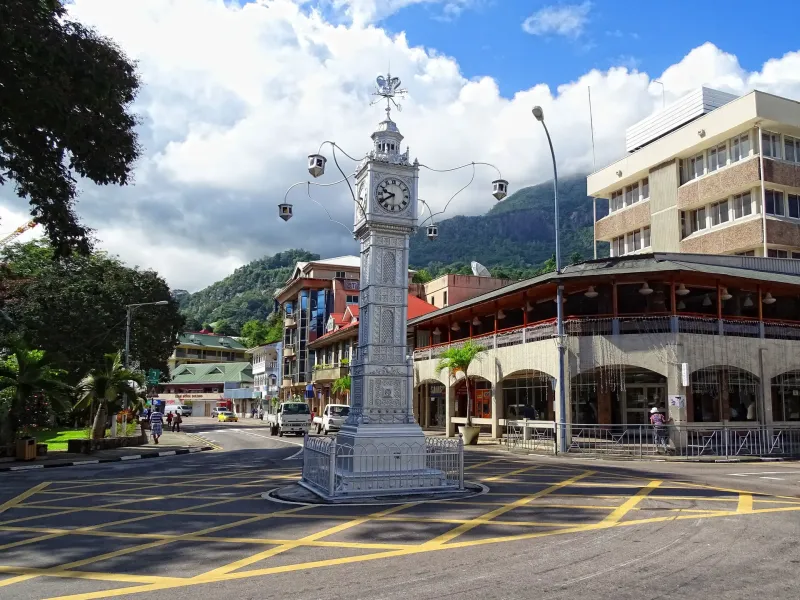
Victoria, on Mahé
One of the smallest capitals anywhere, walkable in an afternoon, with a clock tower, a cathedral, a national museum and the market that is the best hour of eating in the country. It is also where the main hospital and the immigration office are. See the food guide.
-
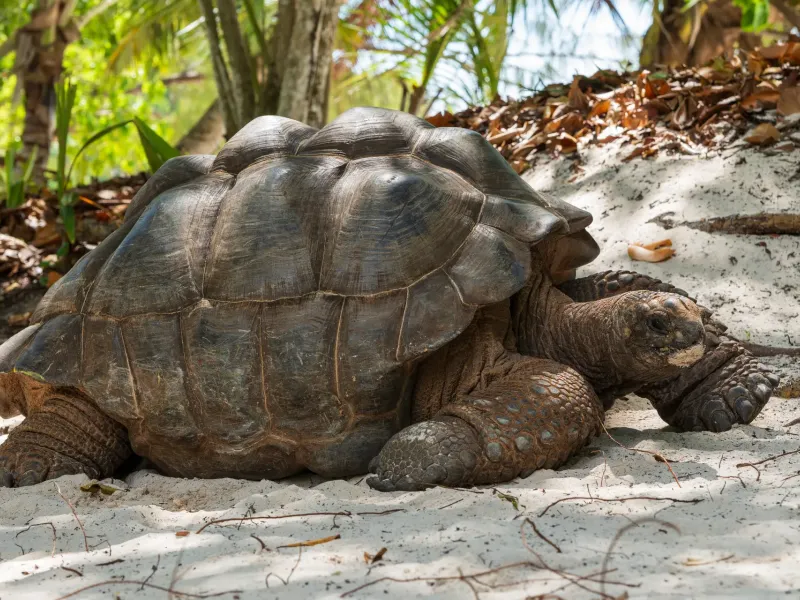
Giant Tortoises, on the Granitic Islands
You do not have to reach the outer islands to meet a giant tortoise. Animals of the same lineage live in the open on La Digue and elsewhere among the inner islands, and they are entirely unbothered by people. It is the closest most visitors come to the wildlife the country is famous for.
The guide
Explore Seychelles by Interest
Planning
Food and Culture
Heritage and History
Traveler Resources
Before you go
Planning
a trip to Seychelles
-
Best Time to Visit Seychelles
April, October and November are calmest, sitting between the two wind seasons. Every other month works too, provided you pick the right coast: the west is exposed during the northwest monsoon and the east during the southeast trades. See the best time to visit guide and the weather guide.
-
Entry, Money and Getting Around
⚠ There is no visa, but there is a travel authorisation you must obtain before you fly, and a three-month visitor's permit issued on arrival. Inside the country the ferry between Mahé, Praslin and La Digue is the backbone of any itinerary. See visa and entry requirements, currency and money and getting around.
-
Before You Book
The United States places Seychelles at Level 1, Exercise Normal Precautions, the lowest of the four levels. The two things that actually catch visitors out are the sea, which is unsafe on one coast or the other depending on the season, and a drug law that reaches life imprisonment. As a tourist you also pay for medical treatment. All of it is in the travel safety guide.
Signature experiences
Signature
Seychelles experiences
-
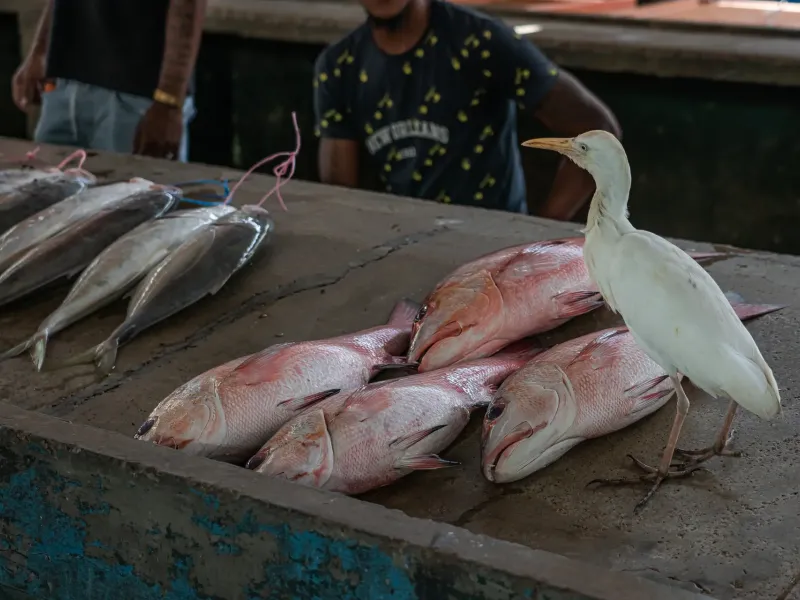
Creole cooking on a fish island
French colonial cooking, the food of enslaved Africans, and later Indian and Chinese influences, on islands where the protein is whatever came off a boat that morning. Grilled fish with Creole sauce, octopus curry, breadfruit, and the market in Victoria before any of it. Start with the food guide.
-
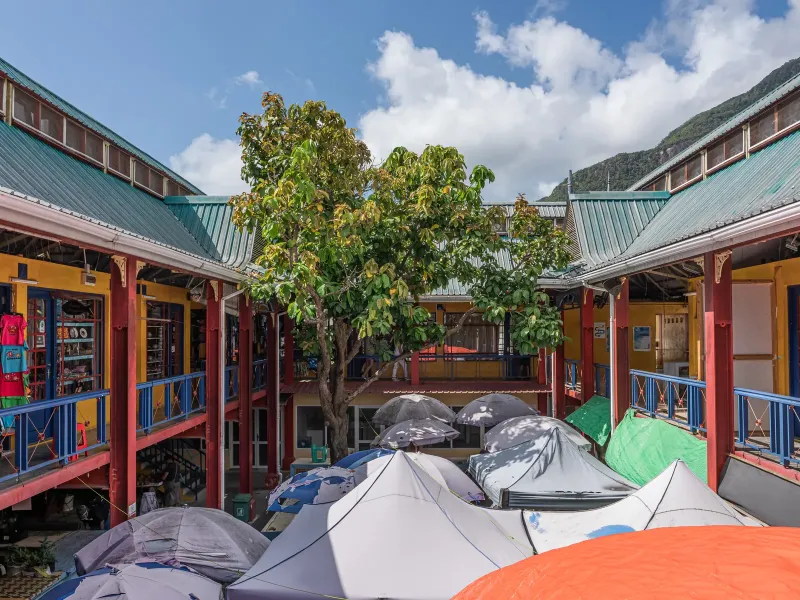
One inscribed tradition, and it is a recovery
Seychelles has a single element on UNESCO's intangible heritage lists: the Moutya, inscribed in 2021. A drum dance descended from the enslaved population, suppressed for much of the colonial period, and carrying what could not be said openly. See culture and etiquette and diaspora reconnection.
-
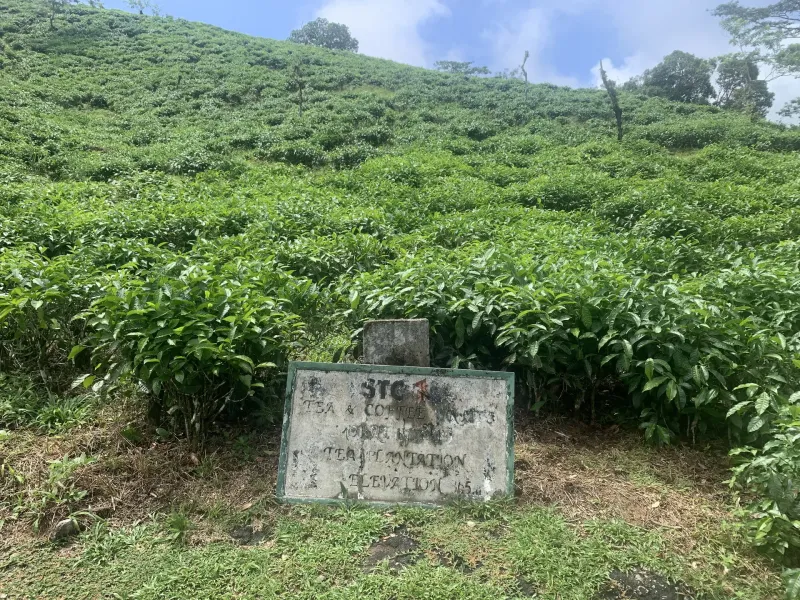
The island above the beach
The interior of Mahé rises into forest, cloud and old tea plantation, and is several degrees cooler than the coast twenty minutes below. The upland road reaches the viewpoints without a walk, which makes it the easiest way to understand the shape of the country. See accessible travel in Seychelles.
Why choose LABUSA Travel for Seychelles
We tell you which coast is the calm one
The single most useful fact about this country is that the safe side of an island changes with the season. We plan around it instead of booking a photograph and hoping, and we say so on every page where it matters.
We do not sell you Aldabra
It is the famous one and it is effectively unreachable, and a company that implies otherwise is either misinformed or counting on you not checking. We tell you what the Seychelles Islands Foundation actually requires, and then we plan the trip you can take.
We settle the insurance question first
Visitors pay for medical treatment here, and you may be asked for proof of cover at the airport. That is a conversation to have before booking rather than at a desk.
Group travel is what we do
Family groups, church and community groups, heritage and reunion travel. We handle the arrangements that get harder with numbers rather than easier.
Common questions
Seychelles Travel FAQs
- Do I need a visa for Seychelles?
- No. Seychelles does not issue tourist visas. What it requires is a travel authorisation, which you apply for online before you fly, and which the airport cannot issue for you on the day. On arrival you are given a visitor's permit for three months, free for those three months, extendable in three-month blocks to a maximum stay of twelve months. This catches people out precisely because searching for a visa returns nothing.
- When is the best time to visit Seychelles?
- April, October and November are the calmest, because they sit between the two wind seasons and the sea settles on both coasts at once. But there is no bad month here. From December to March the east coast is the sheltered side, and from May to September the west coast is. Choosing the right coast for the month matters more than choosing the month.
- Can I swim anywhere?
- No, and this is the most useful safety fact about the country. The west coast is generally unsafe during the northwest monsoon, around December to March, and the east coast is generally unsafe during the southeast winds, around May to September. The beaches at the southern tip are not suitable at any time of year. Beau Vallon and other beaches can carry strong rip currents when the sea is rough, there are few lifeguards, and beaches do not always carry warning signs. Ask locally which side is calm that week.
- Is Seychelles safe to visit?
- By the standards of this region it is a straightforward destination, and neither the United States nor the United Kingdom warns against travel to any part of it. Crime is generally non-violent and opportunistic, and the places named are parked cars, guest houses, beaches and walking trails. The current advisory position, with its date and its source, is on the travel safety guide, which is where we keep anything that can change.
- How many World Heritage Sites does Seychelles have?
- Two. The Vallée de Mai on Praslin is 19.5 hectares of endemic palm forest holding the world's largest population of coco-de-mer, which bears the largest seed in the plant kingdom. Aldabra Atoll is a raised coral atoll in the outer islands with the largest giant tortoise population on earth. One of them you can walk in a morning. The other you almost certainly cannot visit at all.
- Can I visit Aldabra?
- Realistically, no. Aldabra is a Special Reserve managed by the Seychelles Islands Foundation, which requires prior authorisation from every visitor, limits access to specific areas and requires an SIF staff escort at all times. SIF organizes no tourist trips. The atoll has no airstrip, no harbor or jetty, no helipad, no hotel and no guesthouse, and it lies more than a thousand kilometers from Mahé, so anyone who goes sleeps aboard the vessel that brought them. Giant tortoises of the same lineage live in the open on the granitic islands.
- Do I have to pay for medical treatment?
- Yes. As a tourist you pay, and that is the plain position rather than a caveat. It is why travel insurance here is a financial instrument rather than a box to tick, why the policy should cover unexpected medical evacuation as well as treatment, and why you may be asked to show proof of it when you arrive. The main hospital is at Mont Fleuri in Victoria on Mahé, with local health centers elsewhere.
- What language will I need?
- English. It is one of three official languages and the one used in government, law and business, and you can travel comfortably in it everywhere. Seychellois Creole is what people actually speak to one another and is a language in its own right rather than a dialect of French. French is widely understood and used in the media.
- Can I take a coco-de-mer nut home?
- Only with the paperwork. The coco-de-mer is a protected species, and a nut that may lawfully leave the country comes with an official permit and certificate from a licensed vendor. Expect to declare it. Do not buy one without that paperwork and do not pick anything up off the forest floor, because the rules are the reason the species still exists in the wild.
- How do I get between the islands?
- Most trips use Mahé, Praslin and La Digue. The scheduled catamaran ferry is how most people move and it is the backbone of any itinerary here. There is also a short domestic flight between Mahé and Praslin, which costs more, carries less baggage and is the reliable option when the sea is up. Build a spare day in before your flight home: distant weather can put swell on a route under a clear sky and cancel a crossing.