An archipelago with no first people
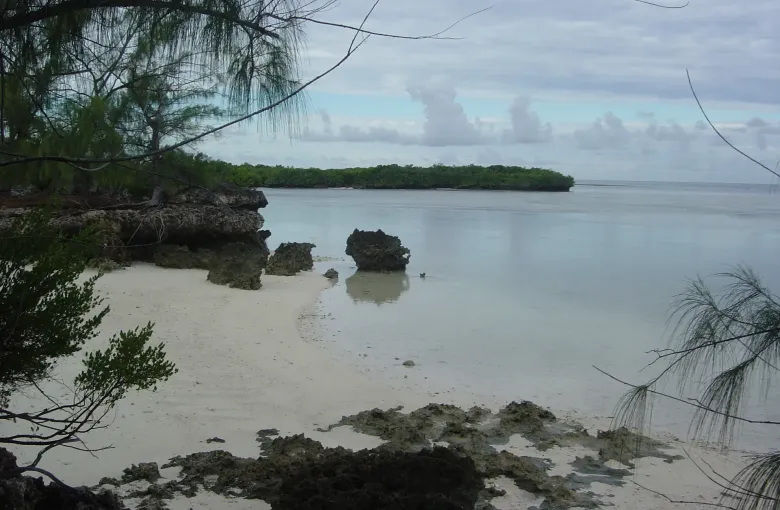
Seychelles had no indigenous population. The islands were uninhabited until the eighteenth century, when French settlement began and enslaved Africans were brought to work the land. That is the founding fact, and it makes Seychelles different from almost everywhere else a reconnection journey leads: there is no prior people whose land this was, and every family here begins with an arrival.
Two African arrivals, not one
The first is the one people expect: enslaved people brought from the East African mainland and Madagascar during the French and early British periods.
The second is less widely known and is central to Seychellois identity. After Britain abolished the slave trade, Royal Navy patrols intercepted slaving vessels in the western Indian Ocean and landed the people aboard them in Seychelles as liberated Africans. They arrived through the nineteenth century, in significant numbers relative to the size of the islands, and their descendants are a large part of the population today.
That second arrival is why the Creole culture here is more African in its substance than the French surface of the language suggests.
⚠ The Moutya is the most direct connection available
The Moutya, inscribed by UNESCO in 2021 and the country's only element on the intangible heritage lists, descends directly from the enslaved population. It is danced at night to a goatskin drum heated over a fire, and its lyrics historically carried grievance and commentary that could not be spoken openly.
It was suppressed under colonial rule and remained marginal well afterward. Its recent inscription is an act of recovery rather than a curation of something safely historical, which is why the difference between a community Moutya and a hotel performance is worth asking about. See Seychelles Culture and Etiquette Guide.
What the records will and will not support
We will not overstate this. Seychelles has national archives and church registers, and the liberated African arrivals were administrative events, so some of them generated paperwork that slavery itself did not. But there is no searchable public register of the kind a visitor might hope for, and the practical route is an approach to the National Archives in Victoria, made in advance rather than on the day, with whatever your family already holds.
Compare this honestly with Aapravasi Ghat in Mauritius, where the contractual nature of indenture produced records of a completeness that has no equivalent here. Different system, different paper trail.
What a reconnection journey here can offer
- Language. Kreol Seselwa is the everyday language of the whole country and is an African-inflected creole rather than a colonial remnant.
- The Moutya, sought out as a community occasion.
- Victoria, and the museum and archives that hold what documentation exists.
- The ordinary. A market, a Sunday, a meal. In a country this small the culture is not behind glass.
How to approach it
Go slowly and through people. Write ahead. Accept that the answer may be that the record does not exist, which is itself a finding about how this history was kept rather than a failure of your search. See Seychelles Festivals and Celebrations for when the living tradition is most likely to be happening.
Sources
- UNESCO Intangible Cultural Heritage: Seychelles's single inscribed element, the Moutya, inscribed in 2021. Accessed 14 September 2026.
- UNESCO World Heritage Centre: Seychelles's State Party record and its two inscribed properties. Accessed 14 September 2026.
- UK Foreign, Commonwealth & Development Office: Seychelles travel advice, which warns against travel to no part of the country. Accessed 14 September 2026.
Other Articles
Seychelles Culture and Etiquette Guide
Seychelles Festivals and Celebrations