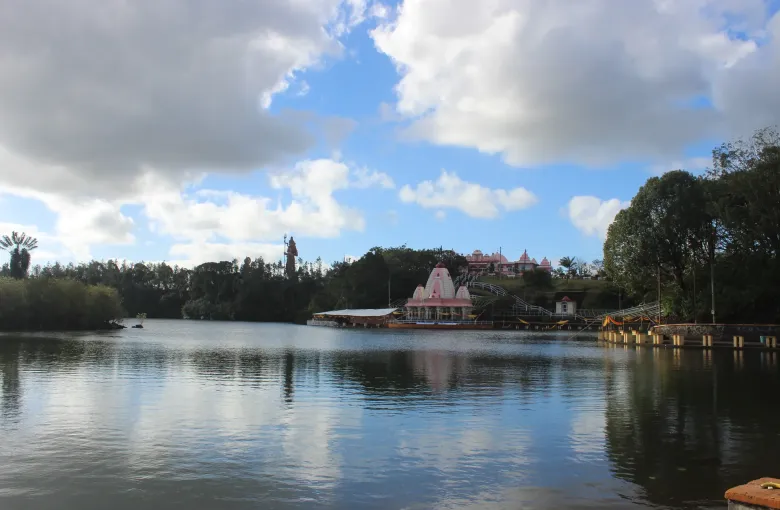
What it is
Aapravasi Ghat stands on the bay of Trou Fanfaron in Port Louis. UNESCO inscribed it in 2006, and its description is precise: the remains of an immigration depot, and the site from where the modern indentured labor diaspora emerged.
The depot was built in 1849 to receive indentured laborers from India, Eastern Africa, Madagascar, China and Southeast Asia to work on the island's sugar estates, as part of what was called the Great Experiment.
What the Great Experiment was
After the abolition of slavery, the British government set out to test whether plantation economies could be run with contracted labor rather than enslaved labor. Mauritius was the first place it was tried at scale, and Aapravasi Ghat was the door through which the people arrived.
The system that followed carried millions of people across the Indian Ocean, the Caribbean and the Pacific over the following decades. Almost every indentured diaspora in the world has a line running back through this bay.
What survives
It is a modest site physically, and that catches visitors out. What remains is a fragment of the depot: stone steps up from the water, the remains of buildings, hospital block foundations, and the paving that the arrivals walked on. The scale is small; the significance is not.
The interpretation center carries the explanation, the documents and the context, and it is what turns a set of walls into a place you understand. Allow time for it rather than photographing the steps and leaving.
⚠ If you are tracing ancestry
This is the one site in this cluster that can serve a genealogical purpose, and expectations should be set carefully.
- Extensive records of indentured arrivals were kept, including names, origins, ages and estate assignments, and they are the reason so many families can trace a specific ancestor.
- Access to those records is through the relevant Mauritian institutions rather than over the counter at the site, and it is a research process rather than a lookup.
- Write ahead. Arriving with a family name and a hope is far less productive than arriving with an appointment.
- Spellings were transcribed by clerks working across several languages. Expect variants, and take every version you know of.
See Mauritius and Diaspora Reconnection.
Visiting
- Where. Central Port Louis, near the waterfront, walkable from the Caudan area.
- How long. An hour to ninety minutes, more with the interpretation center and more again if you have a research interest.
- Combining it. Port Louis's central market and the waterfront are both close, and the contrast between the three is the point.
- Take care with belongings. The FCDO names Port Louis among the areas where petty crime is common, and advises against walking alone at night in the backstreets of the business district. See Mauritius Travel Safety Guide.
The date to know
2 November is the national commemoration of the Arrival of Indentured Labourers, and the site is its focus. If your visit coincides, go.
Why it belongs beside Le Morne
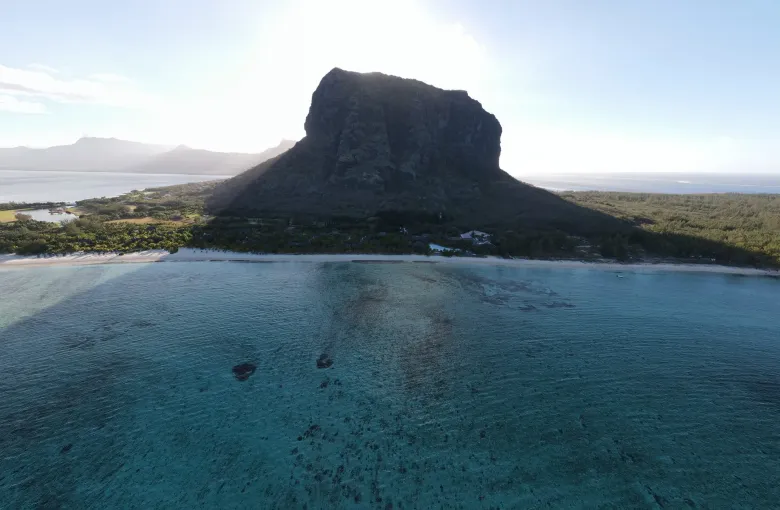
Mauritius has exactly two World Heritage properties and they are the two halves of one story. Le Morne is inscribed for the resistance of enslaved people; Aapravasi Ghat for the system that replaced slavery. Visiting one without the other gives you half the island.
Sources
- UNESCO World Heritage Centre: the inscription of Aapravasi Ghat, the immigration depot from which the modern indentured labor diaspora emerged. Accessed 14 September 2026.
- UNESCO World Heritage Centre: Mauritius’s State Party record and its two inscribed properties. Accessed 14 September 2026.
- UNESCO Intangible Cultural Heritage: Mauritius’s four inscribed elements: Traditional Mauritian Sega, Sega tambour of Rodrigues Island, Bhojpuri folk songs known as Geet-Gawai, and Sega tambour Chagos. Accessed 14 September 2026.
- UK Foreign, Commonwealth & Development Office: Mauritius safety and security: crime, the accommodation-registration advice, drug law, police investigations and the decriminalization of same-sex sexual activity in October 2023. Accessed 14 September 2026.
Other Articles
Mauritius and Diaspora Reconnection
Le Morne Cultural Landscape: Visitor and Heritage Guide