Two diasporas, one island
Most destinations that matter to a returning traveler carry one story. Mauritius carries two, and they run a generation apart on the same island.
The first is slavery, and its monument is Le Morne Cultural Landscape. The second is indenture, the system that replaced slavery, and its monument is Aapravasi Ghat. Both are inscribed by UNESCO. Between them they account for almost everyone who lives here.
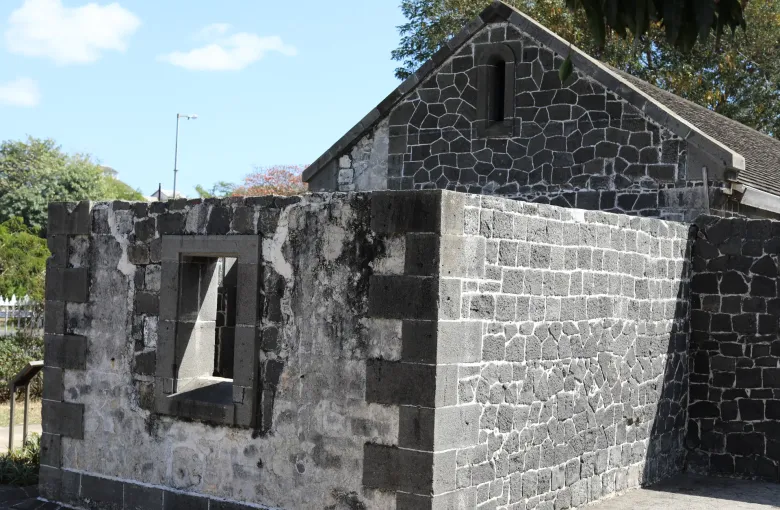
What Aapravasi Ghat actually is
UNESCO describes Aapravasi Ghat, on the bay of Trou Fanfaron in Port Louis, as the remains of an immigration depot and the site from which the modern indentured labor diaspora emerged.
The depot was built in 1849 to receive indentured laborers from India, eastern Africa, Madagascar, China and Southeast Asia, to work on the island’s sugar estates as part of what the British government called the Great Experiment. It followed the abolition of slavery in the British Empire in 1834, and it was meant to demonstrate that free labor outperformed enslaved labor in the plantation colonies.
It worked, in the sense its architects intended, and that is why the site matters far beyond Mauritius. Other colonial powers adopted the model from the 1840s onward. UNESCO records the result as a worldwide migration of more than two million indentured laborers, of whom Mauritius alone received almost half a million. Aapravasi Ghat is the sole surviving example of the system that moved them.
The single most affecting thing on the site is a flight of fourteen steps. UNESCO calls it highly symbolic: every immigrant had to set foot on it before entering the depot. Less than half of the depot area that stood in 1865 survives, and a road now cuts across the setting, but the steps, the immigrant sheds, the kitchens and the hospital block are still there.
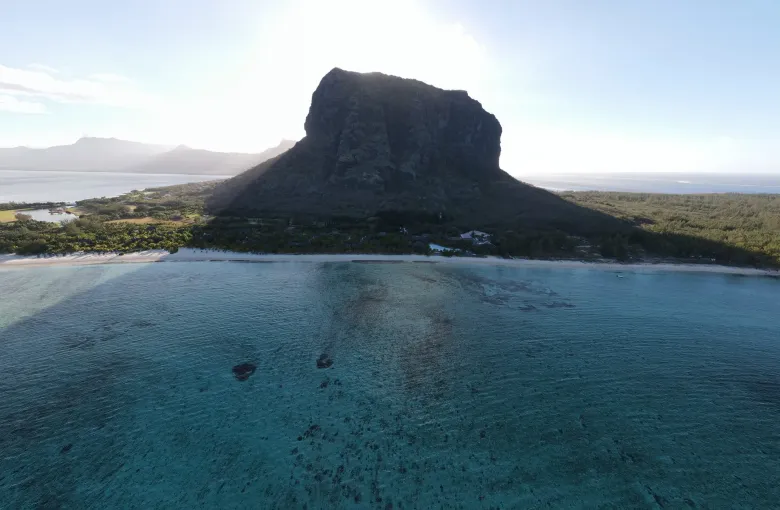
What Le Morne actually is
Le Morne Brabant is the basalt mountain at the southwestern corner of the island. Through the eighteenth century and the early years of the nineteenth, people escaping slavery, the maroons, sheltered in its caves and on its summit, protected by cliffs that were wooded, isolated and close to unclimbable.
UNESCO’s statement of Outstanding Universal Value says the oral traditions attached to those maroons have made the mountain a symbol of the enslaved people’s fight for freedom, their suffering and their sacrifice. It also makes the point that concerns a visitor with ancestry elsewhere: that symbolism has relevance to every place the enslaved came from, namely the African mainland, Madagascar, India and Southeast Asia.
Mauritius was an important stopover in the eastern slave trade, and it came to be known as the Maroon republic for the number of escaped people who lived on the mountain.
Where the living culture is
Neither site is only archaeology. UNESCO has inscribed four intangible heritage elements from Mauritius, and each one descends from one of the two diasporas:
- Traditional Mauritian Sega (2014). The music and dance of the enslaved population and their descendants. It is the direct cultural line from Le Morne.
- Bhojpuri folk songs in Mauritius, Geet-Gawai (2016). Sung at weddings by women of Bhojpuri-speaking families, carried from northern India through the depot.
- Sega tambour of Rodrigues Island (2017), a distinct tradition of the island that forms part of Mauritius.
- Sega tambour Chagos (2019), inscribed on the Urgent Safeguarding List, and belonging to the Chagossian community.
See Mauritius Festivals and Celebrations for when these are performed rather than staged, and Mauritius Culture and Etiquette Guide for how the island’s communities coexist in practice.
If you are tracing a specific family connection
Mauritius is unusual, and genuinely hopeful, on this point. Because indenture was a contractual system, it generated paperwork in a way that slavery did not: names, ages, villages of origin, ships and dates were recorded at the depot. That is the opposite of the situation in most places a reconnection journey leads.
We will not tell you what any particular record contains, or promise that a given name can be found. Approach the institution that holds the archive at Aapravasi Ghat directly, in advance of your trip rather than on the day, and ask what is searchable and what is needed to search it. Bring whatever your family already has, however fragmentary: a ship name, a district, a spelling.
For descendants of the enslaved rather than the indentured, the honest position is the usual one. The records are thin, Le Morne is a landscape rather than a register, and what a visit offers is place, oral tradition and living practice.
How to approach the two sites
- Give Aapravasi Ghat a morning and go with an interpreter or a guide. The site is small, and almost everything it means is carried in what you are told rather than in what is left standing.
- Do not treat Le Morne as a hike to be completed. The mountain is a memorial. Many people who come for the history stop at the interpretation and the viewpoints, which is a whole day and not a lesser one.
- Go in the cooler months if you have the choice. See Best Time to Visit Mauritius.
- Both sites reward slow time, so build the trip around them rather than adding them to a beach week. See Getting Around Mauritius.
For the practical side of a longer, slower stay, see Accessible Travel in Mauritius and Mauritius for Senior Travelers.
Sources
- UNESCO World Heritage Centre: Mauritius’s State Party record and its two inscribed properties. Accessed 14 September 2026.
- UNESCO World Heritage Centre: the inscription of Aapravasi Ghat, the immigration depot from which the modern indentured labor diaspora emerged. Accessed 14 September 2026.
- UNESCO World Heritage Centre: the inscription of Le Morne Cultural Landscape and its statement of Outstanding Universal Value on maroonage. Accessed 14 September 2026.
- UNESCO Intangible Cultural Heritage: Mauritius’s four inscribed elements: Traditional Mauritian Sega, Sega tambour of Rodrigues Island, Bhojpuri folk songs known as Geet-Gawai, and Sega tambour Chagos. Accessed 14 September 2026.
Other Articles
Aapravasi Ghat: Visitor and Heritage Guide
Le Morne Cultural Landscape: Visitor and Heritage Guide