A calendar that tells you who lives here
Mauritius observes Hindu, Muslim, Christian and Chinese festivals as public holidays, and the dates move with four different calendars. Confirm the year's dates locally rather than assuming: only the two fixed national commemorations below sit on the same day every year.
Thaipoosam Cavadee
Usually January or February. Tamil devotees carry the cavadee, a decorated wooden arch, in procession to a temple, many after a period of fasting and many with piercings. It is the most visually extraordinary public observance in Mauritius.
It is also a religious act of penance rather than a parade. Watch from the edge, ask before photographing anyone, and do not step into the procession.
Maha Shivaratri and the walk to Ganga Talao
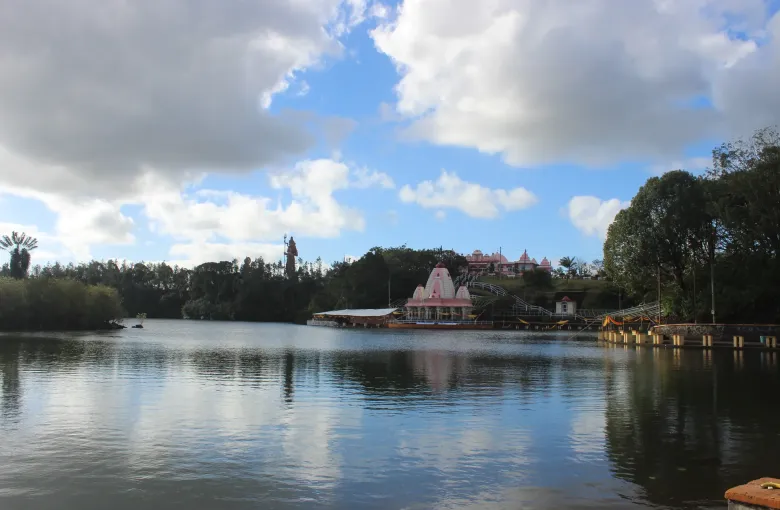
Usually February or March, and the largest observance of the year. Pilgrims walk, many for several days and many barefoot in white, to Ganga Talao, the sacred crater lake in the uplands, carrying kanwars, decorated wooden structures.
Practical consequences for a visitor: roads across the island carry pilgrims on foot for days beforehand, driving takes far longer, and the area around the lake is extremely busy. Drive with great care, or do not drive. Many Mauritians observe a vegetarian diet in the period beforehand and restaurants reflect that. See Mauritius Food Guide.
Divali
Usually October or November. Houses, streets and shopfronts are lit with lamps, and it is the most welcoming festival of the year for an outsider: people give sweets to neighbors regardless of religion, which on this island means across every community.
Eid al-Fitr
Marking the end of Ramadan. During Ramadan itself, Muslim-run restaurants adjust their hours. Eid is a public holiday and a family occasion.
Chinese Spring Festival
Usually late January or February, centered on Chinatown in Port Louis: lion dances, firecrackers and wax cakes. The Sino-Mauritian community is small and its festival is a national one.
⚠ The two commemorations that matter most here
These are not celebrations, and they connect directly to the island's World Heritage.
- 1 February, Abolition of Slavery. Commemorated at Le Morne, the mountain UNESCO inscribed as an exceptional testimony to maroonage and to the resistance of escaped slaves.
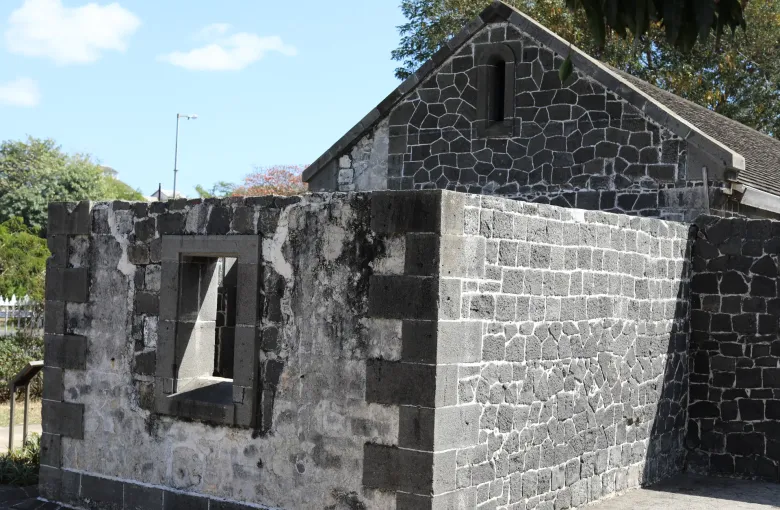
- 2 November, Arrival of Indentured Labourers. Commemorated at Aapravasi Ghat, the depot from which, in UNESCO's words, the modern indentured labor diaspora emerged.
If your visit falls on either date, going is worthwhile and behaving as you would at a memorial is the whole of the etiquette.
Sega
Sega is not a festival but it is where you will meet it. Traditional Mauritian Sega and Sega tambour of Rodrigues Island are on UNESCO's Representative List, and Sega tambour Chagos is on the Urgent Safeguarding List, carried by the Chagossian community in Mauritius. A beachside performance at a hotel is a real form performed commercially; a village or community sega is a different experience, and worth asking about. See Mauritius Culture and Etiquette Guide.
Planning around it all
Public holidays close offices and banks and make roads busy. None of them makes a bad week to visit, and several make an exceptional one. For the weather side of the same question see Best Time to Visit Mauritius.
Sources
- UNESCO Intangible Cultural Heritage: Mauritius’s four inscribed elements: Traditional Mauritian Sega, Sega tambour of Rodrigues Island, Bhojpuri folk songs known as Geet-Gawai, and Sega tambour Chagos. Accessed 14 September 2026.
- UNESCO World Heritage Centre: the inscription of Aapravasi Ghat, the immigration depot from which the modern indentured labor diaspora emerged. Accessed 14 September 2026.
- UNESCO World Heritage Centre: the inscription of Le Morne Cultural Landscape and its statement of Outstanding Universal Value on maroonage. Accessed 14 September 2026.
- UK Foreign, Commonwealth & Development Office: Mauritius safety and security: crime, the accommodation-registration advice, drug law, police investigations and the decriminalization of same-sex sexual activity in October 2023. Accessed 14 September 2026.
Other Articles
Mauritius Culture and Etiquette Guide
Aapravasi Ghat: Visitor and Heritage Guide