
Why visit
Why visit India?
India dazzles with the marble majesty of the Taj Mahal, the rituals along the Ganges in Varanasi, and the serene houseboat cruises through Kerala’s backwaters. Discover bustling bazaars in Delhi, temple carvings in Khajuraho, and Himalayan monasteries in Ladakh. Every region offers something unique: from Ayurveda to Bollywood, spice trails to textile tours. Amid this rich diversity, the Siddi communities in Gujarat, Karnataka, and Maharashtra preserve African-influenced music, dance, and oral history. Descended from East Africans brought centuries ago through trade, they embody a powerful story of cultural fusion, spiritual resilience, and African presence in South Asia, offering diaspora travelers an extraordinary, unexpected connection.
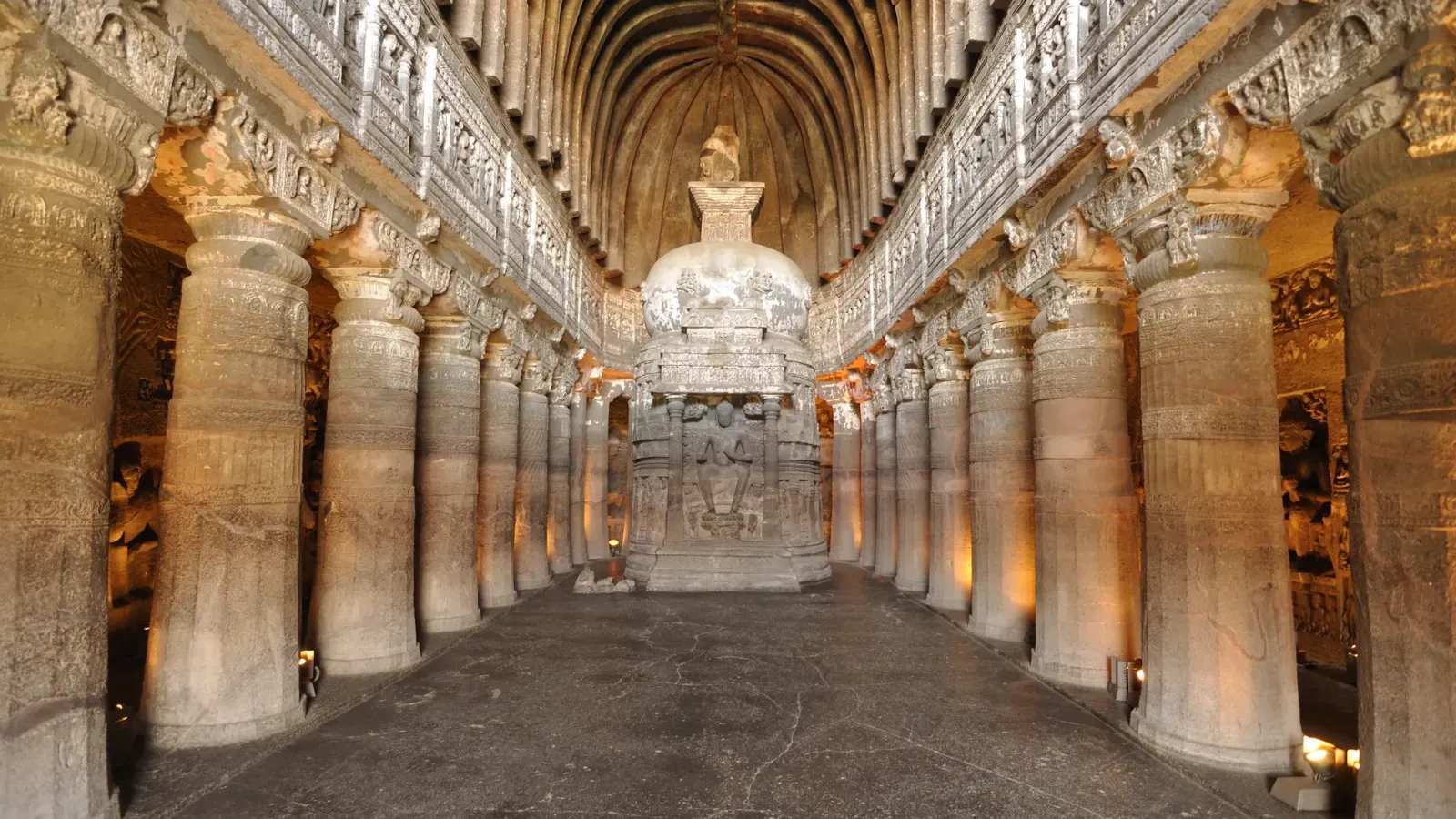
Top places to visit
Popular Attractions
in India
-
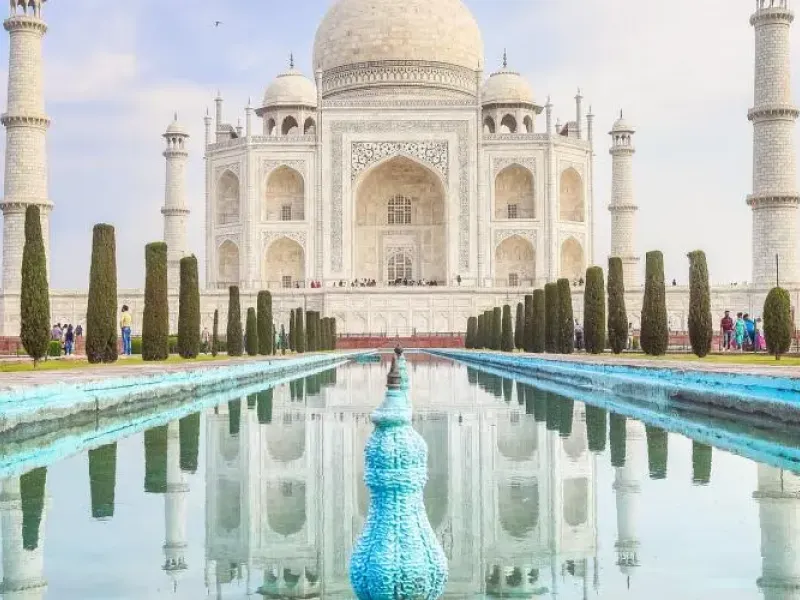
Taj Mahal
An eternal symbol of love and a UNESCO World Heritage Site, the Taj Mahal is India's most iconic monument. This white marble mausoleum in Agra blends Persian, Islamic, and Indian architectural styles, and is best viewed at sunrise or sunset when its hues shift dramatically.
-

Jaipur: The Pink City of Rajasthan
Jaipur enchants visitors with its blend of regal history and vibrant street life. Explore the opulent Amber Fort, stroll through the geometric wonder of the Hawa Mahal (Palace of Winds), and shop for hand-crafted jewelry and textiles in the city’s colorful bazaars. It’s a living museum of royal heritage and artistic craftsmanship.
-
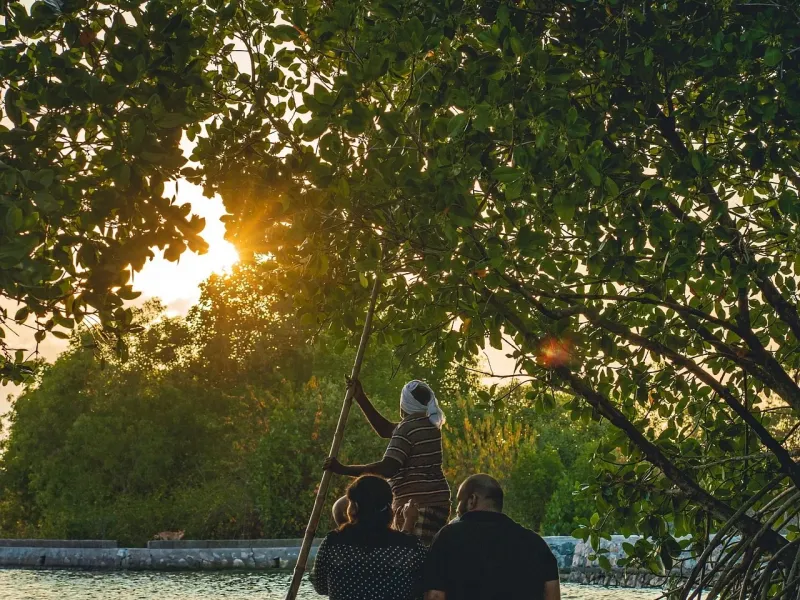
Kerala Backwaters
Float through the serene palm-fringed waterways of Kerala aboard a traditional houseboat. This tranquil experience offers a window into rural life in South India, with stops at coconut plantations, local temples, and spice gardens. Kerala’s Ayurvedic traditions and culinary delights make it a holistic wellness destination.
The guide
Explore India by Interest
Planning
Food and Culture
Heritage and History
Traveler Resources
Deep Expertise
Our travel team collaborates with knowledgeable local partners across India to ensure culturally respectful, safe, and enriching travel experiences. From selecting seasoned guides to securing access to off-the-beaten-path experiences, LABUSA Travel ensures you travel deeper, not just wider.
Purpose-Driven Travel
We help you design a journey that aligns with your interests, whether that’s meditation in the Himalayas, tracing Indo-African heritage in coastal communities, or participating in a heritage cooking class. Every itinerary is tailored to encourage understanding, transformation, and joy.
Affordable Luxury & Authentic Moments
Enjoy India’s splendor in style, with options ranging from restored heritage havelis to serene wellness resorts and boutique city stays. Our packages balance comfort with cultural immersion, so you experience both the richness of India and the warmth of its people.
Common questions
India Travel FAQs
- Do I need a visa to visit India?
- Almost certainly yes, and that single word is what separates India from every other destination in this batch. Whether a visa is required of you is decided by the passport you hold, so the binding answer belongs to your own government and to the Indian mission that serves you. What this cluster can tell you is the shape of the rule India applies. The UK Foreign, Commonwealth and Development Office, whose entry advice is written for British passport holders and is attributed as such throughout this site, states that you must have a visa to visit India unless you are an Overseas Citizen of India cardholder. Read that against the rest of the region before you assume anything. Several countries within a few hours of here admit a visitor for a month or more on arrival with no document obtained in advance, and a habit formed on one of those trips is the most expensive assumption available at this border, because it is discovered at an airline check-in desk rather than at immigration. An Overseas Citizen of India cardholder enters without a visa on a valid card and a valid passport, and the same advice records that an electronic version of the card launched in June 2026. Who may hold one, and on what ancestry, is carried by no source this cluster cites, so no page here states it; that question belongs with the Indian Bureau of Immigration or with the mission handling the application. One more thing to settle before you book. The e-arrival card described further down this page is not a visa, and it does not replace one.
- How long does my passport need to be valid, and how many blank pages does it need?
- The entry advice this cluster cites states that your passport must be valid for at least 6 months after the date you arrive in India and must have at least 2 blank pages. Both halves matter and the second is the one that strands people. A passport with years left on it and a full visa section fails this requirement while looking perfectly fine in a drawer, and it is not a thing anybody checks by habit. Count the six months forward from your arrival date rather than from the day you book, because a trip planned far enough ahead can slip under the line while nothing about the document changes. Then open it and count the empty pages. The other three destinations in this batch publish a validity period and none of them publishes a blank-page requirement, so a traveler moving through the region on one passport can satisfy three borders and be turned away at the fourth. If you are short of either, the replacement has to happen before the visa application rather than after it, because the visa is issued against the passport number you apply with. An American passport holder should take questions about their own document to the U.S. Department of State and questions about the Indian requirement to the Indian mission handling the application.
- What is the e-arrival card, and do I have to register with anyone after I arrive?
- The e-arrival card is an online form, and the first thing to know about it is what it is not. The entry advice this cluster cites states that it is completed online up to 72 hours before arrival and that it is not a visa. Those two facts belong together, because the seventy-two hour window is the same one a neighboring country uses for its own arrival card, and on that neighbor the card is the whole of the paperwork. Here it sits on top of a visa you already hold. Complete it inside the window rather than when you book, and use the official government service only, because a search will surface intermediaries charging a fee for something that is free. The second half of this question is the part visitors do not expect, because it starts after you land. The same advice records that accommodation providers must register foreign guests with the Foreigners Regional Registration Office, which is why a hotel or a guesthouse will ask for your passport and your visa at check-in and why a stay arranged privately still has to be registered by whoever is hosting you. It also records that a stay of more than 180 days without an Overseas Citizen of India card must be registered within 14 days of arrival. Fourteen days is a short deadline against a long trip, and it runs from the day you arrive rather than from the day you pass the 180 day mark. If you lose your passport in India, the same page records that a special exit permit takes between 5 and 15 working days, so build that into any thinking about a replacement rather than assuming a same-week departure.
- How much cash can I bring into India?
- There are two thresholds rather than one, and quoting either of them alone misstates the rule. The entry advice this cluster cites states that amounts above 5,000 US dollars in notes, or above 10,000 US dollars in notes and travelers checks combined, must be declared on arrival. The figures do different work. The lower one governs banknotes on their own; the higher one governs the total once other instruments are added in. A reader who remembers only the higher figure will walk past a declaration they owed, and a reader who remembers only the lower one will make a declaration that was never required of them. Why this page is emphatic about it is worth stating. Both of the countries next door on this site answer the money question differently: one publishes a single flat figure with a named penalty and the other publishes nothing at all and says so on its own page. The higher of the two numbers above therefore now appears in two clusters of this batch meaning two different things, which is exactly the shape a carried sentence takes. If you are moving a significant sum, take the question to Indian Customs before you travel rather than working from a travel page. For an ordinary holiday none of this arises. Cards are accepted widely in cities and in anything aimed at visitors, and the Indian rupee is what small shops, auto-rickshaws and market stalls actually want, in small denominations.
- What is the emergency number in India?
- Dial 112. The advice this cluster cites gives the emergency services in India as 112 for ambulance, fire and police, gives a police helpline separately on 100, and gives a women helpline on 1091. There is also an Indian Ministry of Tourism helpline on 1800 11 1363, which is the right number for a lost passport or a dispute with an operator and the wrong one for anything happening now. Save 112 first and 100 second, and write both somewhere that does not depend on a charged battery. Now the warning that matters more than the numbers, because this is the most dangerous fact on this page. A traveler arriving from elsewhere in the region will have learned a different set, and one of the numbers they learned is 112, which works in at least one of the countries next door as well. A number that has already worked once feels verified, so the whole set gets carried across the border, and the rest of that set reaches nobody here. Learn this pair on its own terms rather than adapting a neighbor. One further point, and it belongs with the emergency numbers rather than with the trekking pages, because it is the sentence that changes what a rescue looks like. The safety advice records that there are no commercial mountain rescue services operating above 3,000m. Anyone going high should read that as a statement about how long help takes rather than as a statement about whether it exists, and should check that their travel insurance covers the altitude they are actually going to.
- Are there parts of India the official advice says not to visit?
- Yes, and they are specific rather than general. The UK Foreign, Commonwealth and Development Office advises against all travel to parts of India, including within 10km of the India to Pakistan border and the Union Territory of Jammu and Kashmir, except travel by air to and within the city of Jammu. It also advises against all but essential travel to the state of Manipur, where the regional advice records that violent ethnic clashes broke out. Read the exception as carefully as the advisory. The city of Jammu is expressly outside the advice against travel when reached and left by air, so a page that repeats the advisory without the carve-out misdescribes a city the source itself excludes, and a page that mentions the carve-out without the advisory sends a reader into a Union Territory where their travel insurance is very likely void. Both halves always travel together. Two more things belong here. The regional advice records that the Wagah to Attari border crossing is closed, which matters to anyone who had a land crossing to Pakistan in mind. And it records that a Naxalite insurgency affects several central and eastern states, which is a risk distributed across districts rather than concentrated in a city and is the kind of thing an itinerary can wander into without anybody naming it. This is also the standing position of the source: no travel can be guaranteed safe, and appropriate travel insurance is what makes a bad day survivable. Check the current advice yourself before you book and again before you fly, because these listings change.
- Is India safe for women traveling alone?
- The honest answer is that the official advice raises this specifically rather than leaving it to general safety guidance, and this page repeats what it says rather than softening it. The safety advice this cluster cites records that British women have been victims of sexual assault, and advises travelers to avoid isolated areas, including beaches, when alone at any time of day. That last clause is the one to read twice. It does not say after dark. It says at any time of day, which is a broader statement than the equivalent advice for most destinations on this site, and it is the sentence a page recasting this as ordinary vigilance would quietly lose. The practical consequences follow from it rather than from a general instruction to stay alert. Arrange arrivals into unfamiliar places in daylight where the schedule allows it. Prefer accommodation and transport booked through a named operator over something arranged at the roadside. Treat an isolated stretch of beach or a quiet stretch of ruins as a place to visit in company rather than alone, including in the middle of the day. Share your itinerary with somebody who will notice if it changes. The women helpline is 1091 and the emergency number is 112, and both are worth saving before you need either. None of this is a reason not to travel here, and a great deal of this cluster is about why people do. It is a reason to plan the day differently than you might elsewhere, on the strength of what the source actually says rather than what a travel page finds comfortable to print.
- Can I bring a satellite phone, a GPS device or a vape into India?
- No on all three, and the first two carry a clause that reaches people who never intend to enter the country. The safety advice this cluster cites records that it is illegal to possess and operate satellite phones and GPS devices in India without a license, even if you are only transiting through India. Read the transit clause literally. A passenger changing planes, who never clears immigration and never leaves the airport, is inside that rule, and the object in question is often an ordinary one: a satellite messenger carried for a trek in another country, a handheld unit, a cycling computer. None of them stops being covered because it is switched off in a bag. If the trip genuinely needs one, the license is a thing to arrange in advance through the Indian authorities rather than a question to raise at a counter. Vapes are a separate and simpler answer. The same advice records that vapes and related products are banned in India: you cannot buy them here and you cannot bring them into the country. That is wider than the rule in at least one country in this batch, where the restriction named is on importing them, so a traveler who has moved through the region with one in a coat pocket has not necessarily broken a rule until now. Leave it at home rather than packing it and hoping. The practical version of this question is a bag check before you close it rather than after you land.
- Can I drink alcohol in India?
- That depends entirely on which state you are in, and any single sentence about alcohol in India is wrong somewhere in the country. The safety advice this cluster cites records that consumption is illegal in Bihar, Gujarat, Mizoram, Nagaland and the Union Territory of Lakshadweep, and that the penalties recorded there include arrest, being held without bail, and a prison sentence of 5 to 10 years. Those are not municipal fines. The same advice records that in some states foreign nationals can buy 30-day alcohol permits, which is the mechanism by which a visitor to a dry state can be lawfully served, and that drinking in public places such as parks is illegal more generally. It also records that sales are often banned during major religious festivals, national holidays and elections, so a state where a drink is ordinarily unremarkable can be dry on the particular day you are there. The practical rule that follows is simple and it is the opposite of the habit most visitors arrive with. Do not assume the position in one state carries to the next, and do not assume this week carries to next week. Check locally, before you order and before you carry anything across a state line, because transportation is named alongside consumption in the prohibition. A hotel bar in a licensed state is not the issue. A bottle bought in one state and carried into another is.
- What are the penalties for drugs in India?
- They are severe, and the part most likely to affect a traveler is not the sentence at the end but the wait before it. The safety advice this cluster cites records a minimum sentence of 6 months for possession of small amounts deemed to be for personal consumption, and up to 10 years for other amounts. It also records that the judicial process is slow and that you could be detained for several years while your case is processed. Read those two facts together rather than separately. A minimum of six months is the figure that gets quoted; several years of detention before the case is heard is the figure that describes what actually happens to somebody, and it arrives regardless of what the eventual sentence turns out to be. Two qualifications belong with that. Legality at home has no bearing whatever at this border, which matters for a reader traveling from a place where cannabis is lawful, and an assumption formed there is the assumption this rule most often catches. And the penalties in this region are not interchangeable: each of the countries around this one publishes a different regime with different thresholds and a different worst case, so nothing learned on a previous trip transfers. This page publishes the two figures its source carries and no others, because a threshold quantity recalled from memory is the worst possible thing to publish about a criminal penalty.
- What vaccinations and medicines do I need for India, and is there malaria?
- Both questions are answered by a clinician rather than by a web page, and the useful thing a page can do is say what is on the record and when to start. The U.S. Centers for Disease Control and Prevention recommends that travelers going to certain areas of India take prescription medicine to prevent malaria, and lists Japanese encephalitis, hepatitis A and typhoid on its India destination record. The same record notes that cholera is presumed to be present in India and that there is an elevated chikungunya risk. The UK health advice separately names dengue and malaria in India. Notice the phrase certain areas, because it is doing real work: whether an antimalarial is recommended for your trip depends on where in a very large country you are going and at what time of year, which is a conversation with a travel clinic rather than a line on a page. Nothing in this register describes any part of India as free of any particular disease, and no page in this cluster will say so, because an absence from a list is not a declaration of absence. Timing is the part that actually goes wrong. The UK health advice is clear that you should seek advice at least 8 weeks before your trip, because some courses take time to finish, and eight weeks is longer than most people leave. Take the itinerary to that appointment rather than the country name, take any regular medication in its original labeled packaging with the prescription, and remember that the emergency number for an ambulance is 112.
- Is air pollution a problem in India, and when is it worst?
- Yes, and the season is the opposite of the one a traveler moving through this region will have just learned. The UK health advice this cluster cites records severe air pollution as a major health hazard in India, especially during the winter months from October to February, with north Indian cities most affected. That window is worth writing down, because the haze season in the countries immediately to the east falls in the middle of the year, and a sentence carried from one of those clusters would send a reader into the worst of this one believing they had avoided it. Who this affects most is predictable. Anyone with asthma or another respiratory condition, anyone with a heart condition, older travelers and young children have the strongest reason to plan around it. What to do about it is mostly itinerary design rather than equipment. The northern plains are where the advice points, so a winter trip weighted toward the south, the coast or higher ground avoids the worst of it without giving up the season, and a few days in Delhi in January is a different proposition from a fortnight. If you are going anyway, check the local air quality readings while you are there rather than before you leave, plan outdoor sightseeing for the part of the day the readings allow, and raise it with a doctor beforehand if you have a condition that it would make worse. Nothing in this register gives a numerical threshold, so this page gives none.
- How many World Heritage sites does India have?
- Forty-five, and the whole shape of the list is worth stating rather than just the headline. The UNESCO World Heritage Centre record for India lists 45 properties inscribed, of which 37 are cultural and 7 are natural, together with 73 sites on the Tentative List. It names the Taj Mahal, inscribed in 1983, and the Chhatrapati Shivaji Terminus in Mumbai among them, and gives the Ancient Buddhist Site of Sarnath as the most recent addition. Those counts were read off the record while this cluster was being written rather than recalled, and the reason for the care is that this batch answers the same question with wildly different numbers: a country a few hours away by air carries one inscription, and another carries six. A figure carried across a border here is not slightly wrong. This is also why the cluster has a heritage guide rather than a heritage section. With forty-five inscriptions and seventy-three more proposed, a page that tried to cover the list would be a table of names, so one property was chosen and written properly and the rest are named as what they are. The guide is about the Taj Mahal, because it is the one nearly every visitor to north India will stand in front of and the one most likely to be visited badly. What the guide does not do is paraphrase the detailed inscription rationale, because that text lives on a property page this cluster could not fetch and verify, and a page does not summarize what it has not read.