The short version.
India is the one destination in this region where arriving and sorting it out at the counter is not an option. The UK Foreign, Commonwealth and Development Office entry advice states that you must have a visa to visit India unless you are an Overseas Citizen of India cardholder. It adds that India has a number of visa categories, that you could be refused entry or deported for holding the wrong one, and that you could also be banned from entering India in future.
That is a description of the rules India applies, written for holders of a full British citizen passport. Your own requirements depend on the passport you hold, so check them against your own government's advice and against the Indian mission that serves you. What does not vary is the shape of the thing: the visa is obtained before you travel, and there is no version of this trip in which that step is optional.
The card that is not a visa.
India also operates an electronic arrival card, completed online up to 72 hours before you arrive and before you reach immigration. It is easy to mistake this for the travel authorization that several neighboring countries use, because the window is the same three days. The entry advice says plainly that the e-arrival card is not a visa, and that you will still need a separate valid visa or OCI card to enter India.
Treat them as two separate tasks with two separate deadlines. The visa is a document you apply for and wait for. The card is a form you complete in the last three days, anchored to your arrival date rather than to your booking date, which makes it the one item that survives a change of plan and the one most often forgotten.
The passport itself.
The entry advice states that a passport must be valid for at least 6 months after the date you arrive and must have at least 2 blank pages. It also says to make sure the border officer stamps your passport. That last instruction sounds trivial and is not: if your passport carries no entry stamp you must apply for a special exit permit from inside India, which the same advice says takes between 5 and 15 working days for straightforward applications. Check the stamp before you leave the hall.
Registration, which has no counterpart nearby.
Two further obligations sit on this side of the border and exist on no other cluster in this program. Hotels, hostels and other accommodation providers must register foreign guests with the Foreigners Regional Registration Office using the online C-form, which is a thing your hotel does rather than a thing you do, but it is a reason to give accurate details at check in. And if you are staying more than 180 days and do not hold an OCI card, the stay must be registered with that office within 14 days of arrival, and you could be denied permission to leave if it is not.
Money at the border.
India publishes a two part declaration threshold rather than a single figure. The entry advice records that you must declare amounts above 5,000 US dollars in notes, or 10,000 US dollars in notes and travelers checks combined. Both halves matter, because the lower number applies to cash alone and the higher one to the total. The currency and money guide in this cluster goes further into what that means in practice.
Permits, and the three month horizon.
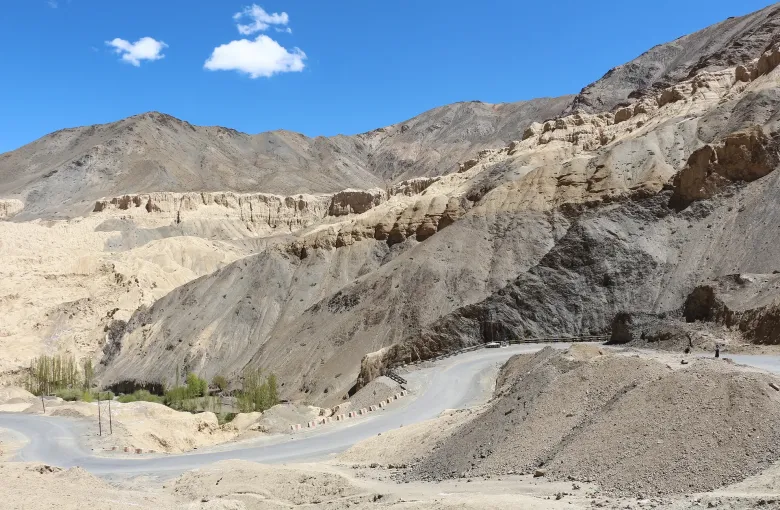
Special permits are required for parts of India designated restricted or protected. The entry advice states that the regulations can change at any time and that you need to apply 3 months before arrival. If Ladakh, the north eastern states or the islands are in your itinerary, that deadline is the first thing to work backward from.
One thing this page cannot tell you.
The advisories matter here as well as at the border. The Foreign, Commonwealth and Development Office advises against all travel to parts of India, and an itinerary that crosses into one of those areas can void your travel insurance whatever your visa says. The travel safety guide in this cluster sets out where those lines currently run, including the exception for travel by air to and within the city of Jammu.
How to settle it.
Start the visa the moment the dates are firm, not the month before. Check passport validity against your arrival date rather than your departure date. Put the e-arrival card in your calendar for the three days before you fly. And if a restricted area is in scope, tell us early, because that permit sets the schedule for everything else.
Sources
- UK Foreign, Commonwealth and Development Office: states that you must have a visa to visit India unless you are an Overseas Citizen of India cardholder, that a passport must be valid for at least 6 months after the date you arrive and have at least 2 blank pages, that an e-arrival card is completed online up to 72 hours before arrival and is not a visa, that accommodation providers must register foreign guests with the Foreigners Regional Registration Office, that a stay of more than 180 days without an OCI card must be registered within 14 days of arrival, that a special exit permit takes between 5 and 15 working days, that amounts above 5,000 US dollars in notes or 10,000 US dollars in notes and travelers checks combined must be declared, and that permits for restricted areas should be applied for 3 months before arrival. Accessed 22 September 2026.
- UK Foreign, Commonwealth and Development Office: advises against all travel to parts of India, including within 10km of the India to Pakistan border and the Union Territory of Jammu and Kashmir except travel by air to and within the city of Jammu, advises against all but essential travel to the state of Manipur, and states that no travel can be guaranteed safe. Accessed 22 September 2026.
Other Articles
India Travel Safety Guide
India and Diaspora Reconnection