
Why visit
Why visit Cozumel?
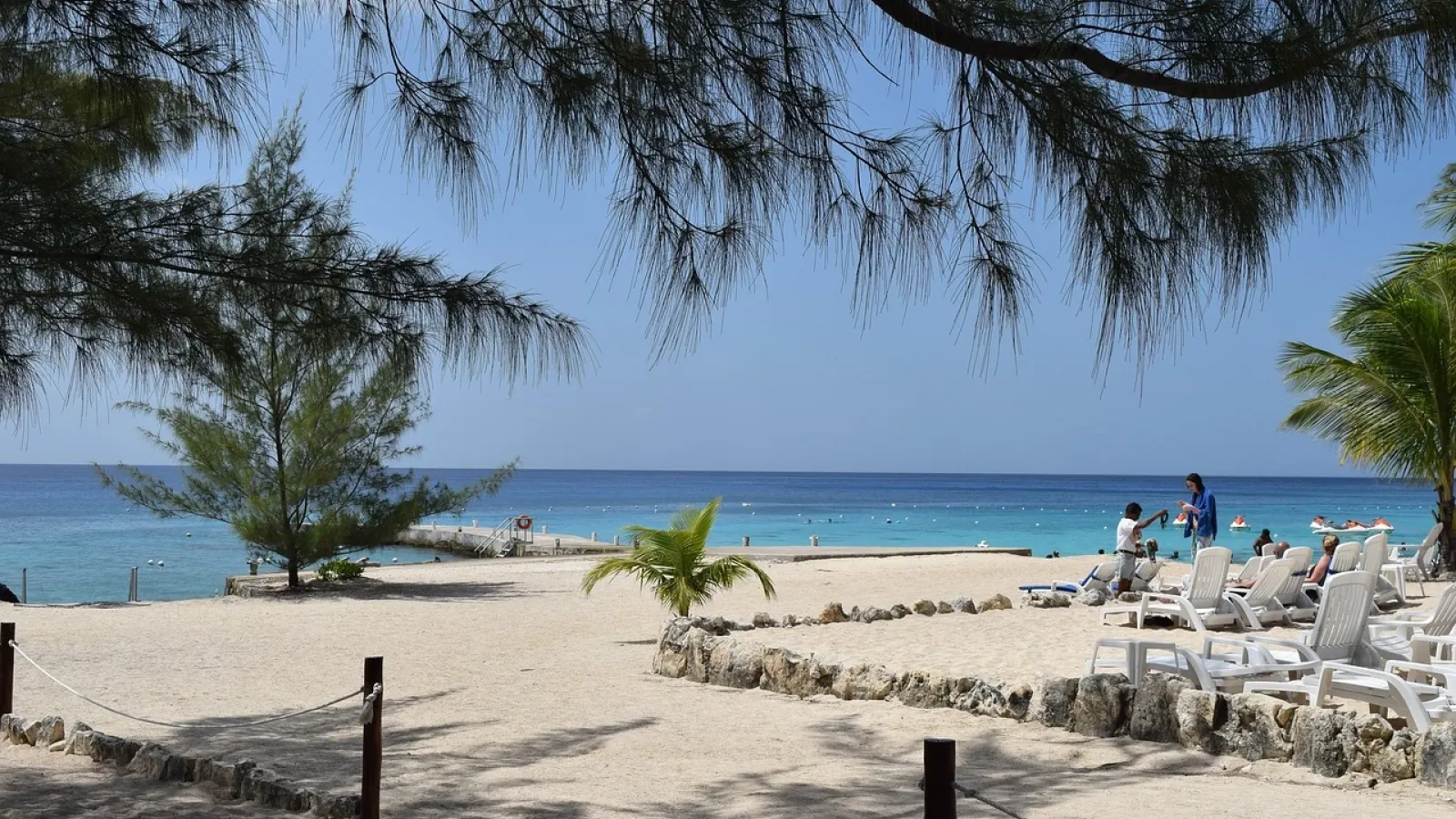
Cozumel is famous for its world-class diving and snorkeling along the Mesoamerican Barrier Reef, but beyond the water lies a rich cultural landscape. Explore San Gervasio, a Maya site where women once made pilgrimages to honor the goddess Ix Chel. Walk through San Miguel, where colorful markets and Afro-Caribbean rhythms fill the streets. Celebrate festivals like El Cedral, blending Maya, Catholic, and African traditions into one powerful expression of resilience. For Diaspora travelers, Cozumel is more than paradise. It’s a reminder of the interconnected roots of the Caribbean.
Top places to visit
Popular Attractions
in Cozumel
-
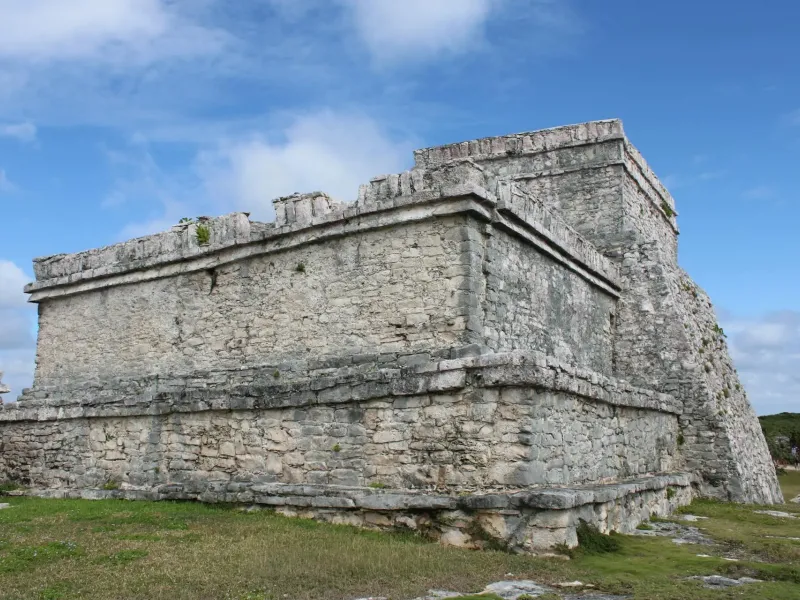
San Gervasio: Temple of the Goddess
Once a sacred pilgrimage site, San Gervasio preserves Maya ruins dedicated to Ix Chel, goddess of fertility and the moon. Visiting here connects travelers to centuries of Indigenous devotion and heritage.
-
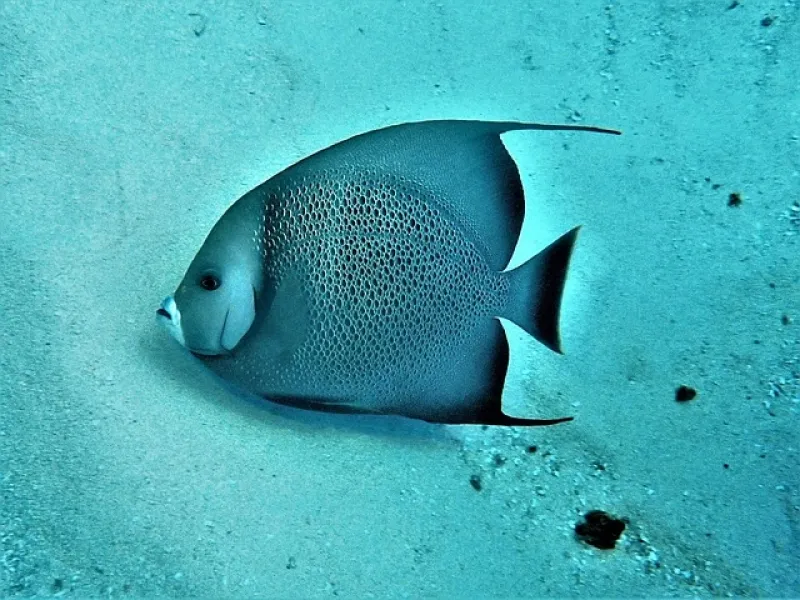
Cozumel Reef: Underwater Wonder
Part of the world’s second-largest reef, Cozumel offers divers and snorkelers an explosion of marine life and coral gardens. Beyond its beauty, the reef has sustained island communities for generations.
-
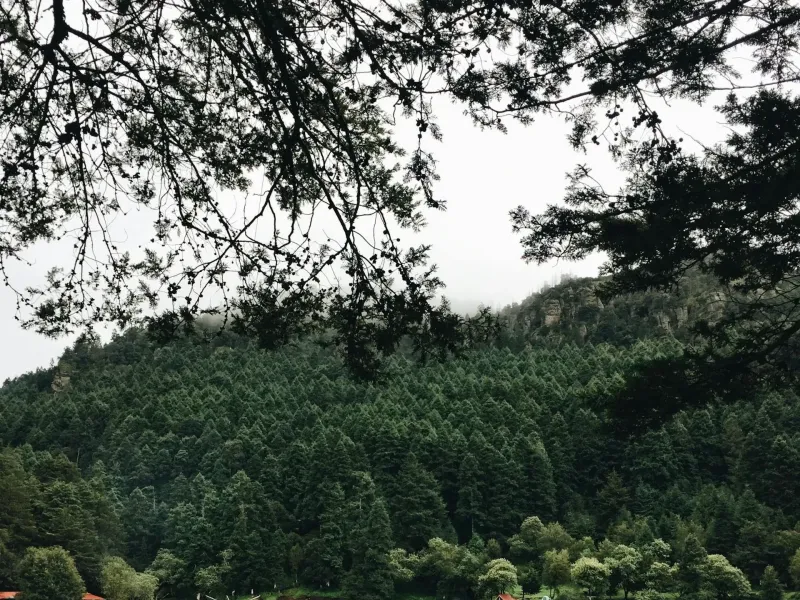
El Cedral: Festival of Faith and Freedom
This annual celebration blends Catholic, Maya, and Afro-Caribbean traditions. Rooted in both devotion and cultural survival, it remains a community event filled with music, dance, and heritage.
The guide
Explore Cozumel by Interest
Planning
Food and Culture
Heritage and History
Traveler Resources
Deep Expertise
We partner with Maya cultural guides, Afro-Mexican musicians, and local storytellers to immerse travelers in the island’s layered past. From temple tours to traditional dance workshops, LABUSA designs experiences that honor both ancestry and community.
Purpose-Driven Travel
Our itineraries highlight sustainable and community-centered travel. Support local artisans, participate in reef conservation, or share in Afro-Caribbean music circles, ensuring your journey contributes to preservation and pride.
Affordable Luxury & Authentic Moments
Stay in boutique beachfront resorts, eco-lodges near the jungle, or heritage guesthouses in San Miguel. LABUSA curates accommodations that combine comfort with cultural character, letting you live Cozumel’s story in style.
Common questions
Cozumel Travel FAQs
- Do I need a visa to visit Cozumel on a cruise?
- This page cannot tell you, and the reason is worth understanding before you look for the answer elsewhere. The entry advice this cluster cites is published by the UK Foreign, Commonwealth and Development Office, and it opens by saying the information is for people traveling on a full British citizen passport from the UK. Everything on that page is the British position. This site writes for readers in the United States, so repeating it as though it described your obligations would be wrong in the way that matters most on an entry question. The visa question is decided by the passport you hold and not by the port you arrive at, it genuinely differs by nationality, and the only authority on it is your own government. Check their advice for your own passport. What is worth settling before you sail, whatever your nationality, is the shape of your day: going ashore and returning before the last tender is one arrangement, and staying on after the ship leaves is a different one that has to be made in advance. The Mexico guide on this site covers the country level entry picture in more depth than a port page should.
- How long does my passport need to be valid for Mexico?
- There is no fixed number of months, which is what makes this worth asking rather than assuming. The official entry advice states that your passport must be valid for the duration of your stay. That is the requirement, and for a call measured in hours it is a low bar. Separately, and this is the half people miss, the same advice records that the Mexican Embassy recommends passports be valid for at least 180 days, because 180 days is the longest a tourist may stay. A requirement and a recommendation are different things: one is what the rule says, the other is a margin the issuing authority suggests you keep. Both belong in the answer. The practical trap is arriving with a number in your head from somewhere else in the region, since several nearby countries do set a fixed period and none of those figures is the Mexican rule. Look at the blank pages while you are checking, because pages are not something that can be resolved at a pier.
- Is there an entry tax for the state of Quintana Roo, and does it apply to a cruise call?
- There is a tax, and whether it reaches a passenger arriving by sea for a few hours is not something this page can settle honestly. The official entry advice states that you must pay an entry tax to visit the state of Quintana Roo, and that you can pay the entry tax online before or during your stay. This island is in Quintana Roo, so the tax is not distant trivia. Here is the limit. The same advice describes the charge entirely in airport terms: help with paying online is described as available at Cancun Airport, and proof of payment is described as something you show at the airport before leaving. It says nothing about arriving by ship, and nothing else in this cluster research register does either. So the position is exactly this: the tax exists, the source describes an air arrival, and whether it is collected from your call, already included in something you have paid, or not applied at all is a question your cruise line can answer and this page cannot. Ask them before you sail.
- Do I need malaria tablets for Cozumel?
- The state this island sits in is not among the areas the CDC names, and the wording of that sentence is deliberate. The CDC recommends that travelers going to certain areas of Mexico take prescription medicine to prevent malaria, and names those areas as Campeche, Chiapas, and the southern part of Chihuahua state, with rare transmission recorded in a handful of others. Quintana Roo is not among them. What this page will not do is turn that into a promise. Reading a guarantee out of a state absent from a list is an inference, and the inference would be ours rather than the CDC position. The useful version is the one above: the list names those states, and this is not one of them. Two further things. A prescription decision is made in advance with a travel health professional and not on arrival, so raise it before you travel. And the answer differs elsewhere in this region, including at ports some itineraries call at in the same week, so an answer carried from a neighboring country is not necessarily the right one. Bite avoidance is sensible wherever you are.
- Is Cozumel safe for visitors?
- Two official findings point opposite ways and you need both. The first is an absence: the UK regional risks advice works through Mexico state by state, advising against all but essential travel to parts of it and naming fifteen states including Guerrero and Sinaloa. Quintana Roo, where this island sits, is not among them. The second is a naming, and it is the one an excursion page would leave out. Under the heading for major tourist destinations, the same office records that the Mexican government makes efforts to protect them and lists this island among those destinations, and then states that criminals have physically and sexually assaulted British travelers in these locations, that in some cases hotel employees, taxi drivers and security personnel were involved, and that hotel staff have sometimes been unhelpful and tried to convince victims not to contact police. Publishing only the first reads as an assurance; publishing only the second reads as a warning against coming. Both are the source position. The advice written for the whole country reaches this island too, and the Mexico guide on this site carries it in full: crime is described as a risk to foreign nationals particularly in tourist resort areas, pickpocketing and theft are described as common, and unlicensed taxi drivers are recorded as having robbed and assaulted passengers, with the instruction being to use sitio taxis from authorized ranks. For a day ashore: book through your ship or a known operator, use an official rank, keep what you carry on you, and if something happens, report it. The emergency number is 911 and you ask for an ambulance.
- Is it safe to dive or snorkel at Cozumel?
- The official advice on this is a warning rather than an endorsement, and since diving is the main reason many people come, it deserves reading in full. For adventure sports including scuba diving, the advice states that equipment may not meet UK safety and insurance standards, and that British nationals taking part have been injured and, in some cases, killed. It asks that the company you use is reputable, takes safety precautions, uses up to date equipment, and is fully licensed and insured. That framing is British and is attributed as such, but the four-point test generalizes to any visitor and is worth applying before money changes hands rather than after. Two further things from the same advice. Your travel insurance has to cover the activity, and that is a question to settle before you sail rather than at a dive shop. And sea conditions can be unpredictable with some beaches unpatrolled, so follow coastguard and local authority guidance on whether it is safe to swim. On wildlife the advice is specific and measured: shark attacks are described as rare in Mexico. Crocodiles are described as normally living in lagoons and coastal areas including Cancun and Pacific coast resorts, which does not name this island, and that is an absence rather than an assurance either way.
- Is Cozumel a World Heritage site, or is San Gervasio?
- Neither, and the second half of that answer comes with a limit worth stating. UNESCO records 36 properties inscribed on the World Heritage List for Mexico and 23 sites on its tentative list, the largest count of either in this series of guides. Measured on 21 September 2026, the words Cozumel, San Gervasio and Chankanaab do not appear on that record at any point. This island carries no inscribed property and no tentative one. The Maya site on the island is San Gervasio, and this page will not put an authority behind it either. The national institute page for the site returns a web page containing none of its own subject, because the content is assembled by script after the page loads and never reaches a reader who fetches it plainly; the record for the island marine park behaves the same way. So nothing here quotes an authority on the site dating, purpose or protection. Go and see it, and take what an on-site guide tells you as what it is. There is an inscribed property in this state, but it is on the mainland rather than on the island, and its own record makes that easy to misread because it names municipalities rather than places. An inscription records a property outstanding universal value; it is not a ranking of what is worth your day.
- What money does Cozumel use?
- The Mexican peso. The health and travel profile this cluster cites records the monetary unit as the Mexican peso, and that is what prices ashore are set in. This page publishes no exchange rate, and that is a deliberate limit rather than an oversight: no source in this cluster research register gives one, a rate printed on a page goes stale the week after it is written, and your own bank will tell you the real figure on the day at the rate you will actually get. What is more useful than a number is a handful of habits for a short call. Carry enough small cash ashore that a card problem is an inconvenience rather than the end of your afternoon. Expect to be quoted in pesos and be wary of a quote already converted for you, because the conversion is rarely in your favor. And treat the taxi advice as a money question as well as a safety one: the same official advice that records unlicensed drivers robbing and assaulting passengers is the reason to use an official rank, and it is the sharpest version there is of a small saving becoming a large problem. The Mexico guide on this site goes further into the country level picture.