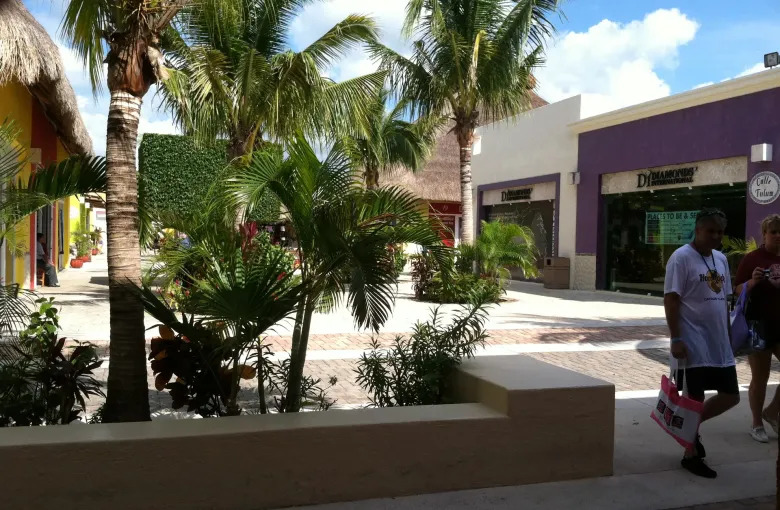
The one instruction worth carrying ashore.
The official safety advice records that unlicensed taxi drivers have robbed and assaulted passengers, and asks travelers to use sitio taxis from authorized ranks, or to have a hotel order one. On a day ashore the equivalent is short: use an official rank or book through your ship or a known operator, and do not take whatever is waiting closest to the gangway.
That instruction is doing more work here than it looks. In the same advice, the passage that names this island among the major tourist destinations the Mexican government makes efforts to protect goes on to record that criminals have physically and sexually assaulted British travelers in those locations, and that in some cases hotel employees, taxi drivers and security personnel were involved. The transport choice and the safety warning are the same warning.
The ferry, and why it is probably not yours.
A passenger ferry runs between this island and the mainland, and it is how residents and many independent travelers arrive. If you came on a ship, you did not use it and you probably will not: your vessel is alongside and your day is measured against an all aboard time. The ferry matters to this page mainly because photographs of it are often captioned as though it were the way visitors reach the island.
On the island itself.
The town is walkable from the waterfront, and a good deal of what a short call can reach is within that walk. Anything further is a road journey, and a road journey on a fixed deadline is the decision most likely to cost you the ship. Ask what the return time is before you set out, not after.
Nothing in this cluster register describes bus routes, rental terms, road conditions or driving rules for this island, so this page describes none of them. The country-level picture, including driving and licensing, is in the Mexico transportation guide.
Sources
- UK Foreign, Commonwealth and Development Office: the Mexico safety and security page: that crime is a risk to foreign nationals in Mexico, particularly in major cities and tourist resort areas; that pickpocketing and theft are common; that unlicensed taxi drivers have robbed and assaulted passengers; that the Mexican government makes efforts to protect major tourist destinations and names this island among them, and that in the same passage criminals have physically and sexually assaulted British travelers in those locations, in some cases involving hotel employees, taxi drivers and security personnel, with hotel staff sometimes unhelpful and trying to convince victims not to contact police; that anyone taking part in adventure sports including scuba diving should be aware equipment may not meet UK safety and insurance standards and that British nationals doing so have been injured and in some cases killed, and should use a company that is reputable, takes safety precautions, uses up to date equipment and is fully licensed and insured; that sea conditions can be unpredictable and some beaches are unpatrolled; that shark attacks are rare in Mexico; that crocodiles normally live in lagoons and coastal areas including Cancun and Pacific coast resorts, which does not name this island; and that the hurricane season normally runs from June to November. Accessed 21 September 2026.
- UK Foreign, Commonwealth and Development Office: the Mexico travel advice landing page: that no travel can be guaranteed safe, and that anyone who chooses to travel should research their destination and get appropriate travel insurance. Accessed 21 September 2026.
Other Articles
Cozumel Safety and Health
Accessible Travel at Cozumel