
Why visit
Why visit Singapore?
Singapore blends futuristic attractions like Gardens by the Bay, Marina Bay Sands, and the Supertree Grove with cultural enclaves such as Little India, Chinatown, and Kampong Glam. Its hawker centers, rooftop gardens, and efficient transit system make exploring seamless. As a historic trading hub at the crossroads of Asia, Singapore’s museums, such as the Asian Civilisations Museum and National Gallery, explore migration, colonialism, and global diasporas. While the African presence here is small, Singapore’s position on ancient trade routes and its modern openness to international dialogue offer diaspora travelers a meaningful space to explore Black identity within a multicultural, global cityscape.
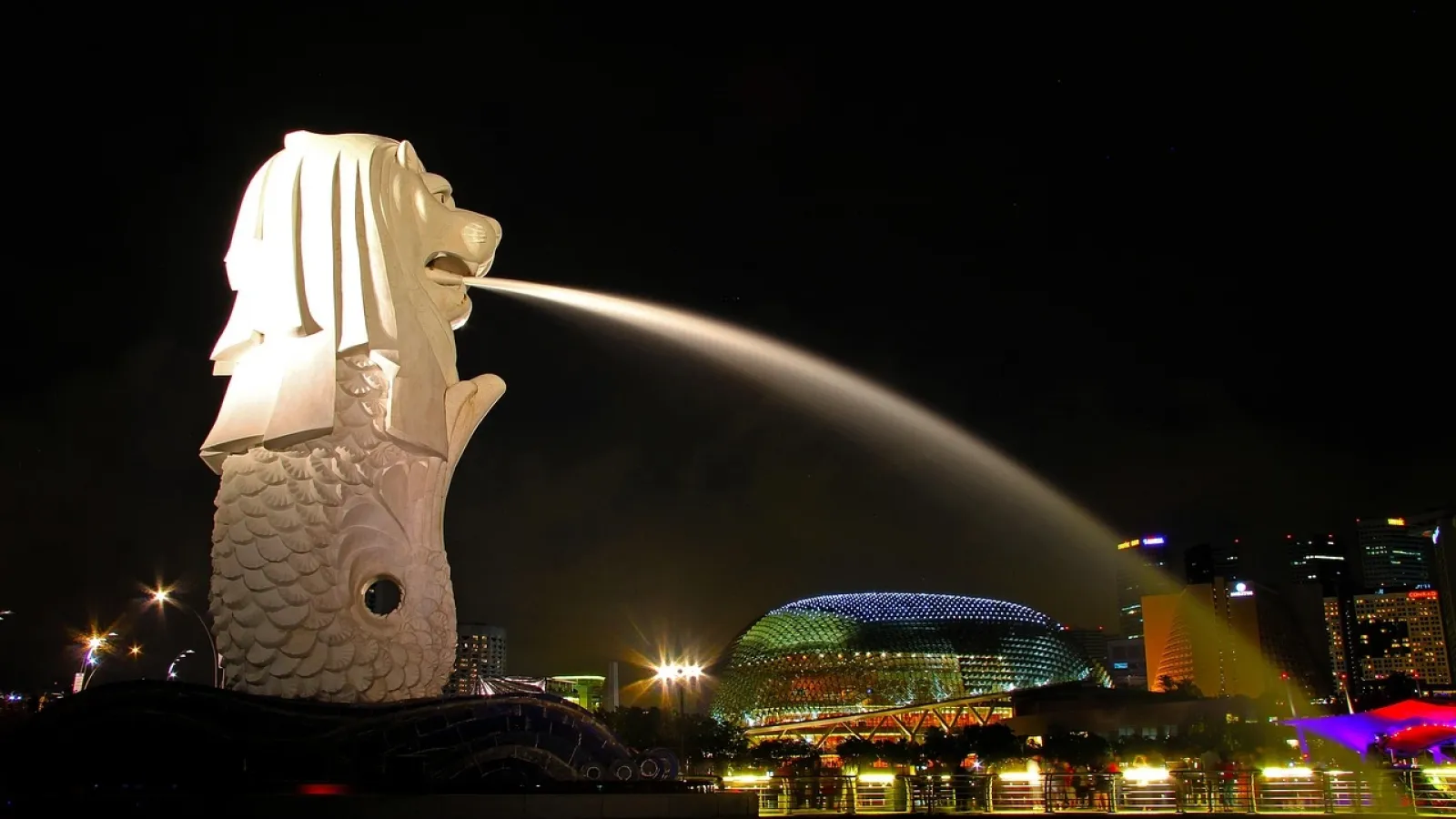
Top places to visit
Popular Attractions
in Singapore
-
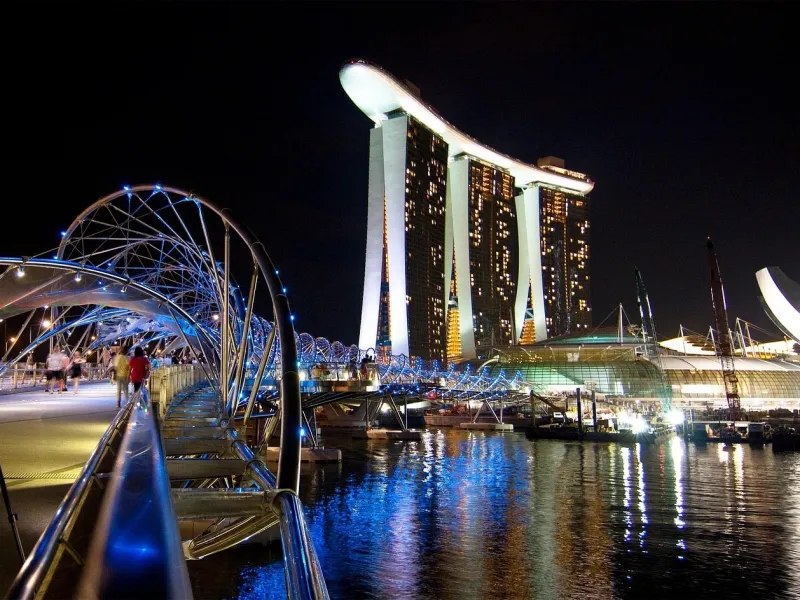
Gardens by the Bay
A global icon of sustainability and innovation, Gardens by the Bay is a sprawling urban nature park that redefines the concept of a city garden. The futuristic Supertree Grove, vertical gardens as tall as 16 stories, comes alive with dazzling light and sound shows at night. Explore the Cloud Forest dome (home to the world's tallest indoor waterfall) and the Flower Dome, which showcases plant species from five continents. It’s a perfect fusion of science, art, and nature.
-
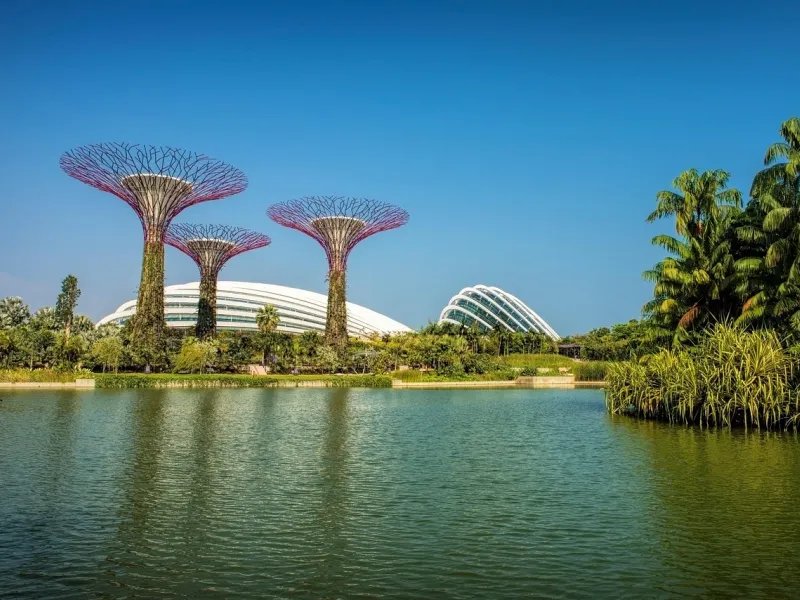
Marina Bay Sands & SkyPark
An architectural marvel and a symbol of Singapore’s global stature, Marina Bay Sands is more than a luxury hotel. It's an immersive experience. Ascend to the SkyPark Observation Deck for panoramic views of the city skyline and the South China Sea, or take a dip in the world’s highest rooftop infinity pool. Below, enjoy high-end shopping, world-class restaurants, and access to the ArtScience Museum, where technology and creativity converge in spectacular exhibitions.
-
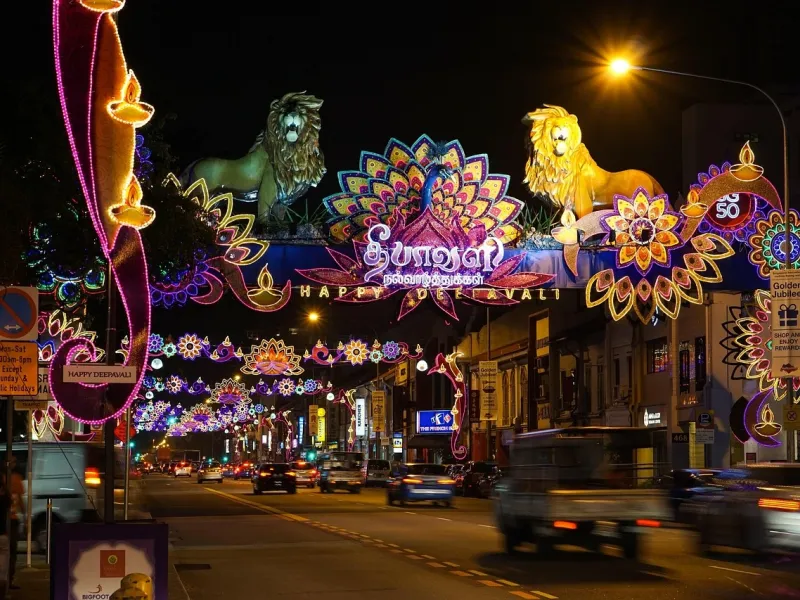
Little India & Kampong Glam
To truly feel the cultural heartbeat of Singapore, step into its historic ethnic enclaves. In Little India, colorful shophouses, vibrant temples, and the scent of fresh jasmine lead you through a maze of markets and eateries. Meanwhile, Kampong Glam, the heart of Malay heritage, offers a deeper dive into Islamic culture, with the majestic Sultan Mosque, lively Arab Street boutiques, and hip cafes set against centuries-old tradition. These neighborhoods are where old-world charm meets urban soul.
The guide
Explore Singapore by Interest
Planning
Food and Culture
Heritage and History
Traveler Resources
Deep Expertise
Our team partners with experienced local hosts and guides to create Singapore journeys that go beyond surface impressions. From private cultural tours to behind-the-scenes design and tech experiences, we bring you the city’s best with clarity and care.
Purpose-Driven Travel
Whether you're seeking a luxurious city break, a deep cultural exploration, or a wellness-infused getaway, we tailor your Singapore itinerary to match your pace and purpose. Think cooking classes with heritage chefs, spa retreats in botanical settings, or personal shopping tours through modern fashion districts.
Affordable Luxury & Authentic Moments
Singapore is renowned for its safety, efficiency, and elegance, qualities we extend into every LABUSA Travel itinerary. Enjoy curated hotel stays, VIP transfers, and personalized experiences that blend relaxation, learning, and indulgence. We make luxury personal, practical, and culturally enriching.
Common questions
Singapore Travel FAQs
- Do I need a visa to visit Singapore?
- Whether you need one is decided by the passport you hold, so the honest answer is to check with your own government rather than to take a figure off a travel page. What this cluster can tell you is the shape of the rule Singapore applies, as described by the UK Foreign, Commonwealth and Development Office, whose entry advice is written for British passport holders and is attributed as such throughout this site. That advice states that you can visit Singapore without a visa for tourism or business, that the Immigration and Checkpoints Authority decides who can enter and how long they can stay, that the period of stay permitted is at the discretion of the immigration officer, and that it is normally between 30 and 90 days for British citizens. Three things in that sentence do real work. The permission covers business as well as tourism, which is not true of every country in the region. The length is decided at the counter rather than by a published rule, so the stamp you are given is the only one that governs you. And it is a range rather than a figure: quoting the top of it as a guarantee, or the bottom of it as a limit, is wrong in opposite directions. Do not carry a neighboring country allowance across the border with you. Several countries within an hour of here publish a single fixed period that is nothing like this arrangement, and the only rule that governs your stay in Singapore is Singapore own. If your plans need longer than the stamp allows, that is a question for the Immigration and Checkpoints Authority before the date on it rather than after.
- How long does my passport need to be valid, and does Singapore allow dual nationality?
- The entry advice this cluster cites states that your passport must be valid for 6 months after the date you arrive. Count the six months forward from your arrival date rather than from the day you book, because a trip planned far enough ahead can slip under the line while the passport sits in a drawer looking fine. The second half of this question has an answer that is narrower than it first appears, and reading it carelessly is how a visitor talks themselves into a problem that is not theirs. The same advice records that Singapore does not recognize dual nationality beyond the age of 21, and that a Singaporean citizen must renounce other nationalities before the age of 22 to retain citizenship. That is a rule about Singaporean citizens. It is not a rule about every dual national who arrives at the airport, and it is not the flat prohibition that some of this region neighbors publish. If you hold Singaporean citizenship alongside another, that is a question for the Immigration and Checkpoints Authority and for the government of your other nationality, and it is worth settling before you travel rather than at a counter. If you hold two passports and neither is Singaporean, the ordinary advice applies: enter and leave on the same one throughout. An American passport holder should raise any of this with the U.S. Embassy in Singapore rather than with a travel page.
- Do I have to complete an arrival card before I travel to Singapore?
- Yes, and the timing is the part people get wrong, because the window opens late rather than early. The entry advice this cluster cites states that you must complete an electronic SG Arrival Card in the 3 days before you arrive in Singapore, that the form asks for your travel details and a health declaration, and that it is illegal to submit a false declaration. So this is not a form to fill in when you book. An attempt made a week out is wasted and a card forgotten in the last three days becomes a problem at check-in, which means the useful thing to do is put it in a calendar at three days before departure rather than trusting memory. Treat the health declaration as the legal document the advice says it is. This page names the official service rather than quoting from it, and the reason is worth knowing. The government site that hosts the card is built almost entirely in the browser and serves practically no readable text to anything that fetches it, so what it displays cannot be verified by the research register behind this cluster. The requirement itself is cited to the entry advice, which does carry it in readable text. Register on the official government service only, because a search will surface intermediaries charging a fee for something that is free.
- Is chewing gum really illegal in Singapore?
- This is the thing almost every visitor arrives knowing about this country, and it is both the least accurate and the least likely to affect them. What the entry advice this cluster cites actually says is that among the items illegal to bring in is chewing gum to sell. The restriction named is on importing gum for sale. The version that circulates, that gum is simply banned, is not what the source says about bringing it in to sell, and a travel page repeating it is a large part of why the folk version survives. Here is what is on the same list and is far likelier to be in somebody bag without a second thought: vaporizers and electronic cigarettes, tobacco products that are chewed or injected, weapons and ammunition including empty cartridge cases and air guns, and replica guns including lighters shaped like a pistol or revolver. The vape is the one that catches people. It is an ordinary object almost everywhere else and a prohibited import here, and it does not become acceptable because it is in a coat pocket rather than a suitcase. So the practical version of this question is the reverse of the one people ask. Go through your bag for the vape, the novelty lighter and anything that came home from a shooting range, and check the official prohibited items list before you close it rather than after you land.
- Do I have to carry my passport around in Singapore?
- No law named in this cluster sources requires a visitor to, and the advice points the other way. The safety advice this cluster cites records that violent crime and theft are rare in Singapore, tells you to take care of your passport, and says to leave valuables in a hotel safe if possible. Its personal identification paragraph says only that using false identification is illegal, and that foreigners living in Singapore are issued an identity card, which is a rule about residents rather than about visitors. So the sensible habit here is the ordinary one: leave the document somewhere secure, carry a photograph or a scan of the identity page, and have the hotel address written down. Two qualifications belong with that. This answer does not travel. What a country requires you to carry, and what it advises you to leave behind, are set separately by each one, and at least one of this region countries takes the opposite position in its own official advice with equally good reason. A habit formed on a previous trip is not a guide here. And a hotel is not the only place a passport is asked for: you will need it for the arrival and departure formalities and at some banks and money changers, so know where it is even when it is not on you.
- How much cash can I bring into Singapore?
- This answer declines to give you a number, and that is a result rather than an evasion. No source in the research register behind this cluster states a cash declaration threshold for Singapore. The entry advice this cluster cites, which does carry a great deal of detail about what you may and may not bring in, does not carry a currency figure at all. Singapore does operate a cross-border reporting regime for money moved in and out, and this page publishes no figure for it, because a number nobody reading this can check is worse than an honest gap. The reason for being explicit rather than silent is specific and worth stating. At least one neighboring country entry advice does publish a threshold and a penalty, and this site quotes it on that country page. It would be an easy sentence to carry across a border that people cross by bus in under an hour, and it would be wrong. So if you are moving a significant sum, take the question to Singapore Customs or to the Immigration and Checkpoints Authority before you travel. For an ordinary holiday the practical answer is unchanged: cards work almost everywhere a visitor spends, contactless is normal, and the places that still prefer cash are the hawker stalls and the older shops, where small notes are what is wanted.
- Is Singapore safe for visitors?
- The official advice does not answer that as a yes or a no, and its standing position is worth taking seriously: no travel can be guaranteed safe, and you should get appropriate travel insurance. What it does say about this country is unusual. The safety advice this cluster cites records that violent crime and theft are rare in Singapore, and its practical advice is to take care of your passport and leave valuables in a hotel safe if possible. Very few destination pages on this site can open that way. What that does is move the question rather than close it. The same advice records that online scams and phone scams are common here, which means the likeliest threat to a visitor is a message rather than a hand in a pocket. Nobody legitimate asks for a transfer or a verification code over the phone, and a message that manufactures urgency about money is the shape the problem takes. The other half of the answer is legal rather than criminal. The same source records an on-the-spot fine for littering, that acts of vandalism including graffiti can be punished by caning, that Orchard Road is a designated no smoking zone, and that outrage of modesty, which covers unwanted physical contact, carries penalties including caning. None of that is aimed at visitors and all of it applies to them. The useful mental model is that the informal tolerances of most cities are formal rules here.
- What are the rules about protests, filming and drinking in public?
- These are the rules most likely to catch a visitor who has done nothing they would think of as wrong, so they are worth reading before you arrive rather than afterward. On public gatherings, the safety advice this cluster cites records that street gatherings and demonstrations will be illegal if they do not have police permission, that foreigners who are not permanent residents are prohibited from attending outdoor demonstrations regardless of police permission, and that filming an illegal gathering is forbidden. Read the scope of that. It is not advice to avoid crowds: attending is prohibited, and so is pointing a phone at one. A visitor who walks past a gathering and stops to film it has done the thing the rule names, and that is broader than the equivalent law in most of the region. On alcohol, the same advice records that it is illegal to drink in a public place, outside restaurants, bars and licensed venues, between 10:30pm and 7am. It also names Geylang and Little India as Liquor Control Zones, where drinking in public is banned all weekend, on public holidays and on the eve of public holidays. Both of those areas are worth visiting and both appear elsewhere in this cluster, so the rule travels with them. A drink in a licensed venue in either area is not the issue. A can carried along the street is.
- What is the emergency number in Singapore?
- There are two and they are not interchangeable. The advice this cluster cites gives the emergency services in Singapore as ambulance and fire on 995 and police on 999. Save both before you need either, and write them somewhere that does not depend on a charged battery. Now the warning that matters more than the numbers themselves, because this is the single most dangerous fact on this page. A traveler arriving overland or on a short hop from the country next door will have learned a different set, and one of the two numbers is the same while the one for an ambulance is not. A partial overlap is worse than a clean difference: a number that has already worked once in the region feels verified, so the whole set gets carried across, and the one that gets carried is the ambulance. Learn this pair on its own terms rather than adapting a neighbor. Two further points. An emergency call is the moment your travel insurance details matter, so keep the policy number and the emergency assistance line with the numbers above. And the official advice is blunt that no travel can be guaranteed safe and that appropriate travel insurance is what makes a bad day survivable.
- What vaccinations do I need for Singapore, and is there malaria?
- Both questions are answered by a clinician and not by a web page, and the useful thing a page can do is say what is on the record and when to start. The U.S. Centers for Disease Control and Prevention names hepatitis A, typhoid, rabies, dengue, Zika and melioidosis on its Singapore destination record, and notes that dogs infected with rabies are not commonly found in Singapore. The health advice this cluster cites separately records Zika virus, dengue and chikungunya, and that hand, foot and mouth disease is common here. Notice what is not on either list, because it is the part most likely to be imported from a neighbor. Neither source carries an antimalarial recommendation for Singapore, and neither names Japanese encephalitis, both of which do appear on the record for at least one country nearby. That is a difference between two records rather than a clean bill of health: nothing in this register states that Singapore is free of any particular disease, and no page in this cluster will say so, because an absence from a list is not a declaration of absence. Timing is the part that actually goes wrong. The health advice is clear that you should seek advice at least 8 weeks before your trip, because some courses take time to finish. Take your itinerary to that appointment, and take any regular medication in its original labeled packaging with the prescription.
- What happens if I have used drugs before arriving, or am only changing planes?
- This is the answer with the widest gap between what a visitor expects and what the law does, and it reaches people who never intend to enter the country. The UK advice puts it on its warnings page rather than burying it, which is a signal in itself: there are severe consequences for drug related crimes in Singapore, and evidence of drug use in your system on arrival or in transit will lead to refusal of entry or arrest. Read the words in transit twice. A passenger changing planes at Changi, who never clears immigration and never leaves the terminal, is inside this rule, and something consumed lawfully in another country days earlier is still in a person system on arrival. For a reader traveling from a place where cannabis is legal, that is the sentence that matters, because legality at home has no bearing at this border. The safety advice adds that penalties are severe for all drug offenses including possession, that you can be charged with trafficking for possessing above a certain amount, that you can be detained without trial, and that sentences include prison terms, caning and the death penalty, including when transiting through the airport. This page states that plainly rather than softening it. It publishes no threshold quantity and no sentencing figure, because no source in this register carries one this page could reproduce and verify, and a number recalled from memory is the worst possible thing to publish about a criminal penalty.
- Does Singapore have World Heritage sites?
- It has one, and stating the whole list in a sentence is the honest way to answer this. The UNESCO World Heritage Centre record for Singapore lists one property inscribed on the World Heritage List, the Singapore Botanic Gardens, inscribed in 2015 as a cultural property, and one site on the Tentative List, the Padang Civic Ensemble. That count was read off the record while this cluster was being written rather than recalled, and it is worth knowing how far it sits from the rest of the region: a country a short drive away carries six inscriptions and three tentative entries, so a figure carried across a border here is wrong by a wide margin. The category is worth noticing too. The Gardens are inscribed as cultural rather than natural, which is a statement about what people made here rather than about what grew on its own, and visiting them as a piece of scientific and economic history rather than only as a pleasant morning changes what you look at. They open early and general admission is free, which makes them one of the few things in this city that is genuinely better at a particular hour. The cluster heritage guide covers what the record establishes and, just as importantly, what it does not: the detailed inscription rationale lives on a property page that could not be fetched and verified, so this cluster does not paraphrase text it has not read.