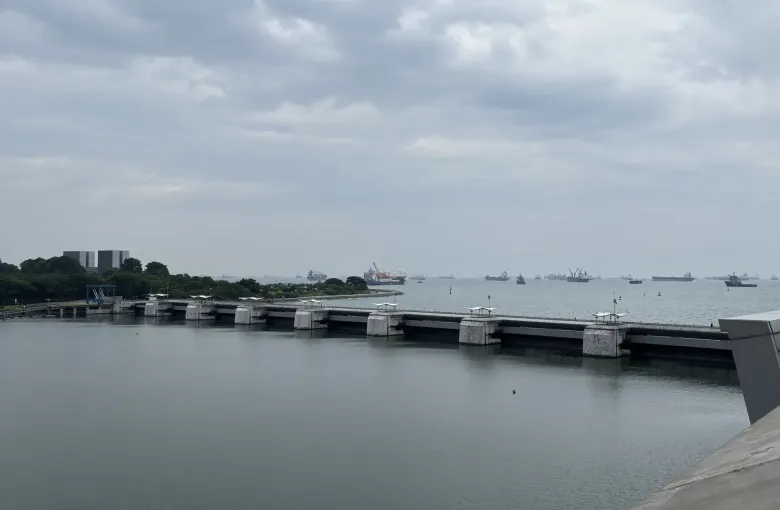
Why this city suits an older traveler.
Distances are short, the public transport is excellent and step-free, the standard of healthcare is high, English is a working language, and the UK Foreign, Commonwealth and Development Office records that violent crime and theft are rare in Singapore. Very few destinations combine all of that. For a first trip to Asia in later life, or for a trip where somebody in the party has limited stamina, it is about as forgiving as the region gets.
The heat is the real constraint, and it is not a small one.
Constant high humidity is more demanding than the temperature suggests, and it affects cardiac and respiratory conditions and anyone on medication that affects heat tolerance. The answer is pacing rather than avoidance: one substantial thing in the morning, the middle of the day indoors on purpose, something gentler in the evening. Use the covered walkways and the underground links rather than the direct route. Drink more water than thirst suggests, because the tap water here is drinkable and the loss is continuous.
The same health advice records that from June to October Singapore can experience high levels of pollution, and names the Pollutant Standards Index as where to check it. If a respiratory condition is in the party, that is the number to look at each morning rather than the forecast.
Health preparation.
The health advice recommends seeking travel health advice at least 8 weeks before a trip, which matters more with age and with existing conditions than it does otherwise. The U.S. Centers for Disease Control and Prevention lists hepatitis A, typhoid, rabies, dengue, Zika and melioidosis on its Singapore destination record, and notes that dogs infected with rabies are not commonly found in Singapore. What any of that means for you is a conversation with a clinician rather than a line on a travel page.
Bring more medication than the trip requires, in original labeled packaging, with a copy of the prescription and the generic names written down. Split it between two bags. And check anything you take against Singapore's rules on controlled medicines before you travel, because a medication that is routine at home may be controlled here.
Insurance, and what it needs to cover.
Healthcare in Singapore is excellent and private treatment is expensive. The same UK advice notes that no travel can be guaranteed safe and recommends appropriate travel insurance. For an older traveler the specific things to check are that pre-existing conditions are declared and accepted, that the medical limit is high enough for private hospital treatment rather than nominal, and that repatriation is included. A policy that fails on the first of those fails entirely at the moment it is needed.
Emergencies.
The UK advice gives the emergency services in Singapore as ambulance and fire on 995 and police on 999. Save both, and write them somewhere that does not require unlocking a phone. If you are traveling with someone, make sure both of you have the hotel address written down in full, along with the medication list.
Getting around comfortably.
Trains and buses are air conditioned, step-free and inexpensive, and priority seating is signed and generally given up. Taxis and ride-hailing are ordinary and are the right answer for the middle of the day or for the end of a long one. The accessibility guide in this cluster covers the detail, including the parts of the heritage quarters where the sidewalk is uneven enough to be worth avoiding.
The laws worth knowing before you arrive.
Singapore enforces rules that many cities leave informal. The safety advice records an on-the-spot fine for littering, that Orchard Road is a designated no smoking zone, and that drinking in a public place outside licensed venues is illegal between 10:30pm and 7am. It also records severe penalties for all drug offenses, including when transiting through the airport, which reaches prescription medicines that are controlled here. None of that is aimed at visitors, and all of it applies to them.
Scams are the likeliest problem.
The safety advice records that online scams and phone scams are common in Singapore. Older travelers are targeted disproportionately everywhere, and the rule is the same one that works at home: nobody legitimate asks for a bank transfer or a verification code over the phone, and urgency is the tell. Given how rare street crime is here, this is where the attention belongs.
A sensible shape for a trip.
Fewer days with more in them beats a packed itinerary in this climate. Base yourself near a rail station rather than near a sight. Book the Botanic Gardens for a first morning while you are fresh and before the heat builds. And leave an afternoon unplanned, because the thing most likely to disrupt a trip here is fatigue rather than anything going wrong.
Sources
- UK Foreign, Commonwealth and Development Office: advises seeking advice at least 8 weeks before a trip, records Zika virus, dengue and chikungunya in Singapore and that hand, foot and mouth disease is common there, states that from June to October Singapore can experience high levels of pollution, and gives the Pollutant Standards Index as the place to check it. Accessed 22 September 2026.
- UK Foreign, Commonwealth and Development Office: records that violent crime and theft are rare in Singapore, that there are severe penalties for all drug offenses including when transiting through the airport, that foreigners who are not permanent residents are prohibited from attending outdoor demonstrations and that filming an illegal gathering is forbidden, and that drinking in a public place is illegal between 10:30pm and 7am with Liquor Control Zones where it is banned at weekends and on public holidays. Accessed 22 September 2026.
- UK Foreign, Commonwealth and Development Office: gives the emergency services in Singapore as ambulance and fire on 995 and police on 999. Accessed 22 September 2026.
- U.S. Centers for Disease Control and Prevention: lists hepatitis A, typhoid, rabies, dengue, Zika and melioidosis on its Singapore destination record, and notes that dogs infected with rabies are not commonly found in Singapore. Accessed 22 September 2026.
Other Articles
Accessible Travel in Singapore
Getting Around Singapore