The short version.
There is no bad month, and that is a statement about geography rather than a way of avoiding the question. Singapore sits about one degree north of the equator on an island you can drive across in under an hour. It has no winter, no dry season in the sense a temperate visitor means it, and no month in which the city shuts down. Rain arrives as heavy afternoon downpours that pass, and almost everything a visitor wants to do happens under cover or is a short walk from it.
What this page will not do is print a rainfall table or a monthly average. No source in this cluster research register publishes one, and a figure reproduced from memory would look exactly like a checked one on the page while being impossible for you to verify. The Meteorological Service Singapore publishes the real numbers and is the place to take that question.
One timing fact this cluster can evidence, and it is a real one.
The UK Foreign, Commonwealth and Development Office health advice records that from June to October Singapore can experience high levels of pollution, and points to the Pollutant Standards Index for the current reading. That is a seasonal planning fact with teeth, and it is published by an authority rather than inferred.
Read it as a window rather than a certainty. The haze depends on fires elsewhere in the region and on which way the wind is blowing, so some years in that window are clear and some are not. The practical reading: if you have a respiratory condition, if a child or an older traveler is coming, or if the trip is built around long days outdoors at the Gardens or on the southern ridges, June to October carries a risk that the rest of the year does not. Check the index for the days you are there rather than for the month you booked.
What actually decides most trips here.
The calendar that matters in Singapore is cultural. This is a city whose public holidays follow several different calendars at once, so the busy weeks move year to year rather than sitting where a European or American visitor expects them. Two consequences follow. Hotels and flights tighten around the major festivals, and around the school holidays of the region that feeds most of its visitors. And some of what is most worth seeing only happens on those dates, which is an argument for planning toward a festival rather than around one. The festivals guide in this cluster covers which ones and why the dates move.
If the trip is built around one place.
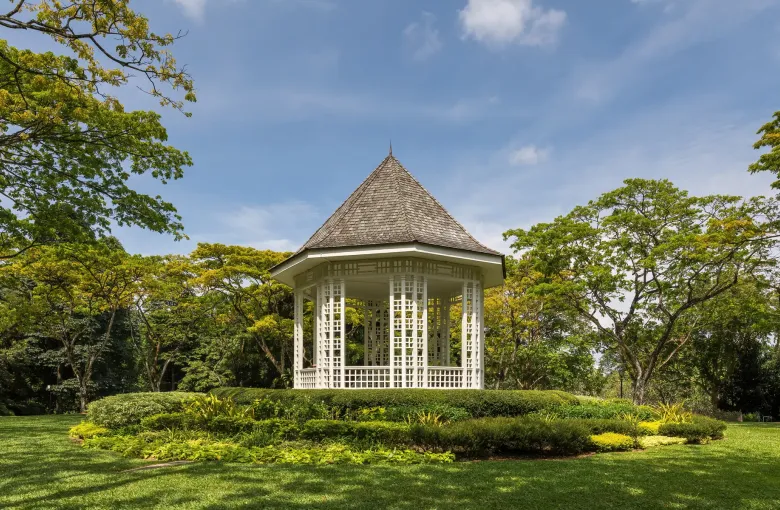
The UNESCO record for Singapore lists one property inscribed on the World Heritage List, the Singapore Botanic Gardens, inscribed in 2015. It is open early and it is free, which makes it one of the few things here that is genuinely better at a particular hour rather than in a particular month. Go at opening, before the heat and before the crowds, and the timing question becomes one about the hours of the day rather than the months of the year. The heritage guide in this cluster goes further into what the record does and does not establish.
The one thing worth doing before you book.
Whatever month you choose, the entry advice records that an electronic SG Arrival Card has to be completed in the 3 days before you arrive. That is a deadline anchored to your arrival date rather than to your booking date, so it is the one calendar item that survives a change of plan. The entry requirements guide covers it.
How to settle it.
Pick the dates that suit the rest of your trip, because Singapore will not fight you on them. Check the public holiday calendar for the year you are traveling, since that is what moves prices and crowds here. If June to October is in scope, factor the pollution risk honestly rather than hoping. And build the days around the hours rather than the months: early for the Gardens and the walking, the middle of the day for the museums and the malls, the evening for the water.
Sources
- UK Foreign, Commonwealth and Development Office: advises seeking advice at least 8 weeks before a trip, records Zika virus, dengue and chikungunya in Singapore and that hand, foot and mouth disease is common there, states that from June to October Singapore can experience high levels of pollution, and gives the Pollutant Standards Index as the place to check it. Accessed 22 September 2026.
- UNESCO World Heritage Centre: records one property inscribed on the World Heritage List for Singapore, the Singapore Botanic Gardens, inscribed in 2015 as a cultural property, and one site on the Tentative List, the Padang Civic Ensemble. Accessed 22 September 2026.
- UK Foreign, Commonwealth and Development Office: records that Singapore admits visitors for tourism or business without a visa, that the Immigration and Checkpoints Authority decides who can enter and how long they can stay, that the period of stay is at the discretion of the immigration officer and is normally between 30 and 90 days for British citizens, that an electronic SG Arrival Card must be completed in the 3 days before arrival, and that it is illegal to submit a false declaration. Accessed 22 September 2026.
Other Articles
Singapore Weather and Climate Guide
Singapore Festivals and Celebrations