
Why visit
Why visit Jamaica?
Jamaica thrills with beaches in Negril, coffee farms in the Blue Mountains, and musical nights in Kingston, the island’s cultural heartbeat. Don’t miss the Bob Marley Museum, the mystical Blue Lagoon, or the iconic Dunn’s River Falls. But Jamaica’s deeper soul lies in its Maroon heritage, Rastafari roots, and Black revolutionary spirit. Sites like Accompong and Liberty Hall (honoring Marcus Garvey) connect visitors to a proud legacy of African resistance, empowerment, and spiritual continuity that still shapes global Black consciousness.
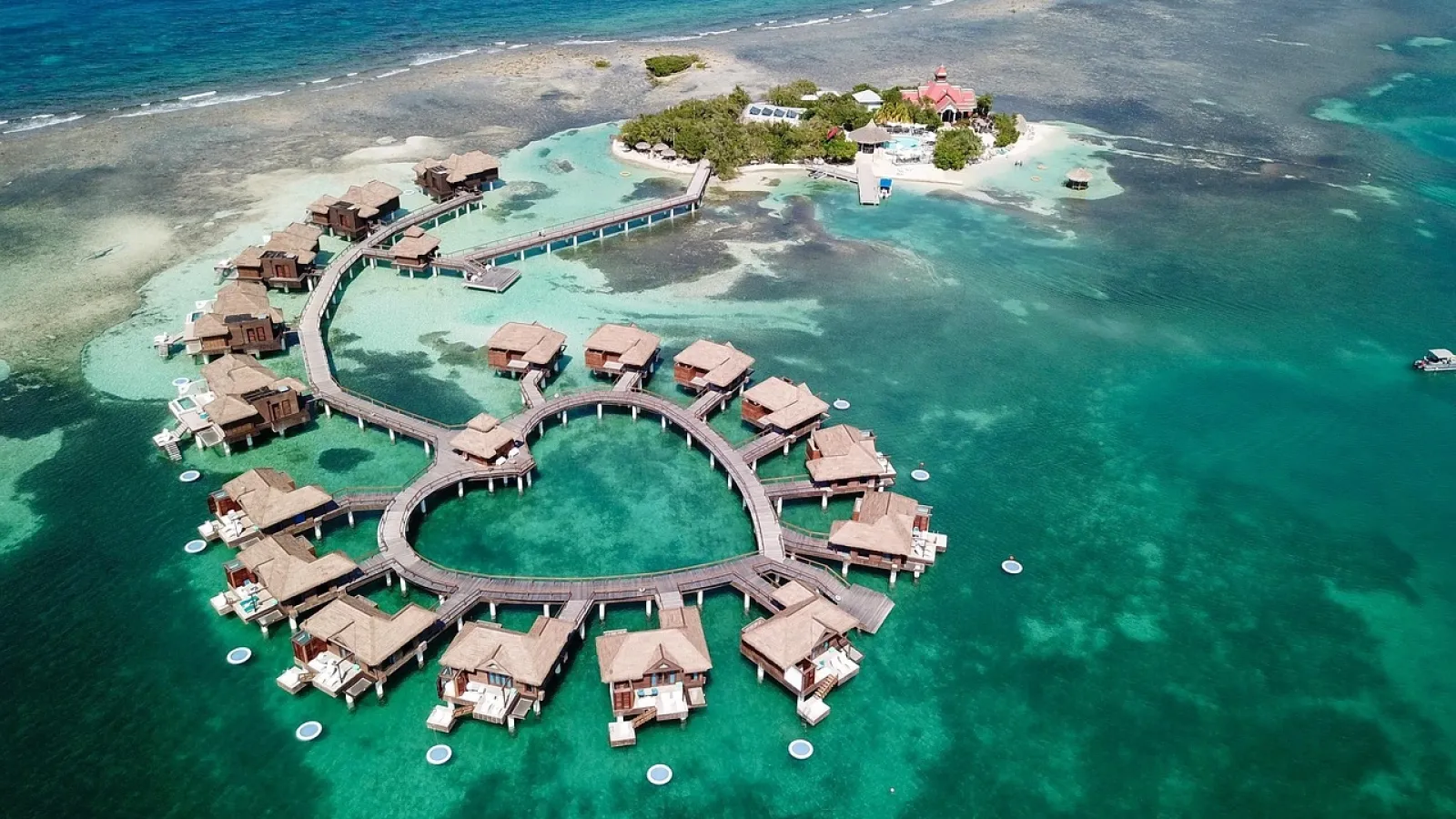
Top places to visit
Popular Attractions
in Jamaica
-
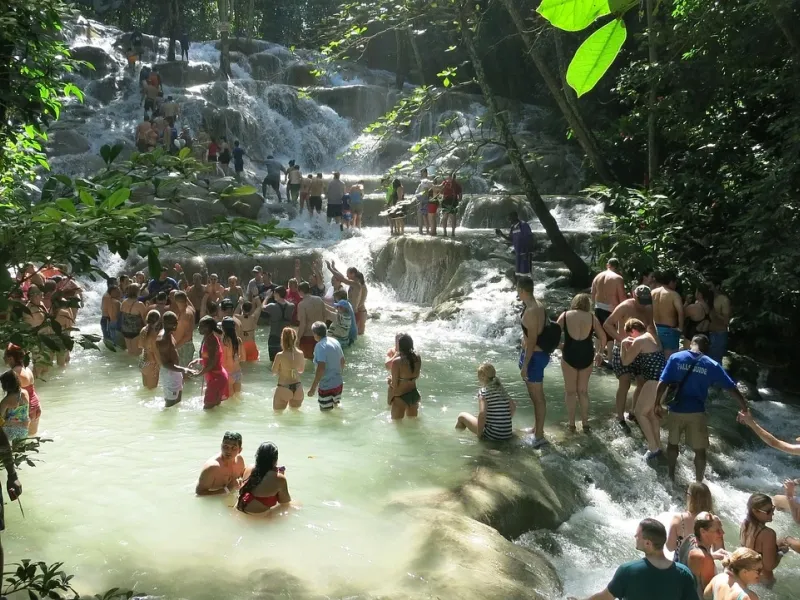
Dunn’s River Falls: Nature’s Cascade Playground
Located near Ocho Rios, Dunn’s River Falls is one of Jamaica’s most iconic natural wonders. Visitors can climb the terraced limestone steps of the 180-foot waterfall, hand in hand with guides and fellow travelers, or relax in the natural pools below. It’s a sensory mix of cool water, lush forest, and vibrant energy.
-
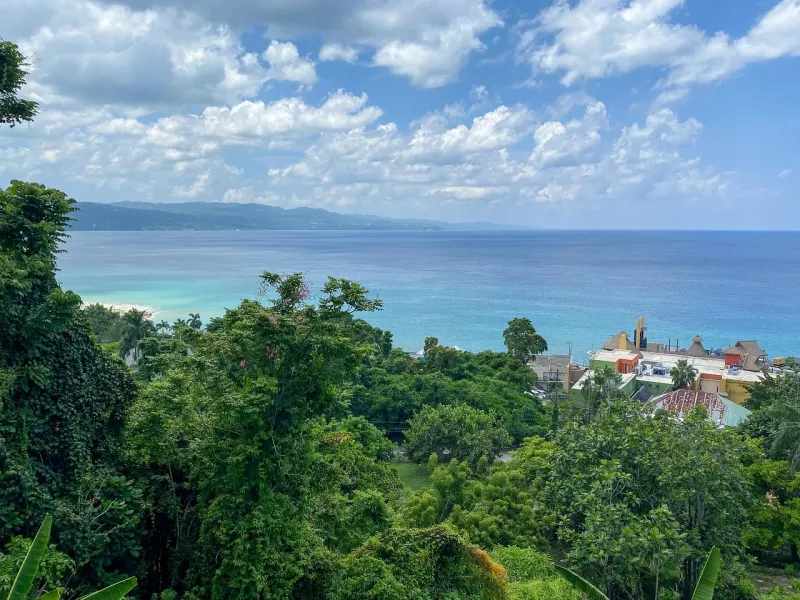
Blue Mountains: Coffee, Clarity & Culture
Home to one of the world’s most prized coffee varieties, the Blue Mountains are more than a scenic backdrop. They’re Jamaica’s spiritual spine. Hike through misty trails, tour family-owned coffee farms, and experience the serenity that once inspired poets, revolutionaries, and musicians alike.
-
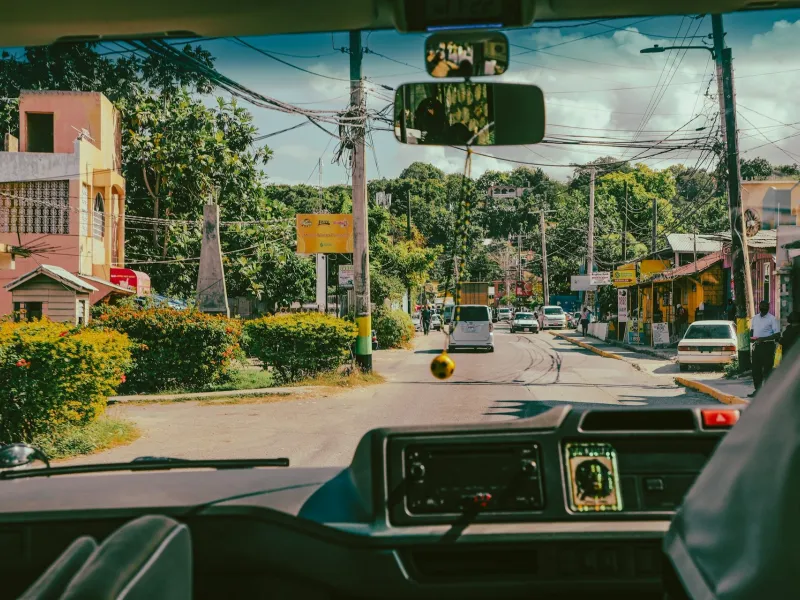
Nine Mile: Birthplace of Bob Marley
For music lovers, a visit to Nine Mile is a pilgrimage. This tiny mountain village is where reggae legend Bob Marley was born and later laid to rest. The guided experience takes you through his childhood home, personal artifacts, and the Rastafarian philosophy that shaped his art, and the soul of Jamaica itself.
The guide
Explore Jamaica by Interest
Planning
Food and Culture
Heritage and History
Traveler Resources
Deep Expertise
We collaborate with community leaders, historians, and creatives to bring you into the heart of Jamaica. Whether you’re learning Rastafarian herbal practices, enjoying a live dub poetry session, or cooking Ital cuisine with locals, every LABUSA moment is deeply rooted and respectfully curated.
Purpose-Driven Travel
LABUSA itineraries support small-scale farmers, artisans, and eco-initiatives: from sea turtle conservation efforts to regenerative tourism in Cockpit Country. Your visit directly contributes to the preservation of Jamaica’s cultural and environmental heritage.
Affordable Luxury & Authentic Moments
Stay in cliffside villas overlooking Negril’s sunsets, heritage cottages in the hills of St. Mary, or contemporary beachfront eco-resorts. Our handpicked accommodations pair authentic Jamaican hospitality with comfort, character, and sustainability.
Common questions
Jamaica Travel FAQs
- Do I need a visa to visit Jamaica?
- Jamaica publishes its own country by country table through the Passport, Immigration and Citizenship Agency, PICA, and its row for the United States of America reads: no visa required for 6 months. That is the destination's own immigration authority answering for a US passport holder arriving as a visitor. Two things go with it. Your passport must be valid for the duration of your stay, which is a shorter requirement than the six months beyond departure that many countries impose, and every arriving traveler must present a completed and signed Immigration and Customs C5 form, which can be done online before you fly. If you hold another passport, look your own nationality up in PICA's table rather than assuming it matches a travel companion's, and check again close to departure.
- What is the emergency number in Jamaica?
- For an ambulance, the official health guidance is to call 110. This site publishes no other emergency number for Jamaica, because no other number appears in the sources this cluster is built on, and an emergency answer is the worst possible place to print a number somebody half remembered. Confirm the current numbers with your accommodation when you arrive. It takes one question and it is the kind of detail worth having before you need it.
- Is Jamaica safe for visitors?
- The official advice says something more specific than yes or no, and it is worth quoting closely. It records that homicide rates are high in Jamaica, that gang violence and shootings mostly occur in inner city areas, and that tourist areas are not usually affected by gang related crime and violence. Read that last hedge: the source says not usually, and it does not say tourist areas are safe. It also names places to be cautious in and around, among them Kingston, Spanish Town, Savanna la Mar and parts of Montego Bay. The most useful practical point is that the Jamaican government can put enhanced security measures in place at short notice in response to outbursts of violence, including a State of Emergency or a Zone of Special Operations, so check the current advice close to your departure date rather than relying on what you read when you booked.
- Do I need a yellow fever vaccination for Jamaica?
- The CDC record for Jamaica reads: vaccine is not recommended. What the same record does carry is hepatitis A, recommended for unvaccinated travelers one year old or older going to Jamaica, and hepatitis B, recommended for unvaccinated travelers younger than sixty, alongside its standing guidance about measles for international travelers. Which of those apply to you is a judgment for a clinician who knows your history, not for a travel page, so have the conversation with a travel clinic or your own doctor well before you fly rather than in the week you leave.
- What currency should I carry in Jamaica?
- The currency is the Jamaican dollar. US dollars are also accepted almost everywhere in the resort areas, and those are two different facts rather than one. Accepted is a commercial convenience offered by businesses, not a second official currency, and when you pay in US dollars the business sets the rate and often gives change in Jamaican dollars at a rate that also favors them. The practical consequence is simple: inside a resort you can get by on cards and US dollars, and anywhere else, which includes markets, small restaurants, buses and route taxis, you want Jamaican dollars. Withdraw them from a bank cash machine rather than changing money at a hotel desk, and carry small denominations, because change for a large note is a recurring problem.
- When is hurricane season in Jamaica?
- The cited guidance is that hurricane season normally runs from June to November. That overlaps the wetter months without being the same thing, and keeping the two apart matters when you plan. An ordinary wet season afternoon is an inconvenience you work around, usually a heavy burst that clears. A tropical system is a reason to have bookings you can change, a way of receiving official warnings while you are in the country, and travel insurance that covers disruption rather than only medical costs. Most trips in these months are entirely uneventful, and the point is not to avoid the season but to book it differently from the way you would book February.
- What are Jamaica's World Heritage Sites?
- Jamaica has two, and they were inscribed ten years apart. The Blue and John Crow Mountains were inscribed in 2015 as a mixed cultural and natural property in the east of the island, recognized for its biodiversity and for its cultural significance together, which is the right category because the terrain that makes it an exceptional natural reservoir is the same terrain that made it a refuge for people who escaped enslavement. Port Royal, at the mouth of Kingston Harbour, was inscribed much more recently, in 2025, as the Archaeological Ensemble of 17th Century Port Royal. Much of the seventeenth century town went into the harbour in the earthquake of 1692 and stayed there, which is what the inscription recognizes. Note that the submerged archaeology is a research site rather than somewhere a visitor swims around; what you can visit is the town above water, including Fort Charles.