
Why visit
Why visit Bahamas?
With its powdery beaches, turquoise waters, and luxury resorts, the Bahamas is perfect for island-hopping, snorkeling the Andros Barrier Reef, or exploring natural wonders like Blue Holes National Park. In Nassau, visitors can stroll the Queen’s Staircase or shop at vibrant straw markets. Beyond the bliss, the islands are steeped in history. The Pompey Museum and Clifton Heritage Park preserve the legacy of Black Loyalists and formerly enslaved Africans who found freedom here. Festivals like Junkanoo bring African-rooted celebration to life, offering travelers a colorful, cultural window into resilience and identity.
Top places to visit
Popular Attractions
in Bahamas
-
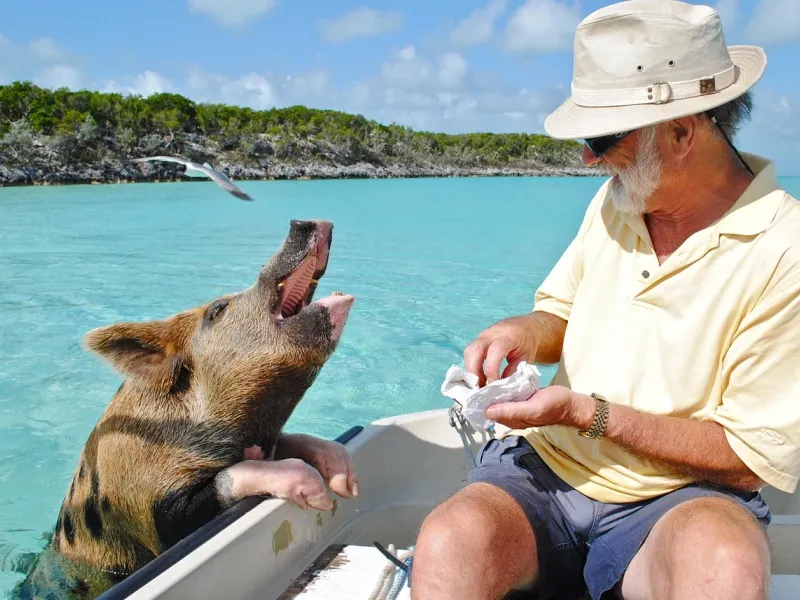
Exuma Cays: Turquoise Waters and Swimming Pigs
The Exumas are a chain of pristine, low-lying islands where luxury meets wild beauty. Charter a boat to visit Big Major Cay, home of the world-famous swimming pigs, snorkel Thunderball Grotto (made famous by James Bond), and wade through sandbars that seem to float in the sky. This is paradise in motion.
-
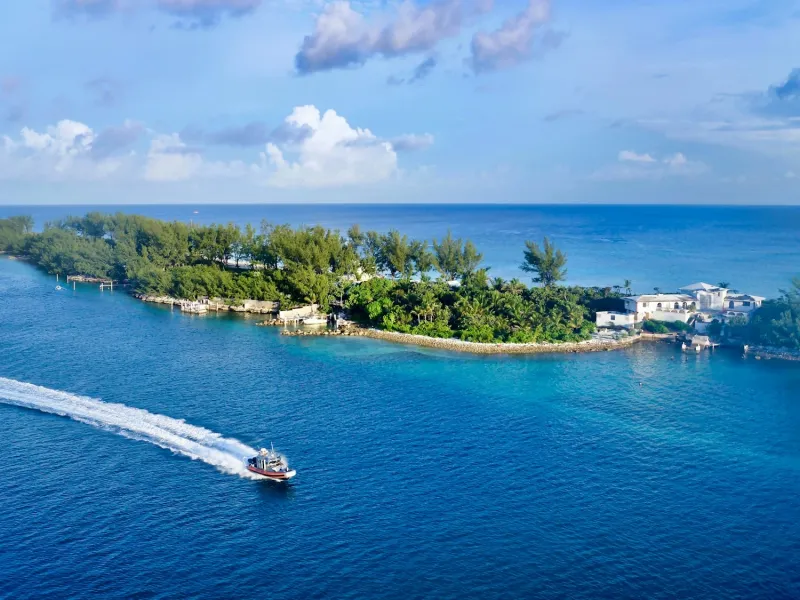
Nassau & The Queen’s Staircase
Nassau pulses with history and vibrancy. Walk through pastel-colored colonial buildings, visit the Queen’s Staircase, a 66-step limestone landmark carved by slaves in the late 18th century, and explore the National Art Gallery of The Bahamas. Nassau offers a blend of cultural storytelling, spirited markets, and coastal charm.
-
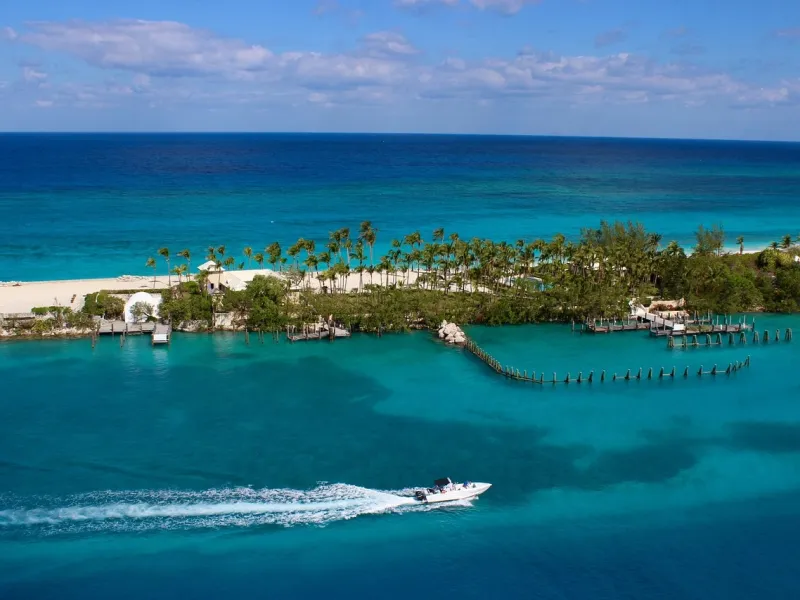
Andros Island: The Bahamas’ Wild Heart
Andros is the largest and least developed island, a haven for nature lovers and spiritual seekers. Home to the third-largest barrier reef in the world and mysterious blue holes, Andros offers world-class diving, bone fishing, and eco-retreats. It’s where the adventurous go to find stillness.
The guide
Explore Bahamas by Interest
Planning
Food and Culture
Heritage and History
Traveler Resources
Deep Expertise
We partner with Bahamian artists, ecologists, and cultural historians to ensure immersive, meaningful experiences. From bush medicine walks and storytelling circles to private culinary sessions with island chefs, LABUSA brings you into the heart of Bahamian life.
Purpose-Driven Travel
Our itineraries support local economies, reef preservation, and community initiatives. Whether you're planting mangroves, visiting a sustainable conch farm, or learning rake-and-scrape rhythms from local musicians, your journey makes a lasting impact.
Affordable Luxury & Authentic Moments
Stay in boutique beachfront villas, eco-lodges in the out islands, or historic inns in Nassau’s heart. LABUSA’s handpicked accommodations reflect both luxury and locality where comfort meets character.
Common questions
Bahamas Travel FAQs
- Do I need a visa to visit the Bahamas?
- For British citizen passport holders the Foreign, Commonwealth and Development Office states that you can usually stay for up to 30 days without a visa, and that extensions can be applied for to a maximum of 8 months. Thirty days is shorter than several neighboring destinations grant, so it is worth checking against your own ticket rather than assuming. The authorities in the Bahamas set and enforce entry rules, so travelers holding any other passport should confirm their own position with the Bahamian immigration authorities. Penalties for overstaying are a fine, detention and deportation.
- Does my passport need six months of validity?
- Yes. The requirement is an expiry date at least 6 months after the date you plan to leave the Bahamas, counted from your departure rather than your arrival. This is the fact most likely to be carried in wrongly from a nearby island: several territories in this region ask only that a passport be valid for the length of the visit, and a traveler who applies that rule here can be refused at the airline check in desk before an immigration officer ever sees the document.
- Is the Bahamas an independent country?
- Yes. The Bahamas is sovereign, not a British Overseas Territory and not anybody's dependency, and the Foreign, Commonwealth and Development Office states plainly that the authorities in the Bahamas set and enforce entry rules. UNESCO dates Bahamian independence to 1973, in its account of the lighthouse service that was managed from Britain until that year. The distinction matters in practice, because several of the nearest neighbors are territories whose rules are written somewhere else.
- What are the emergency numbers in the Bahamas?
- The Foreign, Commonwealth and Development Office instructs travelers to call 911 or 919 and ask for an ambulance. Two numbers rather than one is worth committing to memory before you need either. Treatment is recorded as being of a good standard but expensive, and emergency medical facilities are limited on all the Family Islands, with serious cases transferred to Nassau or Freeport, so insurance that covers an inter island transfer matters more here than the treatment cost alone.
- When is hurricane season in the Bahamas?
- The Foreign, Commonwealth and Development Office records the season as running from 1 June to 30 November. That is a window in which tropical storms form rather than a forecast of any particular week, so travel inside it is normal and what changes is the value of a flexible booking and of insurance that covers disruption. Travel outside it is not a guarantee either. Read a current forecast close to departure in both cases.
- Does the Bahamas have a UNESCO World Heritage Site?
- No. UNESCO records no property inscribed on the World Heritage List for the Bahamas, and two sites on the Tentative List, which is the inventory of properties a State Party intends to consider for nomination. The two are the Historic Lighthouses of The Bahamas and the Inagua National Park. A tentative listing is a statement of intent rather than a designation, and signage and tour commentary routinely blur the two.
- Which islands does the official safety advice single out?
- The Foreign, Commonwealth and Development Office records violent crime in residential and tourist areas of New Providence and Grand Bahama, which are the two islands carrying most of the visitor infrastructure. It records that the outlying Family Islands, also called the Out Islands, have lower crime rates. It also records that risk rises during regattas and festivals, that the water sports industry is poorly regulated, and that you should never go into water that has been baited.