Three layers, and they are not interchangeable
This cluster's sources describe three distinct pasts in the same islands, and a visitor who collapses them into one story will misread every site they stand in front of.
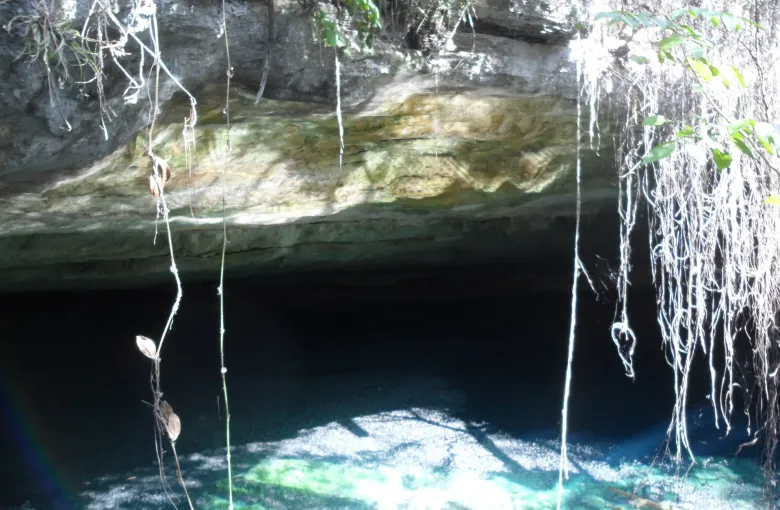
The Lucayan layer comes first. The Bahamas National Trust records preserved remains of the Lucayan Indians in the cave system at Lucayan National Park. These were the people here before any European arrival, and they are the reason a park on Grand Bahama carries that name.
The African layer is the one most visitors are tracing. The official tourism site records the widely held belief that Junkanoo evolved from the days of slavery, when Loyalists who migrated to the Bahamas in the late eighteenth century brought enslaved Africans with them. That single sentence is a migration, a forced displacement and the origin of a population, and it is the reason the Bahamian present looks as it does.
The national layer is recent. UNESCO dates Bahamian independence to 1973. A person who greets you may well have been born under a different arrangement.
The detail worth carrying to a heritage site
UNESCO's account of the lighthouses contains the sentence that changes the visit. The towers were designed in England but built and manned by local British subjects, the ancestors of present-day Bahamians.
For a visitor tracing descent, that is not an architectural note. It is an acknowledgment in an international record that the labor and the skill were local, and that the people who did it have descendants who live here now. Our lighthouse guide goes further into it.
Language as evidence
Ethnologue records one living indigenous language in the Bahamas, Bahamas English Creole, alongside official English. A creole is a historical document in itself: it exists because populations who did not share a language had to build one, under conditions nobody chose. Hearing it is hearing the outcome of the history above, still in use by 413,000 people. Our culture guide covers how to receive that as a visitor.
Arriving well
Come having read rather than expecting to be taught. Ask before photographing people, and do not photograph human remains at all. Accept that a family connection is likely to be traced through records and conversation rather than through a monument, and that the people best placed to help you are living their own lives. Spend money locally, and in more than one island if you can; our transportation guide covers what that involves.
⚠ What this guide cannot do
It cannot help you trace an individual ancestor. No source in this cluster's register covers Bahamian genealogical archives, record offices, church registers or DNA services, and a page that invented a research route would send people somewhere that may not exist. The Bahamian national archives and the country's own institutions are the correct starting point, and this guide points you at them rather than pretending to be them.
Sources
- The Islands of The Bahamas, official tourism site: Junkanoo: a street parade accompanied by whistles, cowbells, horns and goatskin drums, held on Boxing Day and New Year's Day and many Saturdays through the summer, whose largest celebration takes place on Bay Street in downtown Nassau while Bahamians across the 16 islands mark it, and whose origin the site records as unknown, offering the theory of John Canoe, a legendary West African Prince, and the more widely held belief that it evolved from the days of slavery, when Loyalists who migrated to The Bahamas in the late 18th Century brought enslaved Africans with them. Accessed 18 September 2026.
- UNESCO World Heritage Centre: Historic Lighthouses of The Bahamas, on the Tentative List: eleven lighthouses built by the British Imperial Lighthouse Service between 1836 and 1887, designed in England but built and manned by local British subjects, the ancestors of present-day Bahamians, and managed by the service until Bahamian independence in 1973. Accessed 18 September 2026.
- Bahamas National Trust: Lucayan National Park: established in 1982 and expanded in 2015, protecting one of the longest charted underwater cave systems together with preserved remains of the Lucayan Indians, and now the second most visited national park in the Bahamas, where a species new to science, Speleonectes lucayensis, was collected in Ben's Cave. Accessed 18 September 2026.
- Ethnologue, SIL International: Bahamas country language record: a country of 413,000 people with one living indigenous language, Bahamas English Creole, alongside English, which is the official language of the country. Accessed 18 September 2026.
Other Articles
Lucayan National Park and the Cave System
Bahamian Culture and Etiquette