
Why visit
Why visit Guatemala?
Guatemala stirs with ancient Maya temples in Tikal, scenic Lake Atitlán, and colorful markets in Chichicastenango. On the Caribbean coast in Livingston, the Garifuna people carry on their Afro-Indigenous heritage with music, language, and coastal cuisine. Diaspora visitors will find resonance in this blend of African ancestry and Mesoamerican memory, alive through festival, dance, and storytelling.
Top places to visit
Popular Attractions
in Guatemala
-
Lake Atitlán
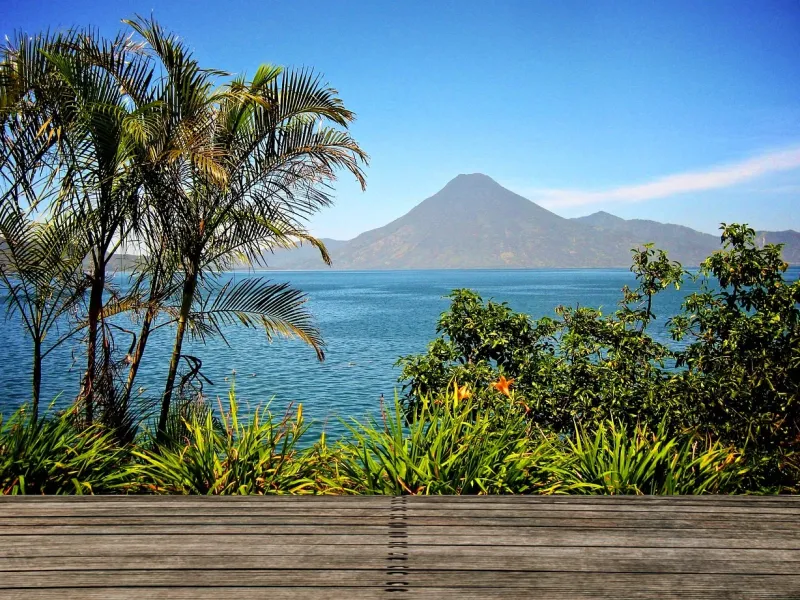
Surrounded by three volcanoes and over a dozen Maya villages, Lake Atitlán is considered one of the most beautiful lakes in the world, and one of the most spiritually charged. Each village around the lake has its own character and language. Explore the markets of Santiago Atitlán, engage in a backstrap weaving workshop in San Juan, or attend a Maya fire ceremony guided by a local spiritual elder. Atitlán is not just a destination. It’s a deeply sacred experience.
-
Antigua: Colonial Elegance and Cultural Revival
Antigua is a city of timeless beauty, with cobbled streets, crumbling churches, and a backdrop of volcanoes. Once the capital of Spanish Central America, today it’s a UNESCO World Heritage Site and a hub for language learning, coffee culture, and artistic exchange. Visit chocolate-making cooperatives, learn about Afro-Guatemalan contributions to Guatemalan independence, or hike to nearby volcanoes by day and relax in boutique colonial inns by night.
-
Livingston: Garifuna Culture on the Caribbean Coast
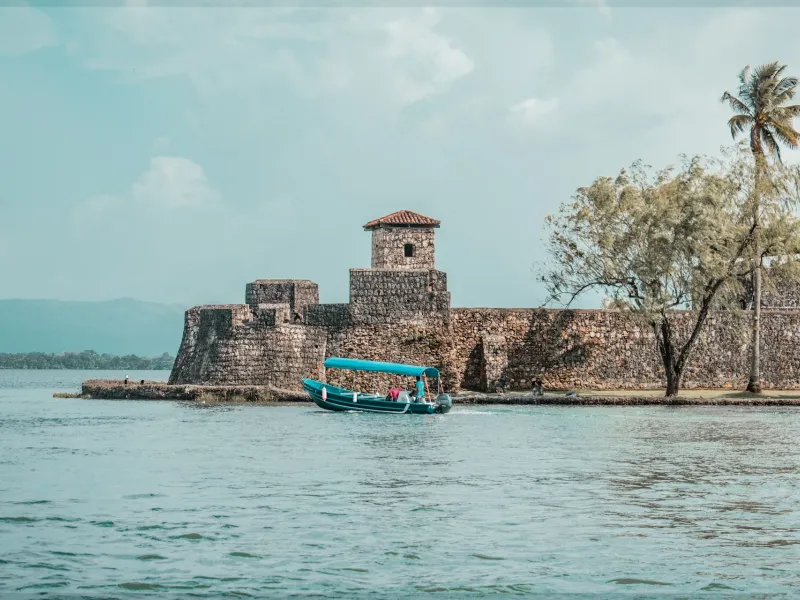
Accessible only by boat, Livingston offers a rich Afro-Indigenous cultural experience unlike anywhere else in Guatemala. This small coastal town is home to the Garifuna people, descendants of West Africans and Indigenous Caribs, who maintain powerful traditions of drumming, dance (punta), and spiritual resilience. Taste tapado (a coconut seafood stew), learn the stories of Garifuna resistance, and dance with local musicians who keep ancestral rhythms alive and beating strong.
The guide
Explore Guatemala by Interest
Planning
Food and Culture
Heritage and History
Traveler Resources
Deep Expertise
We bring more than brochures. We bring lived experience, trusted relationships, and cultural fluency. Our team works hand-in-hand with Maya and Garifuna guides, historians, and artisans across Guatemala. From the sacred shores of Lake Atitlán to the Afro-Caribbean rhythms of Livingston, we ensure your journey is not only well-planned but also deeply informed by the people who know this land best
Purpose-Driven Travel
Our team designs culturally immersive experiences for curious, conscious travelers who want more than sightseeing. Whether you’re exploring ancestral weaving traditions, supporting Afro-Indigenous storytelling projects in Livingston, or visiting community-led conservation areas, your journey is rooted in mutual respect and meaningful exchange. We don’t just get you there. We help you arrive with presence and purpose.
Affordable Luxury & Authentic Moments
Guatemala’s beauty lies in its depth, not its price tag. LABUSA Travel offers curated itineraries that balance comfort with culture, value with vision. From charming eco-lodges with volcano views to family-run workshops and spiritual encounters that don’t appear on tourist maps, we make authentic travel accessible. With us, you experience the richness of Guatemala, not from the outside looking in, but heart-to-heart.
Common questions
Guatemala Travel FAQs
- Do I need a visa to visit Guatemala?
- Guatemala sets and enforces its own entry rules, and this site does not publish an answer for United States passport holders, because the source cached for this cluster was written for a different nationality and its allowance does not transfer. Ask the Guatemalan consulate responsible for where you live, close to your travel date. What applies more widely is the mechanics: the cited source records ninety days without a visa, a passport valid at least six months beyond the date you arrive, and at least two blank pages in it. The blank pages condition is the one that goes unnoticed, and a full but unexpired passport is not a problem that can be solved at the airport.
- Is Lake Atitlan a World Heritage Site?
- No, and almost everybody assumes otherwise. Guatemala has four properties on the World Heritage List and the lake is not among them: Antigua Guatemala and Tikal were both inscribed in 1979, Quirigua followed in 1981 and a fourth site was added in 2023. Lake Atitlan sits instead on Guatemala's Tentative List, entered in 2002 as a protected area of multiple use, and a place on that list is a statement of intent rather than a designation. None of which makes the lake less worth the days you give it. It is simply worth knowing which of the things you are looking at carries the label, and Tikal is the more unusual case anyway, since it is inscribed as a mixed property for its rainforest as well as its Maya city.
- Is it safe to travel in Guatemala?
- The advisory that applies here is narrow, and reading it as a warning about the country is the common error. The cited advisory advises against all but essential travel within five kilometers of the Mexican border, from the Pacific Coast up to and including the Gracias a Dios crossing, and to the towns of Santa Ana Huista, San Antonio Huista and La Democracia in the department of Huehuetenango. That is the whole of it, and the places visitors actually go are well away from it. What shapes an ordinary trip instead is opportunistic theft, which ordinary habits answer: booked transport rather than a street hail after dark, the day's cash on you and the rest in the hotel safe, and a phone out of sight. Avoid demonstrations and roadblocks, which can close an intercity route for a day with no warning.
- Do I need vaccinations or antimalarials for Guatemala?
- The cited public health source records the yellow fever vaccine as not recommended for Guatemala itself, and not required for travel arriving direct from the United States. It is required for travelers aged one year and over arriving from a country with a risk of transmission, and that rule counts an airport transit or layover of more than twelve hours in such a country, which is the clause that catches people on a cheap routing. On malaria, the same source records transmission primarily in the departments of Alta Verapaz, Baja Verapaz, Escuintla, Izabal and Peten, with few cases reported elsewhere, and records no transmission in the cities of Antigua or Guatemala City and none at Lake Atitlan. What to take, if anything, is a question for your own clinician several weeks before you travel, and this site publishes no medication and no dose.
- What is the emergency number in Guatemala?
- Call 122 or 123 and ask for an ambulance. Two numbers are published rather than one, which is unusual, and it is worth putting both in your phone before you travel because a short number is exactly what nobody can recall under pressure. Care is reasonable in Guatemala City and Antigua, where the private hospitals are the best equipped in the country, and it is thinner in rural areas. The line of small print that matters most is medical evacuation: check that your policy includes it and that it covers any condition you have declared, because the distances from the Peten or the western highlands to a hospital that can help are long.
- What is the money situation in Guatemala?
- The currency is the quetzal, named after the bird, and outside the hotels and the larger restaurants this is genuinely a cash economy. Markets, shuttle drivers, village dining rooms, entrance fees at smaller sites and every stall you will actually want to buy something from take cash and nothing else. The practical skill is not exchange, it is denominations: machines dispense large notes and small vendors cannot break them, so break a big one whenever a supermarket or a hotel gives you the chance and keep a working float of small ones. Carry two cards from different banks, stored separately, and use machines inside a bank or a hotel lobby in daylight.
- When should I go, and what about Holy Week?
- The dry season runs from November through April and is the reliable half of the year, with bright cool days in the highlands and cold nights. The green season from May to October is wetter, much quieter and the most beautiful time in the mountains: the usual day is clear until the early afternoon and then wet for an hour or two, so a trip planned around early starts loses very little. The date that moves everything is Semana Santa, which falls in March or April with Easter. Antigua during that week is the largest religious event in Central America, with processions carried over carpets of dyed sawdust laid overnight in the street, and the town is completely full. Decide on purpose: build the trip around it, or find out when it falls and choose a different week.