Accessibility legislation exists in Guatemala and enforcement is limited. Most historic buildings predate any such idea by centuries, and the surfaces in the towns visitors most want to see are among the hardest in the country. This page sets out what that means in practice rather than softening it.
⚠ The surfaces
Antigua's streets are original cobbles: uneven, domed, with deep gutters and high curbs, and frequently no continuous sidewalk. A manual wheelchair is very hard work and a scooter is not practical. Village streets around Lake Atitlan are steep, often unpaved, and several lake towns are built on a hillside with steps as the main route.
Anyone who walks with a stick or tires easily should plan for short distances between rests rather than a day of walking, and should treat the cobbles as the limiting factor on every plan.
What works
- Antigua as a base. Plaza Mayor and the blocks immediately around it are relatively flat and paved, and a hotel on the square removes most of the walking from a day.
- A private vehicle with a driver. The single most useful adaptation available here, and it is not expensive by North American standards. It replaces shuttles, chicken buses and most of the walking at once.
- Panajachel. The main lakeside town is flat along its principal street, unlike most of the villages across the water.
- Tikal, partially. The main causeways between the principal groups are wide and reasonably level packed earth, and a good deal of the site can be seen without climbing anything. The temple staircases cannot be adapted.
- Quirigua. One flat plaza, a short circuit, and the monuments arranged around it. The most accessible archaeological site in the country.
What does not
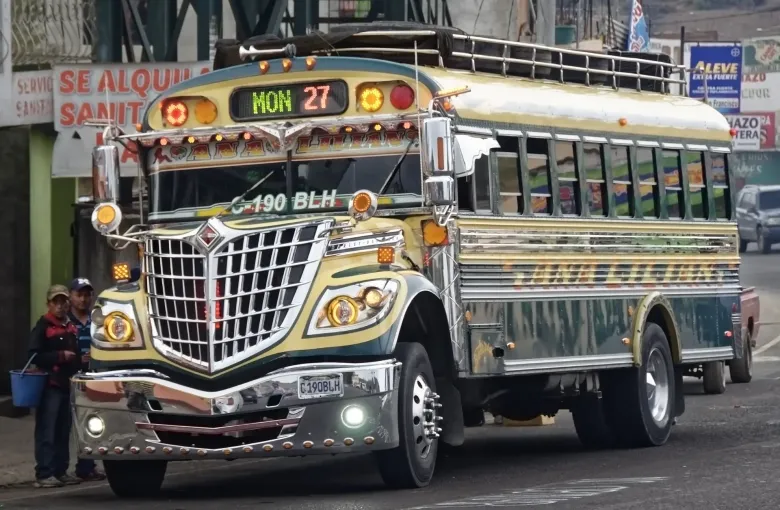
- Chicken buses, entirely. High steps, no space, and no time at a stop.
- Boat boarding on Lake Atitlan and the Rio Dulce, which is generally a step down into a rocking launch from a dock with no ramp. Crew will help willingly and it is still a physical transfer.
- Volcano hikes and most of Antigua's ruined convents, which have uneven footing throughout.
- Many older hotels, including some beautiful ones, which are built around courtyards with rooms up stairs.
Planning it
- Work with a specialist operator and describe your requirements precisely rather than in general terms. Ask about door widths, step free entrances and bathroom layouts, and ask for photographs.
- Book ground floor rooms explicitly and confirm in writing. Modern hotels on the outskirts are often more accessible than historic ones on the square, and the trade is charm for practicality.
- Bring spare parts and a repair kit. Wheelchair repair is not readily available and a specific part will not be.
- Altitude adds to fatigue in the highlands. Acclimatize before you go higher, never during, and build rest days in.
Medical and emergencies
Private hospitals in Guatemala City and Antigua are the best equipped in the country and are the realistic option in an emergency. Carry medication in original labeled packaging with a copy of the prescription, and take out insurance that explicitly covers your condition and includes medical evacuation.
⚠ Call 122 or 123 and ask for an ambulance. Carry both numbers, and carry your accommodation address written in Spanish.
For the layers and footwear this terrain demands, see the packing list; for the transport options in detail, see getting around.
Sources
- UK Foreign, Commonwealth & Development Office: Guatemala travel advice: the standing warning that the FCDO advises against all but essential travel to parts of Guatemala, and the index to the entry, safety, regional and health pages this cluster draws on. Accessed 17 September 2026.
- UK Foreign, Commonwealth & Development Office: Guatemala health: the emergency medical numbers 122 and 123, and the advice on insurance and medical evacuation. Accessed 17 September 2026.
Other Articles
Guatemala for Senior Travelers
Tikal National Park