
Why visit
Why visit Saudi Arabia?
Saudi Arabia opened to ordinary visitors in 2019 and almost nothing about it is what a traveler who has not been expects. It holds eight World Heritage properties, a Nabataean necropolis the size of a small town, the largest oasis on earth, a Red Sea coast with reefs that have barely been dived, and an escarpment two hours from the capital where the ground simply ends. Most of it is close to empty.
The territorial advice is unusually small, and saying so precisely matters more than softening it. The United Kingdom advises against all travel to within ten kilometres of the border with Yemen and against all but essential travel between ten and eighty kilometres of it. That is the whole of it. Riyadh, Jeddah, AlUla, Diriyah, Al-Ahsa and the Red Sea coast north of Yanbu carry no restriction at all, and that is where a trip goes.
Three of the eight properties carry this guide. Hegra near AlUla, inscribed in 2008, is the largest Nabataean site south of Petra. At-Turaif in ad-Diriyah, inscribed in 2010, is the adobe capital the Saudi state began in. Historic Jeddah, inscribed in 2014, is the last substantial survival of the Red Sea coral stone tradition. The other five are the Al-Ahsa Oasis, the rock art of Hail, Hima, Al-Faw and Uruq Bani Ma'arid.
The practical picture is lighter than most first time visitors assume. An electronic travel authorisation is obtained online before you fly, covers tourism and stays valid for 730 days against a limit of 180 days in total. Alcohol is not permitted anywhere in the country. Dress is loose clothing covering the elbows and below the knees, for men as well as women. It is all set out on the visa and entry requirements page and the travel safety guide.
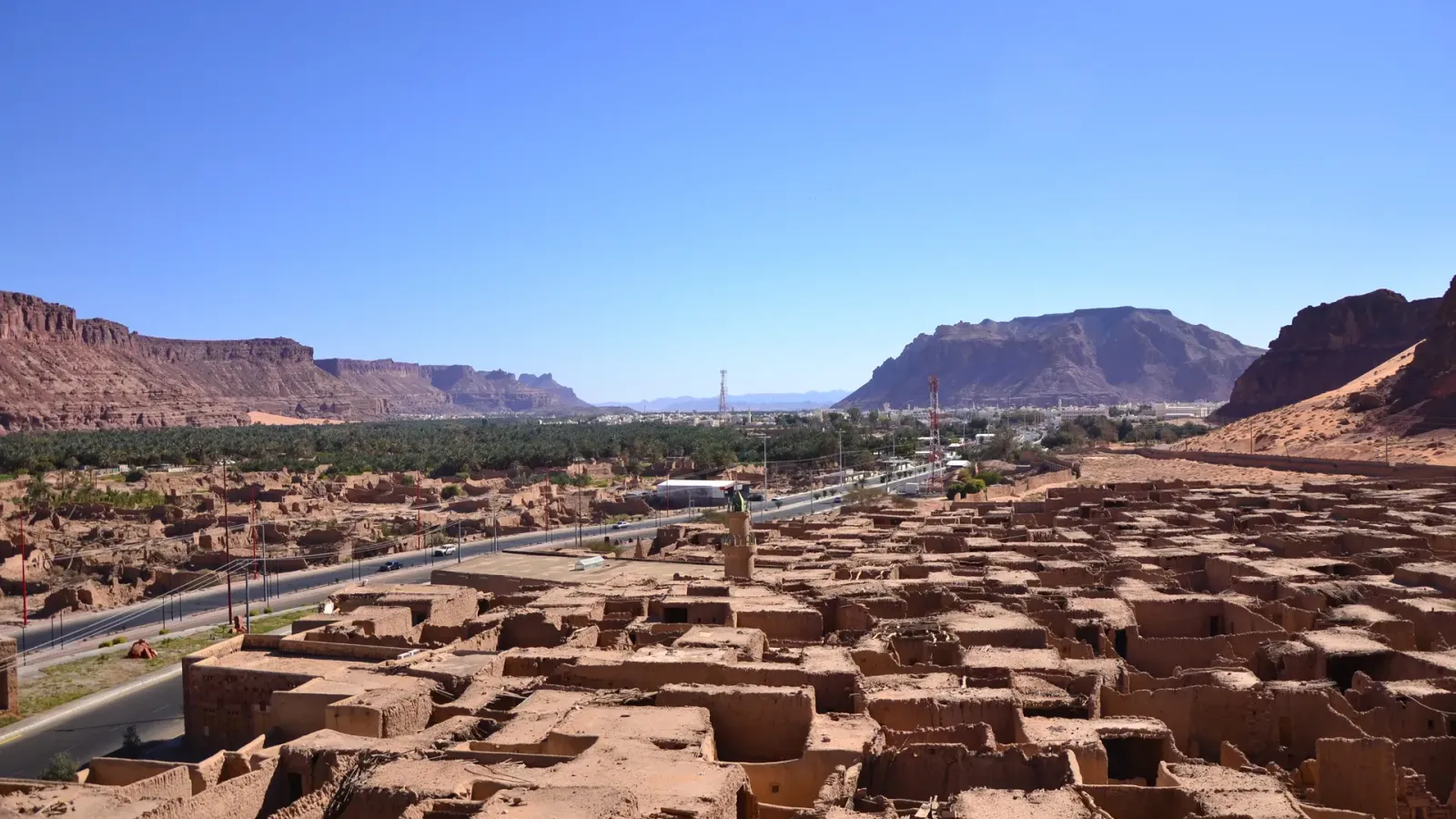
Top places to visit
Popular Attractions
in Saudi Arabia
-
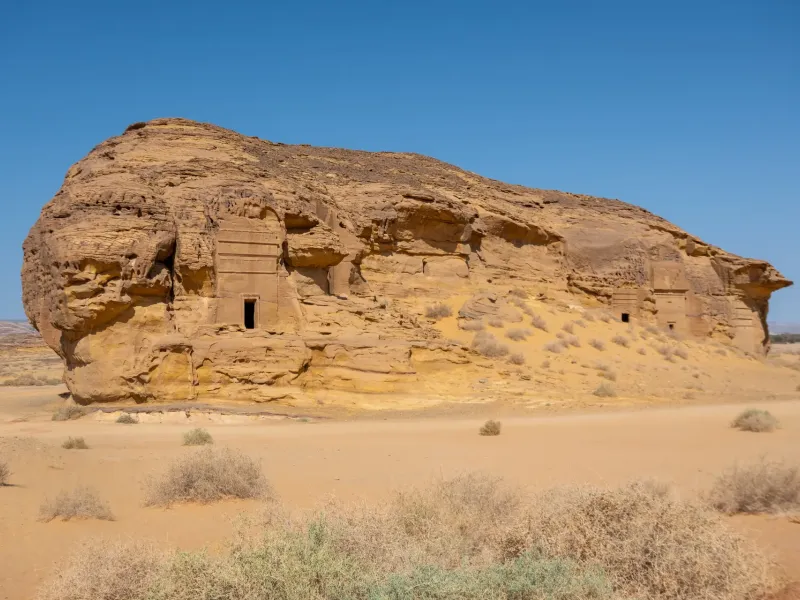
AlUla and Hegra
Sandstone tombs cut into free standing rock across a desert valley, carved by the Nabataeans and inscribed as Saudi Arabia's first World Heritage property in 2008. It is the largest Nabataean site south of Petra and it is almost empty by comparison. See the Hegra guide.
-
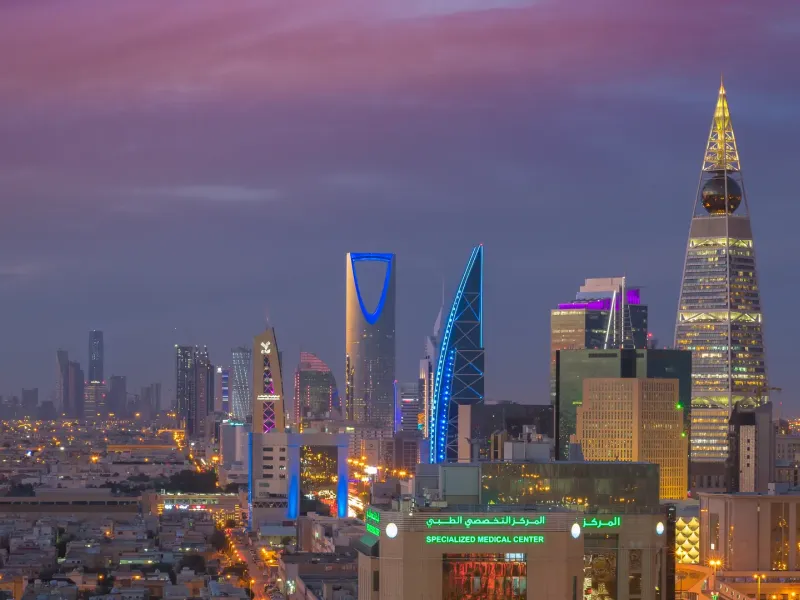
Riyadh
A capital rebuilding itself at speed, with a driverless metro, a national museum worth a half day and the escarpment country an hour outside it. Start with getting around and currency and money.
-
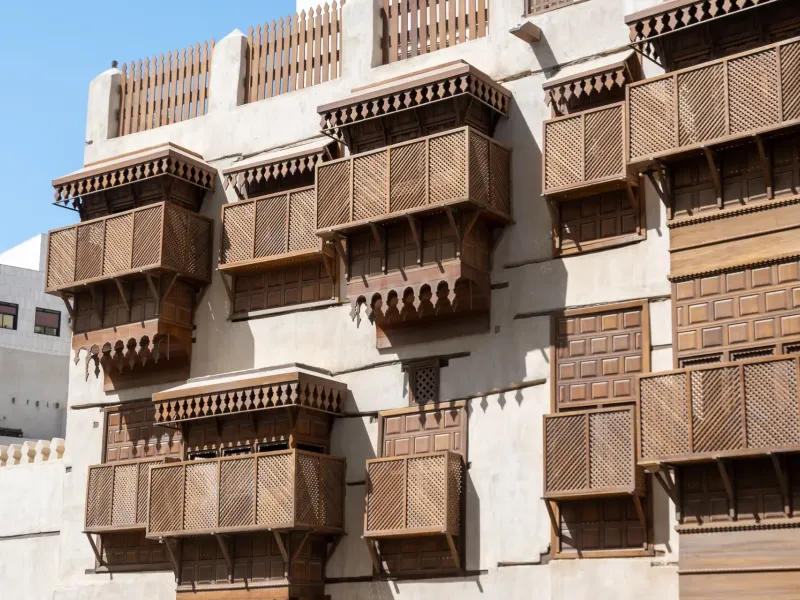
Historic Jeddah
Al Balad, inscribed in 2014: coral stone houses with tall latticed rawashin screens leaning over lanes too narrow for a car, and the last substantial survival of the Red Sea architectural tradition. See the Historic Jeddah guide.
-
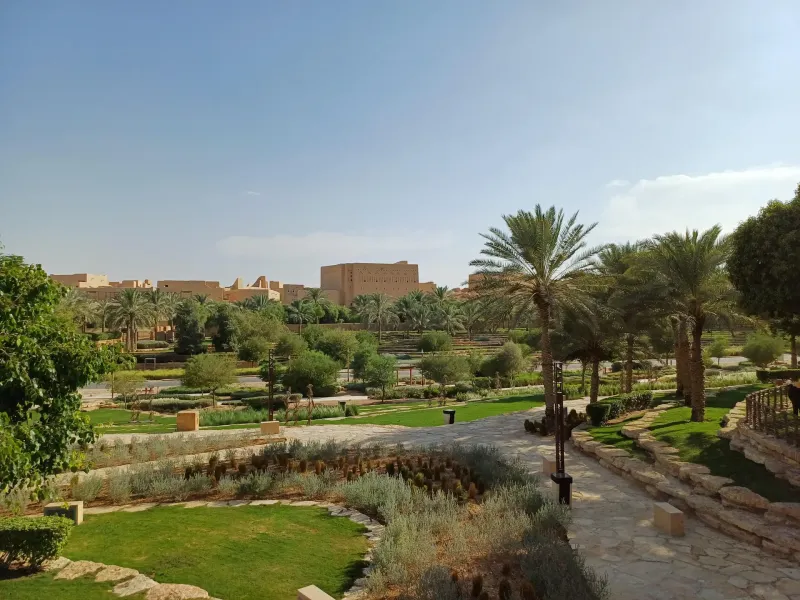
At-Turaif, ad-Diriyah
The mud brick capital the Saudi state began in, on the edge of Riyadh and inscribed in 2010. Adobe walls, a restored quarter and an evening when the light does the work. See the At-Turaif guide.
-
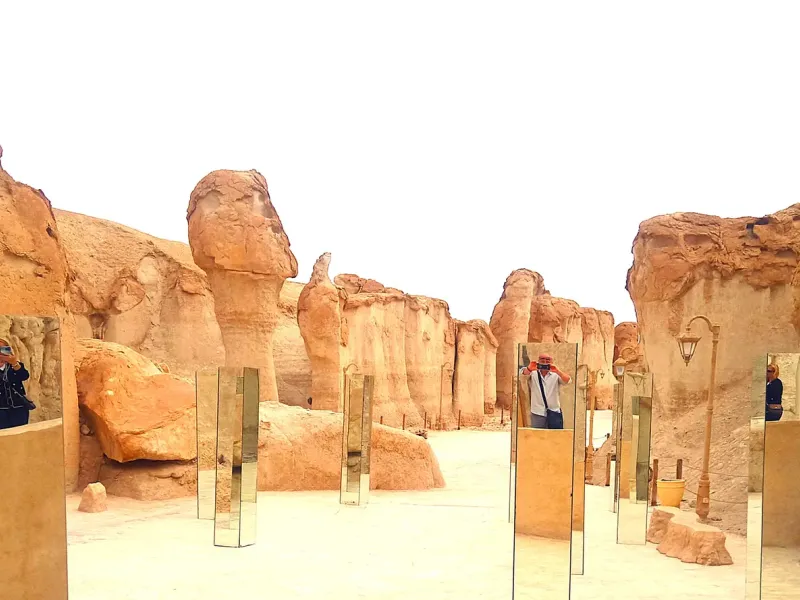
The Al-Ahsa Oasis
The largest oasis in the world, inscribed in 2018: millions of date palms, springs, canals and the caves of Al Qarah mountain, in the Eastern Province and largely unvisited by anyone who is not Saudi. See best time to visit.
-
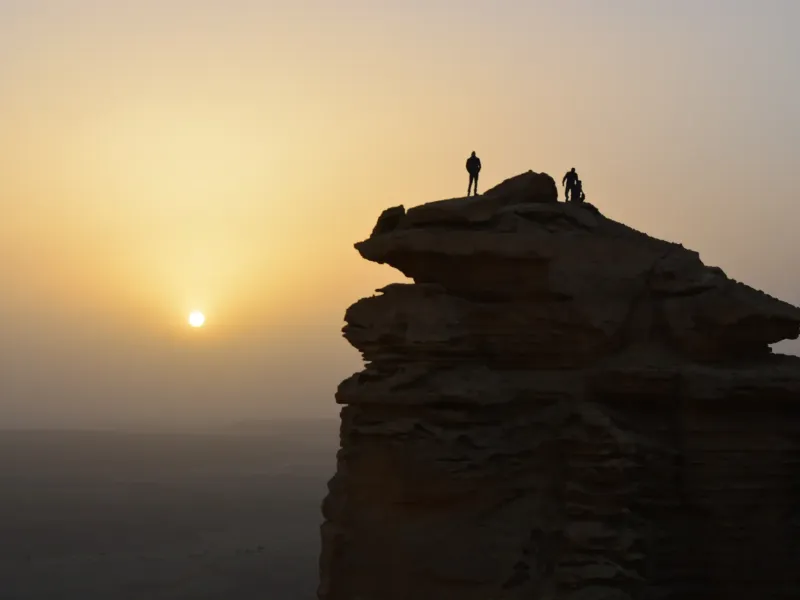
The Edge of the World
A break in the Tuwaiq escarpment about two hours from Riyadh where the cliff simply stops and the plain runs to the horizon. A driver, a four wheel drive and a late afternoon. See the packing list, because there is no shade at all.
The guide
Explore Saudi Arabia by Interest
Planning
Food and Culture
Heritage and History
Traveler Resources
Before you go
Planning
a trip to Saudi Arabia
-
Best Time to Visit Saudi Arabia
November to March, and we will tell you plainly that this is an editorial recommendation rather than a sourced figure. What is sourced is the reason: heat stroke and dehydration are named as summer health risks, and the desert sites are open ground. See the best time to visit guide and the weather guide.
-
Entry, Money and Getting Around
An electronic travel authorisation obtained before you fly, valid 730 days but good for only 180 days in total, and a passport valid six months from the day you arrive. See visa and entry requirements, currency and money and getting around.
-
Before You Book
The territorial advice is one band and we would rather you had it from us: the United Kingdom advises against all travel to within ten kilometres of the border with Yemen, and against all but essential travel between ten and eighty kilometres of it. Nothing else in the country carries a restriction. It is all on the travel safety guide.
Signature experiences
Signature
Saudi Arabia experiences
-
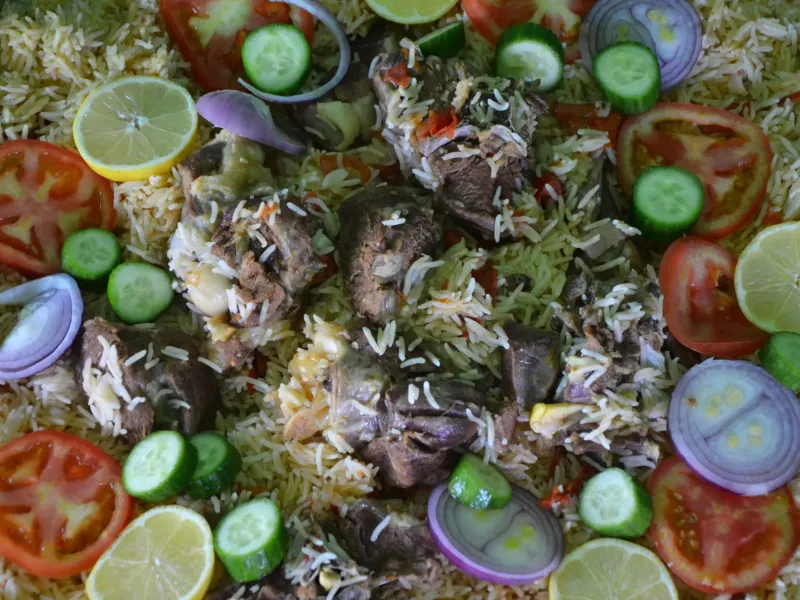
Kabsa, dates and the long table
Spiced rice under slow cooked lamb or chicken, eaten from a shared dish with the right hand, and dates and cardamom coffee before anything else happens. Restaurants run late because the heat decides the day. Start with the food guide.
-
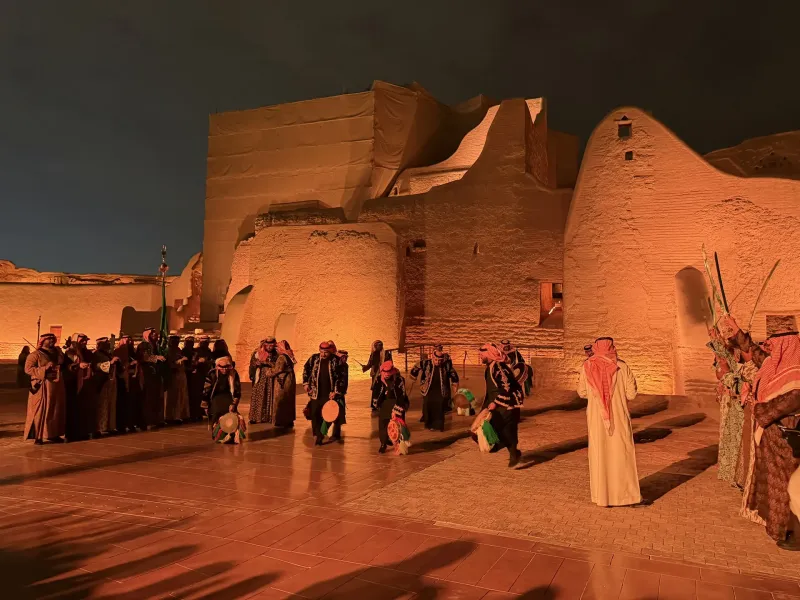
The ardha, and a festival calendar that moves
The ardha, the sword dance performed with drums and chanted poetry, is the one most visitors see. The rest of the calendar runs on the lunar year and moves earlier against your own by about eleven days annually, which is why we plan it rather than print it. See festivals and celebrations.
-
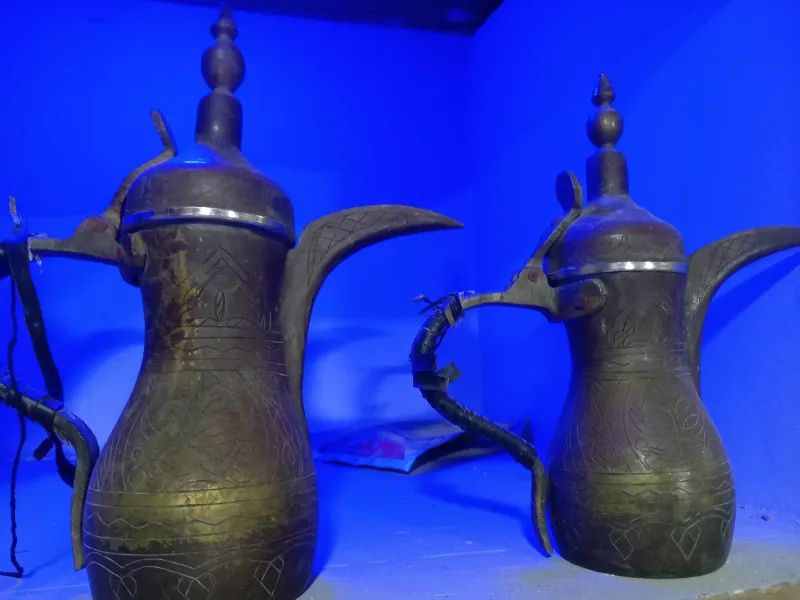
Coffee, the dallah and how to be a guest
Arabic coffee poured from a long spouted dallah into a small cup you shake gently to signal you have had enough. Greet before you do anything else, accept the first cup, and dress in loose clothing that covers the elbows and below the knees. See culture and etiquette.
Why choose LABUSA Travel for Saudi Arabia
We say where the line is, and where it is not
Saudi Arabia's entire territorial advisory is one band along the border with Yemen, and an operator who leaves that vague is either overstating the risk to sound careful or understating it to make a sale. We name the band, we name its two distances, and we say plainly that nothing else in the country carries a restriction.
The two numbers on your authorisation are ours to watch
An electronic travel authorisation is valid for 730 days and permits 180 days in total, and it is the second number that catches people who visit twice. Your passport must be valid six months from the day you arrive rather than the day you booked. Both are on our side of the arrangement.
We do not sell pilgrimage
Hajj and Umrah have their own visa category and their own specialist operators, and that is not what we do. We plan around the Hajj season because it governs flights and hotels across half the country, and we will tell you when your dates run into it.
Common questions
Saudi Arabia Travel FAQs
- Do I need a visa for Saudi Arabia?
- Yes. You must get a visa to visit Saudi Arabia, and which one depends on why you are going and how long you want to stay. For an ordinary leisure trip the route is an electronic travel authorisation obtained before you fly. Your passport must have an expiry date at least six months after the date you arrive, counted from arrival rather than from the day you booked.
- How long does a Saudi electronic travel authorisation last?
- An ETA is valid for 730 days from the date it is issued and permits multiple entries, but only 180 days in total across that two year period. The two numbers do different jobs and the second is the one that catches people: a long first visit eats into a second. It covers tourism, attending an event, visiting family and friends, and Umrah outside the Hajj season.
- What happens if I overstay?
- The FCDO is blunt about it. You could face large fines, detention and deportation, and you could be banned from returning to Saudi Arabia. Keep the arithmetic of the 180 cumulative days in your own head rather than assuming a border officer will do it for you.
- Is Saudi Arabia safe to visit?
- Almost all of it carries no territorial restriction at all. The UK Foreign, Commonwealth and Development Office advises against all travel to within ten kilometres of the border with Yemen, and against all but essential travel to areas between ten and eighty kilometres from that border. That is the entire territorial advice. Riyadh, Jeddah, AlUla, Diriyah, Al-Ahsa and the Red Sea coast north of Yanbu carry none of it, and a LABUSA itinerary is built entirely within that ground.
- Do I need malaria tablets for Saudi Arabia?
- Almost certainly not, and the reason is worth knowing. The US Centers for Disease Control and Prevention records malaria transmission only in the Asir and Jazan regions near the Yemen border, which is the same ground the FCDO advises against travelling to, and records no transmission at all in Jeddah, Mecca, Medina, Riyadh or Taif. An itinerary that respects the advisory has already settled the question. Discuss routine vaccines with a travel clinic in good time.
- When is the best time to visit Saudi Arabia?
- November to March. Warm dry days, cool evenings and the desert sites usable through the daylight. Outside that window heat stops being a discomfort and starts deciding your itinerary: the FCDO names heat stroke and dehydration as summer health risks, and Hegra and At-Turaif are open ground with sandstone and adobe radiating what they absorbed all day.
- What should I wear in Saudi Arabia?
- Loose fitting clothing that covers the elbow and below the knees. That is the FCDO wording and it applies to men and women alike, which is the half most visitors have not heard. Cotton and linen in loose cuts are cooler than less cloth would be, because what you are managing is sun on skin. A scarf is useful for women to carry for religious sites and more conservative settings.
- Can I drink alcohol in Saudi Arabia?
- No. Do not bring alcohol into the country and do not arrive under the influence of it, including anything bought in transit. Saudi restaurant culture runs on fresh juice, mint lemonade and coffee instead, and it runs late.
- How many World Heritage Sites does Saudi Arabia have?
- Eight. This guide covers three of them in detail: Hegra near AlUla, inscribed in 2008 and the largest Nabataean site south of Petra; At-Turaif in ad-Diriyah, inscribed in 2010 and the first capital of the Saudi dynasty; and Historic Jeddah, inscribed in 2014 and the last substantial survival of the Red Sea architectural tradition. The other five are Al-Ahsa Oasis, the rock art of Hail, Hima, Al-Faw and Uruq Bani Maarid.
- Does LABUSA Travel arrange Hajj or Umrah?
- No. Pilgrimage has its own visa category and its own specialist operators, and it is not what we do. We mention the Hajj season because it governs flights and hotel availability across half the country: during it the authorities have stopped visitors who are not performing the pilgrimage from flying to Jeddah, Madinah and Taif, which can remove a leg of an ordinary tourist itinerary.