
Why visit
Why visit Thailand?
Thailand enchants with Bangkok’s Grand Palace, Chiang Mai’s night bazaars, and the ancient ruins of Ayutthaya and Sukhothai. Lounge on Phuket’s beaches, island-hop in Krabi, or meditate in mountain temples tucked in lush jungles. Thai cuisine, hospitality, and Buddhist spirituality make for an immersive cultural experience. While Thailand doesn’t have a prominent African diaspora, historical records reference early African envoys and travelers who arrived through Indian Ocean routes. Today, the country’s emphasis on wellness, mindfulness, and sacred tradition offers diaspora travelers a deeply grounding opportunity to engage in personal healing and spiritual connection across cultures.

Top places to visit
Popular Attractions
in Thailand
-
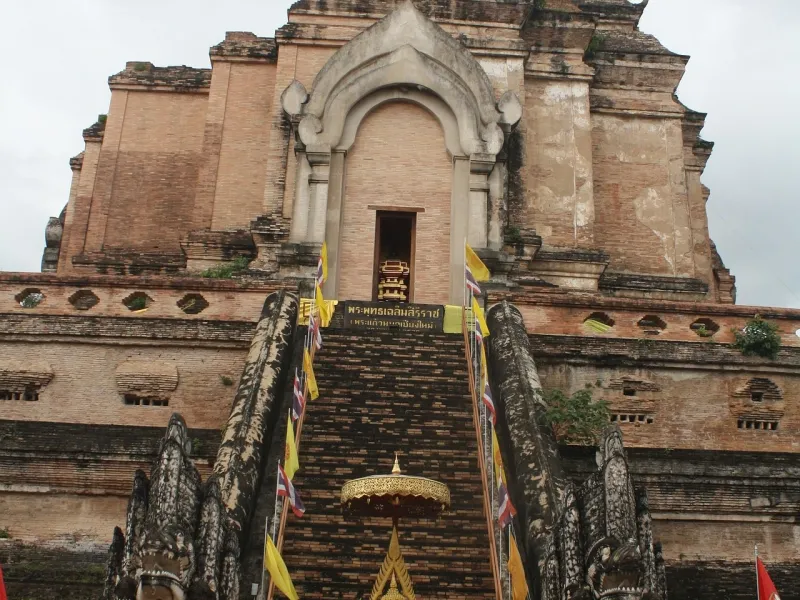
Chiang Mai Temples and Hill Tribes
Northern Thailand’s Chiang Mai is the cultural heart of the country, where over 300 temples offer space for contemplation, beauty, and learning. Visit Wat Phra That Doi Suthep perched on a misty mountain, and join in a blessing ceremony led by resident monks. Extend your journey with a visit to surrounding hill tribe villages, where Indigenous communities like the Karen and Hmong share centuries-old customs, textile traditions, and a slower, meaningful way of life.
-

Bangkok’s Grand Palace and Floating Markets
In Thailand’s energetic capital, tradition and innovation exist side by side. The Grand Palace dazzles with its golden spires, intricate mosaics, and reverent atmosphere. It’s a must-see for understanding Thailand’s royal and spiritual legacy. Just a short ride away, Bangkok’s floating markets offer a sensory immersion into Thai life: sample tropical fruits, shop from boat vendors, and experience the rhythm of daily commerce on the water. It’s a dynamic introduction to a city of surprises.
-
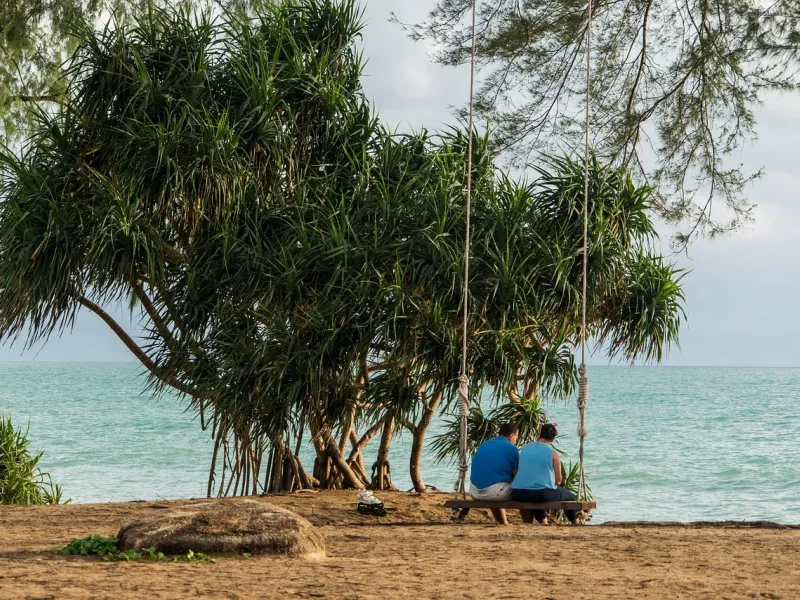
Phuket & The Andaman Coastline
For those drawn to sea and sun, Thailand’s southern coastline is a dream come true. Phuket, the country’s largest island, offers luxury resorts, water adventures, and easy access to the famed Phi Phi Islands. Beyond the beaches, explore mangrove forests, indulge in Thai massage by the ocean, or snorkel over coral reefs teeming with life. Whether you're sailing into a sunset or enjoying freshly grilled seafood at a beach shack, Thailand’s coast delivers serenity and spectacle.
The guide
Explore Thailand by Interest
Planning
Food and Culture
Heritage and History
Traveler Resources
Deep Expertise
Our Thailand specialists craft experiences rooted in authenticity and mutual respect. We work with local guides, artisans, and cultural leaders to ensure your journey supports communities and deepens your understanding of the places you visit.
Purpose-Driven Travel
We don’t believe in one-size-fits-all travel. Whether you seek a spiritual retreat in a forest monastery, a hands-on Thai cooking class in a local home, or a luxury yacht tour of the islands, we tailor your itinerary to reflect your interests and travel goals.
Affordable Luxury & Authentic Moments
Thailand is a place of natural richness and cultural generosity, and our itineraries honor that spirit. Enjoy thoughtfully chosen accommodations, from boutique jungle lodges to beachfront resorts, all while maintaining a balance between comfort, authenticity, and ecological mindfulness.
Common questions
Thailand Travel FAQs
- Do I need a visa to visit Thailand?
- Whether you need one is decided by the passport you hold, so the honest answer is to check with your own government rather than to take a figure off a travel page. What this cluster can tell you is the shape of the rule Thailand applies, as described by the UK Foreign, Commonwealth and Development Office, whose entry advice is written for British passport holders and is attributed as such throughout this site. That advice states that from 15 September 2026, entering under the visa exemption scheme allows a stay of up to 30 days for tourism only. Read that date twice. It is recent, it is a reduction from what came before, and any page that quotes a longer figure is quoting a rule that has changed. The same advice is explicit that the exemption does not cover business travel, so a conference or a meeting is a different question with a different answer and the appropriate visa has to be obtained in advance. One further condition sits in the same advice and is easy to miss: you may be asked to prove you have enough money for your stay, given as at least 10,000 Thai baht per person. It is rarely checked and it is a real requirement, which is an uncomfortable combination to plan around. Americans can raise all of this with the U.S. Embassy in Bangkok, which is the authority for a U.S. passport in a way that no travel guide is.
- How long does my passport need to be valid for Thailand, and do I need blank pages?
- There is a fixed period here, and that is worth saying plainly because it is not true everywhere. The entry advice this cluster cites states that your passport must be valid for at least 6 months after the date you arrive, and that it must have at least 1 blank page. Both halves matter and the second is the one people are caught by, because a passport can be years from expiry and still be full. Count the months forward from your arrival date rather than from the day you book, since a trip planned far enough ahead can slip under the line while the passport sits in a drawer looking fine. Check the pages at the same time, and if either is marginal, renew before you travel rather than hoping at a counter. The trap worth naming is a habit rather than a rule: several destinations this site covers set no fixed period at all and ask only that the passport outlast the stay. Carrying that expectation into this one is how a six month requirement becomes a conversation at check in. If you hold a passport from somewhere other than the United Kingdom, the requirement is set by Thailand rather than by your nationality, but the place to confirm it is still your own government or the Thai authorities.
- Do I have to complete an arrival card before I travel to Thailand?
- Yes, and it is done online before you go rather than on the plane. The entry advice this cluster cites records that from 1 May 2025, all foreign nationals entering Thailand, whether by air, land or sea, must complete a digital arrival card online before arrival, and that it can be completed within 3 days before they arrive. Three things follow from that. It applies however you arrive, so a land crossing from a neighboring country or a cruise call is covered by the same requirement as a flight. It is a short window, so it is a task for the week of travel rather than the month of booking, and putting it on a calendar is more reliable than remembering it. And the paper form handed out in the cabin is what this replaced, so do not wait for one. This page names the official site rather than quoting it, and the reason is worth knowing: the arrival card site is built entirely in the browser and serves almost no readable text to anything that fetches it, so nothing in this cluster research register can verify a sentence from it. Complete it on the official government site only. A search for it will surface intermediaries that charge for a free registration, which is the most common way travelers lose money on this step.
- What happens if I stay in Thailand longer than my visa exemption allows?
- It is charged by the day and it escalates into something that outlasts the trip. The entry advice this cluster cites states that overstaying carries a fine of 500 Thai baht a day up to a maximum of 20,000 baht, and that people who overstay can be banned from re-entering Thailand for up to 10 years. The fine is the small half. A ban measured in years is a consequence attached to your passport rather than to your wallet, and it is imposed for a reason that is usually an oversight rather than an intention. Practical shape. Know the date your permitted stay ends and treat it as a fixed appointment, not an estimate, because the day you entered counts. Build in a margin against a missed flight or a change of plan rather than booking to the last permitted day. And if something does go wrong and you realize you are close to or past the limit, deal with it at an immigration office before you reach the airport, because the departure desk is the worst place to discover it. Extensions exist and are handled by Thai immigration, not by an airline or a hotel, and this page will not put a figure or a procedure behind them because no source in this register publishes one.
- Is it really illegal to criticize the Thai monarchy?
- It is illegal, it is enforced, and this is the single fact about Thai law a visitor is least likely to arrive knowing. The safety advice this cluster cites states that criticizing the Thai monarchy is illegal, that the law can be interpreted broadly and carries a long prison sentence, and it records that journalists, human rights defenders and members of the public have been charged over political comments or articles shared online. Read the middle clause carefully, because it is the one that makes the rest unusual. A broadly interpreted law is not one you can reliably stay clear of by knowing where a line is drawn, and a long prison sentence is not a fine. Two consequences people miss. It reaches things posted online, including posts written before you traveled and posts made from outside the country, so this is not only about what you say in a room. And it reaches sharing as well as authoring, which is a distinction that carries no weight here. This page states it as law rather than as etiquette, deliberately, because framing a criminal offense as a matter of respect or local custom would leave a reader thinking the risk is causing offense. It is not. Images of the King and the royal family should be treated with care for the same reason.
- Should I leave my passport as a deposit when renting a motorbike or jet ski in Thailand?
- No. Do not hand your passport over as a guarantee, and this is one of the few places where a travel page can be that blunt, because the official safety advice is. It records that companies may hold on to passports against claimed damage, and it names motorcycle and jet ski rental businesses specifically. The mechanism is worth understanding before you are standing at a counter being asked. Once the document is behind the desk, any dispute about a scratch stops being an argument about money and becomes an argument about whether you can leave the country, and the person holding it knows that. The request will be routine, it will be made pleasantly, and in many places it is simply how the counter operates. Refuse it anyway. Offer a cash deposit or a different form of identification instead. A photocopy or a photograph of the passport page is accepted in many places, and where nothing short of the document itself will do, rent somewhere else. Photograph the vehicle from every angle before you take it, including existing damage, and keep the photographs until the deposit is returned. Check that your travel insurance actually covers you to ride, because a great many policies do not, and check whether the license you hold is valid here before you get on anything.
- What vaccinations do I need for Thailand, and is there malaria?
- Both questions are answered by a clinician and not by a web page, and the useful thing a page can do is tell you what is on the list and when to start. The CDC destination record for Thailand names Hepatitis A, Typhoid, Japanese Encephalitis, Rabies and Malaria among the health topics travelers should raise. Malaria is on that list, so nothing here will describe this country as free of it. Risk is not uniform across a country and a single sentence either way would be wrong somewhere, which is why the CDC advice is organized around discussing your own itinerary rather than around a national verdict. Timing is the part that actually goes wrong. The health advice this cluster cites is clear that you should see a health professional at least 8 weeks before your trip, because some courses take time to complete and a decision made in the departure week may simply be too late to act on. Take your itinerary to that appointment, including rural stays, forested areas and anything involving animals, because those are what change the answer. Bite avoidance is worth doing regardless of what is prescribed, and it is the one measure that works against more than one thing at once.
- What is the emergency number in Thailand?
- There are two and you want both, because they are not interchangeable. The health advice this cluster cites gives 191 as the number to dial to ask for an ambulance, and separately gives 1669 as the local medical emergency number. In practice 191 is the police line that will connect you and 1669 is the medical service directly, so for a medical emergency 1669 is the more direct call and 191 is the one to use if you are unsure or if the situation involves a crime. Save both in your phone before you fly rather than looking them up during the thing you need them for. Two further points. Do not carry a number here from somewhere else you have traveled: this site has tracked several different emergency numbers across the destinations it covers, and four in one recent batch happened to share one, which makes the habit feel safer than it is. And an emergency call is the moment your travel insurance details matter, so keep the policy number and the emergency assistance line somewhere you can reach without a working phone. The official advice this cluster cites is blunt that no travel can be guaranteed safe and that appropriate travel insurance is the thing that makes a bad day survivable.
- Is Thailand safe for visitors?
- The official advice does not answer that as a yes or a no, and its opening position is worth taking seriously: no travel can be guaranteed safe, and you should get appropriate travel insurance. What follows are the specific warnings the safety advice this cluster cites actually publishes, rather than a general impression. Drowning is named directly, with people having drowned in strong riptides, and the advice records that a flag system for safe swimming operates at many beaches. Learn what the flags mean before you get in, and treat a red flag as a closure rather than a suggestion, because the currents that cause this are not visible from the sand. Drink spiking and drug assisted sexual assault are recorded as happening in tourist areas, so watch your drink being poured, do not leave it unattended, and look after the people you are traveling with. A third warning is regional rather than local and is published here because the source publishes it: people have arrived in Thailand and been illegally transported to neighboring countries on the promise of high paying jobs that turn out to be scams, with some detained on re-entry while their immigration status is checked. A job offer that requires you to travel onward is the shape to be suspicious of. The emergency numbers are 191 for police and 1669 for medical help.
- Does Thailand have World Heritage sites, and can I visit one from Bangkok?
- It does, and one of them is a realistic day out. The UNESCO record lists nine World Heritage properties in Thailand, six of them cultural and three natural. A further six sites sit on its Tentative List. That count was read off the record while this cluster was being written rather than recalled, and the reason is concrete: one of the nine was inscribed in 2026, so any figure carried from memory is now out of date. The one this cluster covers in full is the Historic City of Ayutthaya, inscribed in 1991, which was the Siamese capital for four centuries and sits close enough to Bangkok that you can go, spend real time there and come back the same day. That reachability is why it was chosen over the others rather than any ranking of what is most worth seeing. The rest are spread wide. Sukhothai and Si Thep repay an overnight, Ban Chiang and Phu Phrabat are in the far northeast, the newest inscription is in the south, and the three natural properties are forest complexes whose access differs sector by sector. This page cites the national record for the inscription names and years and does not quote the individual property pages, because those pages cannot currently be fetched and verified, and a citation this cluster cannot reproduce is not one it will publish.