The variable is not age.
What makes a Thai itinerary hard or easy is stamina in heat, the distance between where you sleep and what you came to see, and how much paperwork the trip requires. Those are the same for a fit sixty-five-year-old and an unfit thirty-five-year-old, and a page organized around age rather than around those three things is not much use to either.
So this guide is about pace, heat and preparation, and it happens to matter more to people who have learned what their own pace actually is.
Pace, and the shape of a day.
The mistake most itineraries make in Thailand is scheduling a full day of sightseeing in the middle of the day. The country's own rhythm does not: a good deal of Thai life moves early and late and treats the hottest hours differently.
Building a trip with a real gap in the afternoon is not a concession, it is how to see more rather than less. It also makes the difference between a temple visit that is a pleasure and one that is endured.
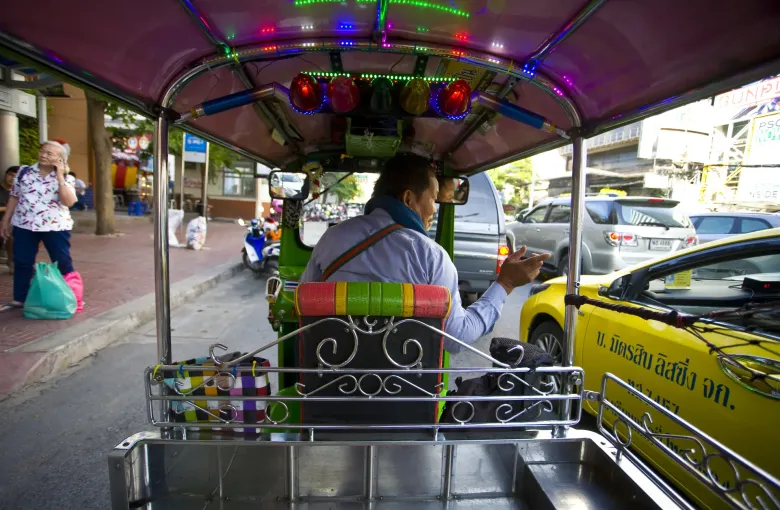
Travel between places has the same shape. Thailand has rail, buses, cheap domestic flights and boats, and the choice between them is usually time against comfort. The getting around guide sets out the options, including which ones are boarded by stepping down into them.
Eight weeks, and what belongs in them.
The UK Foreign, Commonwealth and Development Office advises checking vaccination and health information at least 8 weeks before travel. The US Centers for Disease Control and Prevention publishes a Thailand traveler health page covering routine vaccines, hepatitis A, typhoid, rabies and Japanese encephalitis, along with malaria and mosquito-borne illness including dengue, and states which travelers each recommendation applies to.
Which of those applies to you is for a travel health professional, and this page does not guess. What eight weeks is genuinely for is the practical work: prescriptions in sufficient quantity and in their original packaging, a written list of medicines under their generic names, and a conversation about anything that interacts with heat or with long flights.
Insurance is the item with the largest consequence.
The FCDO states that no travel can be guaranteed safe and that anyone who travels should get appropriate travel insurance, and its health page emphasizes cover for treatment and for unexpected medical evacuation, particularly for anyone with a health condition.
Read the pre-existing condition terms rather than the headline, and check the evacuation limit rather than assuming there is one. That is the paragraph on this page most worth acting on.
Emergencies.
The instruction for Thailand is to dial 191 and ask for an ambulance, with 1669 given as the local number. Write down both, not one, and keep them somewhere that does not require unlocking a phone. American travelers can also turn to the U.S. Embassy in Bangkok for consular assistance.
The paperwork sets the length of the trip.
Since 15 September 2026, entry under Thailand's visa exemption scheme allows a stay of up to 30 days for tourism only, and since 1 May 2025 every arrival must complete a digital arrival card online before traveling. Both are described on the entry requirements guide, including the penalties for overstaying, which are severe.
For a longer, slower trip of the kind a lot of retired travelers prefer, that 30-day figure is the first constraint to work with rather than the last. It is worth settling before the itinerary is built.
Sources
- UK Foreign, Commonwealth and Development Office: the Thailand health page: that the emergency medical instruction is to dial 191 and ask for an ambulance, with 1669 given as the local number; and that a traveler should check vaccination and health advice at least 8 weeks before the trip. Accessed 22 September 2026.
- UK Foreign, Commonwealth and Development Office: the Thailand entry requirements page, which describes the rules Thailand applies and writes them for people traveling on a full British citizen passport, so the framing is the British position rather than a general one: that a passport must have an expiry date at least 6 months after the date of arrival and at least 1 blank page; that from 1 May 2025 all foreign nationals entering Thailand, whether by air, land or sea, must complete a digital arrival card online before arrival, and that it can be registered within 3 days before arrival; that from 15 September 2026 entry under the visa exemption scheme allows a stay of up to 30 days for tourism only, and that visa-exempt entry does not cover business travel including conferences and meetings; that a traveler may be asked to show funds of at least 10,000 Thai baht per person or 20,000 per family together with evidence of onward or return travel, and that British nationals have been refused entry for failing to provide it; and that overstaying carries a fine of 500 Thai baht a day up to a maximum of 20,000 baht, with detention, deportation at the traveler own expense and a ban from re-entering Thailand for up to 10 years, adding that conditions in detention centers can be harsh. Accessed 22 September 2026.
- UK Foreign, Commonwealth and Development Office: the Thailand travel advice landing page: that no travel can be guaranteed safe, and that anyone who chooses to travel should research their destination and get appropriate travel insurance. Accessed 22 September 2026.
- US Centers for Disease Control and Prevention: the Thailand traveler health page: that routine vaccines should be up to date before travel, and that it sets out vaccine and medicine advice for this destination covering hepatitis A, typhoid, rabies and Japanese encephalitis, along with malaria and mosquito-borne illness including dengue. The page states which travelers each recommendation applies to, and the decision belongs with a travel health professional rather than with a guide. Accessed 22 September 2026.
Other Articles
Accessible Travel in Thailand

Thailand Visa and Entry Requirements