What the record states.
The UNESCO World Heritage Centre's Thailand State Party record lists the Historic City of Ayutthaya as inscribed on the World Heritage List in 1991. It is one of nine Thai properties on the List, six cultural and three natural, with six further sites on Thailand's Tentative List.
The other cultural properties are Ban Chiang Archaeological Site, inscribed in 1992; the Historic Town of Sukhothai and Associated Historic Towns, also 1991; Phu Phrabat, inscribed in 2024; the Ancient Town of Si Thep and its Associated Dvaravati Monuments, 2023; and Wat Phra Mahathat Woramahawihan at Nakhon Si Thammarat, inscribed in 2026. The natural properties are Dong Phayayen-Khao Yai Forest Complex, Kaeng Krachan Forest Complex and Thungyai-Huai Kha Khaeng Wildlife Sanctuaries.
What this page could not fetch, stated plainly.
UNESCO's individual property pages could not be retrieved in preparing this guide. Measured on 22 September 2026, the property page for Ayutthaya returned an automated interstitial rather than a document, three times in succession, while the State Party record returned normally at the same moment with the same request.
So this page quotes the inscription name and year, which the record does carry, and does not quote UNESCO's own description of the property's significance, which it could not verify. Where you want that, go to the World Heritage Centre's entry for the property directly. What follows below is a visitor's orientation rather than a summary of a document we could not read.
Why this is the Thai heritage site most visitors see.
Ayutthaya sits north of Bangkok, close enough that people reach it and return the same day, which is true of none of the other eight properties. Ban Chiang and Phu Phrabat are in the far northeast; Wat Phra Mahathat is in the south and was inscribed too recently for its visitor arrangements to be described from this register; Sukhothai and Si Thep are reachable but ask for a night. The three natural properties are forest complexes whose access differs sector by sector and cannot be described honestly from a State Party record alone.
That is the reason this cluster carries one heritage guide rather than five. The framework would allow more; the evidence available here supports one.
What you are looking at.
Ayutthaya was a royal capital, and what stands now is the brick and laterite core of its temples and monasteries: prang towers, chedi, foundation walls and seated images, on open ground between modern roads. It is a ruined city rather than a single monument, and it rewards being walked or cycled rather than driven between three stops.
It is also an active religious landscape rather than only an archaeological one. Where an image is venerated, the courtesy owed is the same as at a working temple, and the culture and etiquette guide sets that out.
Practical notes.
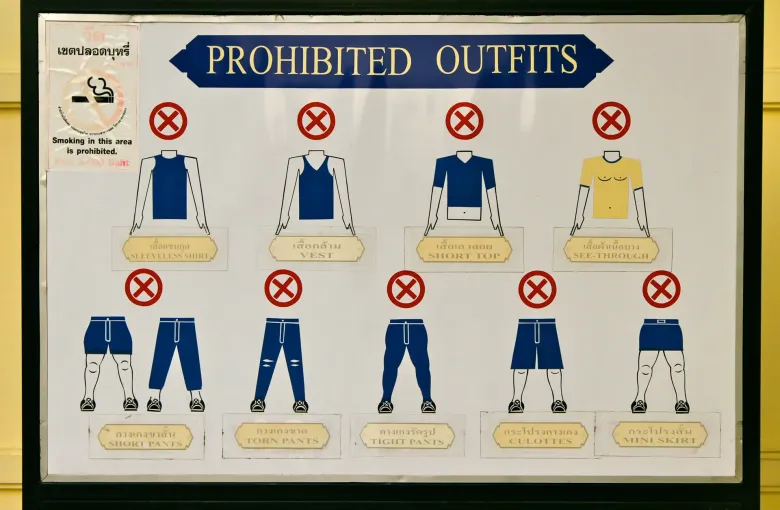
Dress for a religious site rather than for a ruin: covered shoulders and a hem below the knee will avoid difficulty at the buildings still in use. The packing list covers the standard the major sites publish.
The site is open, largely unshaded and walked on uneven brick, which makes it a hot and demanding half-day. The accessible travel guide and the guide for senior travelers both discuss what that means in practice and where this cluster cannot evidence a claim.
If you are renting anything to get around once you are there, the travel safety guide carries the official warning about rental deposits, which applies as much here as at a beach.
Sources
- UNESCO World Heritage Centre: the Thailand State Party record: that Thailand has nine properties inscribed on the World Heritage List, six cultural and three natural, and six sites on its Tentative List. The cultural properties are Ban Chiang Archaeological Site inscribed in 1992, the Historic City of Ayutthaya in 1991, the Historic Town of Sukhothai and Associated Historic Towns in 1991, Phu Phrabat in 2024, the Ancient Town of Si Thep and its Associated Dvaravati Monuments in 2023, and Wat Phra Mahathat Woramahawihan at Nakhon Si Thammarat in 2026. The natural properties are Dong Phayayen-Khao Yai Forest Complex inscribed in 2005, Kaeng Krachan Forest Complex in 2021 and Thungyai-Huai Kha Khaeng Wildlife Sanctuaries in 1991. Accessed 22 September 2026.
- UK Foreign, Commonwealth and Development Office: the Thailand safety and security page: that criticizing the Thai monarchy is illegal, that the law can be interpreted broadly and carries a long prison sentence, and that journalists, human rights defenders and members of the public have faced charges over political comments and shared articles; that travelers should not hand a passport over as a guarantee, for example to motorcycle or jet-ski rental businesses, because companies may hold on to passports against claimed damage; that people have arrived in Thailand and been illegally transported to neighboring countries on the promise of high-paying jobs that turn out to be scams, and may then be detained on re-entry while their immigration status is validated; that drink spiking and drug-assisted sexual assault happen in tourist areas with both male and female victims, that attacks are most common during full moon parties or similar events and near bars late at night, and that drinks served in bars are often stronger than those at home; that there have been incidents of ATM skimming and that a traveler should use an ATM in a bank and protect the PIN; and that people have drowned in strong riptides, that Thailand has lifeguards at designated beaches and operates a flag system for safe swimming, and that warning signs and especially red flags should be followed. Accessed 22 September 2026.
Other Articles
Thailand Culture and Etiquette Guide
Thailand Packing List