What this page is, and what it is not.
Elsewhere in this series, a heritage page is about returning: people traveling to a place their family came from. Thailand does not fit that shape for most of the travelers this guide is written for, and stretching it to fit would produce a page that names a relationship nobody has.
So this page takes the honest subject instead. The community whose heritage is most visible in Thailand, and most possible to visit thoughtfully, is the Chinese-Thai community, and it is a resident community rather than a returning one. The framing throughout is visiting somebody else's living heritage with care, not reconnecting with your own.
Yaowarat.
Bangkok's Chinatown runs along Yaowarat Road in the Samphanthawong district, and it is one of the oldest continuously occupied commercial quarters in the city. Chinese-Thai families have traded there for generations, and the shophouses, the gold dealers, the herbalists and the temples are a working district rather than a preserved one.
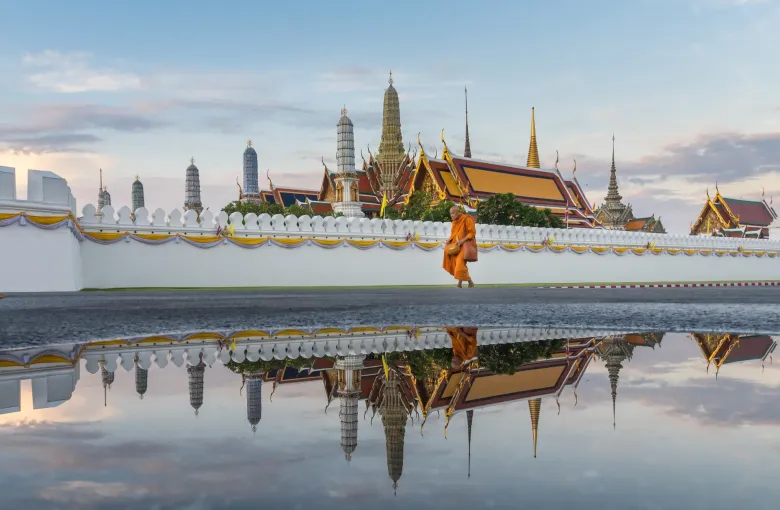
What that means for a visitor is straightforward: the quarter is not an exhibit and the people in it are at work. Eat there, buy there, look at the architecture, and photograph the street rather than individuals without asking. The culture and etiquette guide sets out the wider courtesies, all of which apply here.
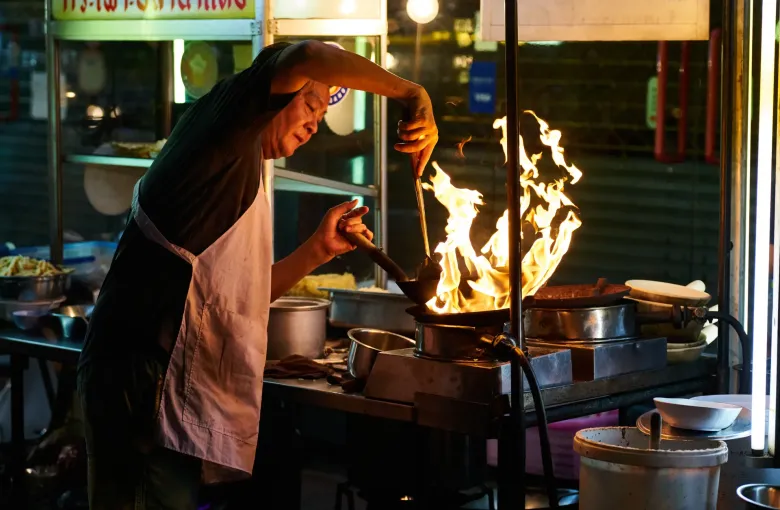
The food is also the reason many people come, and the food guide says something about how the Chinese-Thai contribution runs through what you will eat in Bangkok generally rather than only in one street.
Heritage that is recognized rather than remembered.
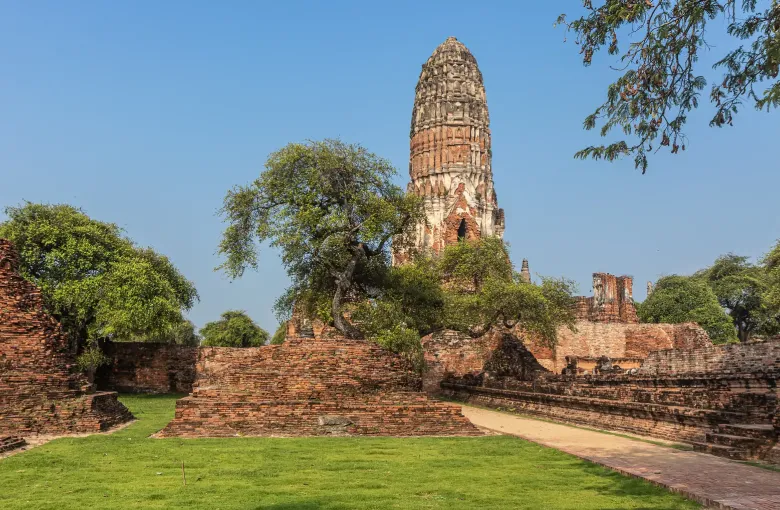
Thailand's nine World Heritage properties are national heritage rather than community heritage, and they are covered in the Ayutthaya guide, which also lists the other eight. They belong on this page only as a reminder that the country's recognized heritage and its living community heritage are different things and are visited differently.
A caution this page has to carry.
The UK Foreign, Commonwealth and Development Office describes a scam in which people arrive in Thailand and are illegally transported to neighboring countries on the promise of high-paying jobs, and may then be detained on re-entry while their immigration status is validated. Its advice is to be wary of job offers that appear too good to be true.
It is on this page because heritage and community travel is exactly the context in which somebody is offered work or an arrangement by a new acquaintance, and because the source's warning is specific rather than general. The travel safety guide carries it in full.
What this page does not claim.
It gives no population figure for the Chinese-Thai community, no date for its settlement and no account of its internal diversity, because no source this cluster cites publishes any of them. It also does not speak for that community. Where you want its own account of itself, the temples, associations and museums of the quarter are the place to ask, and they are better sources than a travel page.
Sources
- UK Foreign, Commonwealth and Development Office: the Thailand safety and security page: that criticizing the Thai monarchy is illegal, that the law can be interpreted broadly and carries a long prison sentence, and that journalists, human rights defenders and members of the public have faced charges over political comments and shared articles; that travelers should not hand a passport over as a guarantee, for example to motorcycle or jet-ski rental businesses, because companies may hold on to passports against claimed damage; that people have arrived in Thailand and been illegally transported to neighboring countries on the promise of high-paying jobs that turn out to be scams, and may then be detained on re-entry while their immigration status is validated; that drink spiking and drug-assisted sexual assault happen in tourist areas with both male and female victims, that attacks are most common during full moon parties or similar events and near bars late at night, and that drinks served in bars are often stronger than those at home; that there have been incidents of ATM skimming and that a traveler should use an ATM in a bank and protect the PIN; and that people have drowned in strong riptides, that Thailand has lifeguards at designated beaches and operates a flag system for safe swimming, and that warning signs and especially red flags should be followed. Accessed 22 September 2026.
- UNESCO World Heritage Centre: the Thailand State Party record: that Thailand has nine properties inscribed on the World Heritage List, six cultural and three natural, and six sites on its Tentative List. The cultural properties are Ban Chiang Archaeological Site inscribed in 1992, the Historic City of Ayutthaya in 1991, the Historic Town of Sukhothai and Associated Historic Towns in 1991, Phu Phrabat in 2024, the Ancient Town of Si Thep and its Associated Dvaravati Monuments in 2023, and Wat Phra Mahathat Woramahawihan at Nakhon Si Thammarat in 2026. The natural properties are Dong Phayayen-Khao Yai Forest Complex inscribed in 2005, Kaeng Krachan Forest Complex in 2021 and Thungyai-Huai Kha Khaeng Wildlife Sanctuaries in 1991. Accessed 22 September 2026.
Other Articles
Thailand Culture and Etiquette Guide
Thailand Food Guide