Most visitors experience Guatemala as a highland country of volcanoes and Maya towns. Its Caribbean corner is neither, and the shortest way to understand that is that Livingston has no road into it. You arrive by boat, and when you step off, the language on the street is not Spanish.
Who the Garifuna are
The Garifuna descend from West and Central Africans who were never enslaved on a Caribbean plantation, having survived a shipwreck and found refuge among the Indigenous Carib and Arawak people of the island of St Vincent. Over generations the two peoples became one, with an African descended population speaking an Indigenous Caribbean language.
After a long war with the British, the community was deported in 1797, put ashore on an island off the Central American coast, and from there spread along the mainland shore. They reached the bay at the mouth of the Rio Dulce, and the town they founded there is the Livingston of today, which the Garifuna themselves call Labuga.
Two centuries later the language, the drumming, the dance and the food are all still living practice rather than heritage display, and the community exists in four countries along the same coast with the same origin story.
Getting there, which is half the point
Livingston is reached by lancha, a motor launch, either from Puerto Barrios in about forty minutes or down the Rio Dulce from the town of Rio Dulce in about two hours. Take the river. It runs through a gorge with walls of jungle rising straight out of green water, past hot springs and bird colonies, and it is one of the best journeys in the country.
Boats run to a schedule that thins out considerably in the afternoon. Ask at your accommodation rather than at the dock, and do not plan a same day return in one direction.
What is there
- The town itself. Small, hot, wooden, and completely unlike anywhere else in Guatemala. A day of walking it is the visit.
- Tapado. The Garifuna dish: fish, shrimp and plantain in coconut milk, served in a bowl the size of your head. Eat it where the locals do.
- Punta and paranda. Drum led music that is the community's own. Live sessions are common and they are not scheduled for tourists.
- Siete Altares. A sequence of waterfall pools a walk along the beach from town. Go with a guide and go in company.
- The twenty sixth of November. The Garifuna day, marked in Livingston with drumming, processions and dancing, and the best time to be there if you can get a room.
Visiting well
- Ask before photographing people, and expect that the answer is sometimes no. See the culture guide.
- Hire Garifuna guides and eat in Garifuna kitchens. The money staying in the community is the difference between a visit and an extraction.
- Learn buiti binafi, good morning, and use it. It lands.
- Drumming sessions and ceremonies are not performances arranged for visitors. If you are invited, go; if you are not, listen from the street.
Practicalities
The coast is hot, humid and low lying, and it sits in the department of Izabal, which the cited health source names among the departments where malaria transmission is recorded. Repellent, long sleeves at dusk and a screened room. See the travel safety guide.
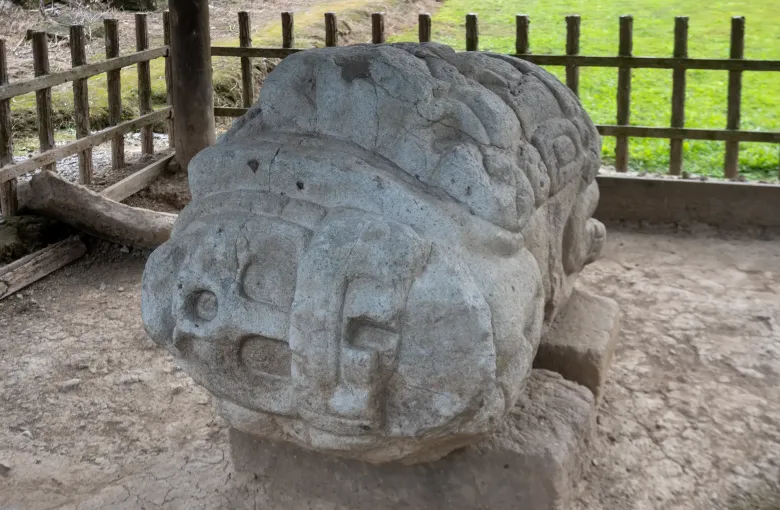
Quirigua is on the road between the highlands and the coast and is the natural stop on the way; see the Quirigua guide.
Sources
- UK Foreign, Commonwealth & Development Office: Guatemala travel advice: the standing warning that the FCDO advises against all but essential travel to parts of Guatemala, and the index to the entry, safety, regional and health pages this cluster draws on. Accessed 17 September 2026.
- UK Foreign, Commonwealth & Development Office: Guatemala regional risks: the advice against all but essential travel within five kilometers of the Mexican border from the Pacific Coast up to and including the Gracias a Dios crossing, the same advice for the towns of Santa Ana Huista, San Antonio Huista and La Democracia in Huehuetenango, and the instruction to pay particular attention to security in the border areas with Mexico, Honduras, El Salvador and Belize. Accessed 17 September 2026.
- Centers for Disease Control and Prevention: Guatemala traveler health: the yellow fever vaccine recorded as not recommended, not required for direct travel from the United States, and required for travelers aged one year and over arriving from a country with transmission risk including airport transits or layovers of more than twelve hours; malaria transmission primarily in the departments of Alta Verapaz, Baja Verapaz, Escuintla, Izabal and Peten with few cases reported elsewhere, no transmission in the cities of Antigua or Guatemala City, and no transmission at Lake Atitlan. Accessed 17 September 2026.
Other Articles
Quirigua
Guatemalan Culture and Etiquette