The short version
Take first class buses on toll roads, fly the very long distances, use sitio taxis or a car your hotel books, and travel by day where you can.
Long-distance buses
This is the thing Mexico does better than almost anywhere, and visitors consistently underestimate it. First class and executive services run reclining seats, air conditioning, onboard bathrooms and reserved seating between every pair of cities worth connecting.
The class distinction is the whole decision. First class and executive services use the toll roads, stop rarely and are secure. Second class services use the free roads, stop constantly and take much longer.
The source is direct about the risks: theft on buses is common and there is a risk of hijacking, which is why the advice is to use first class services on toll roads. In practice:
- Book first class or executive, and book directly or through the company's own app.
- Keep your passport on you, never in a stowed bag.
- Keep a small bag with valuables at your feet or on your lap.
- Travel by day where the schedule allows it.
- Take a warm layer. The air conditioning is aggressive.
Domestic flights
Mexico is large and the flight market is competitive, so flying between Mexico City, Cancun, Oaxaca, Merida, Guadalajara, Monterrey and the Baja peninsula is often cheaper than a long bus and saves a day. Watch the baggage rules on the low cost carriers, which are strict and are where the apparent saving usually goes.
Taxis, and the rule with no exceptions
Unlicensed drivers have robbed and assaulted passengers, including in Mexico City. There are three sanctioned ways to get a car and they are the only three:
- Sitio taxis from an authorized rank.
- A car ordered by your hotel.
- At an airport, the authorized pre-paid service, bought at the desk before you go outside.
Do not take a car that approaches you, and do not accept help with your luggage from somebody who says they are meeting you.
Cancun is a special case. Licensed drivers protesting about ride hailing have blocked roads by the hotel zone and have pulled visitors out of ride hailing cars, and travelers have missed flights in the roadblocks. Ask your hotel which service to use there rather than defaulting to the app you use at home.
Mexico City
The metro is extensive, very cheap and the fastest way across the city at most hours. It is also crowded, and pickpocketing at rush hour is the ordinary risk of any busy metro. Some lines run women and children only carriages at the front during peak times.
The Metrobus runs in dedicated lanes and covers routes the metro does not. Between them they reach most of what a visitor wants, and both are far faster than a car in traffic.
⚠ One thing to plan for: driving restrictions based on number plates operate in Mexico City and elsewhere to reduce pollution, and they apply to rental cars too. If you are driving, check which day your plate is banned before you plan around it.
Driving
Most visitors do not need to, and in Mexico City should not. Where driving is genuinely useful, in the Yucatan and in Baja California Sur, it is straightforward.
- Use the toll roads. The cuotas are better maintained, better policed and much safer than the free roads. Carry cash for the tolls.
- Driving standards differ sharply from what North American drivers expect: potholes, vehicles changing lane without indicating, and vehicles going through red lights. Many drivers carry no insurance.
- Keep doors locked and windows up, especially at lights. Violent carjackings happen along the Pacific Highway.
- Stay off isolated roads, and do not drive at night between towns.
- Check what license and permit Mexico requires of a driver holding your own country's license before booking a car.
Colectivos and local transport
Shared vans and minibuses, the colectivos, run the short hops between towns, especially along the Riviera Maya and around Oaxaca. They are cheap, frequent and used by everybody. They are also cramped with luggage, and they take cash.
Trains
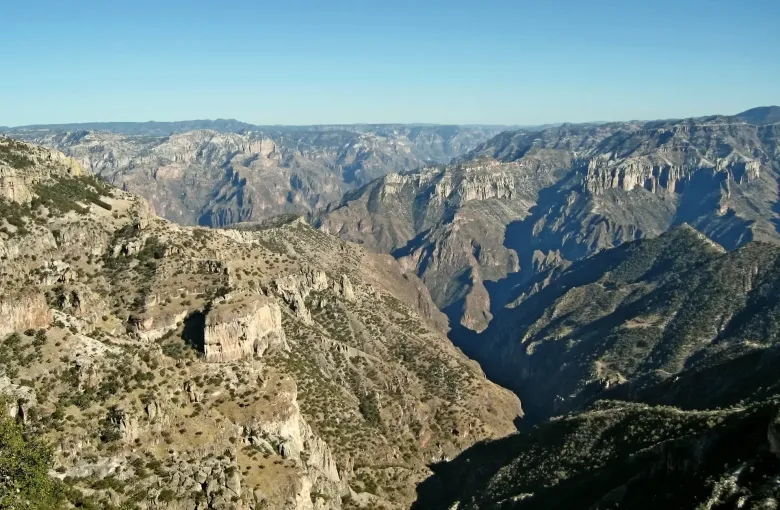
Mexico has very little passenger rail, and the exception is the one worth knowing about: the Copper Canyon railway through Chihuahua and Sinaloa. Both states carry a travel advisory, and the rail route and the towns immediately on it are explicitly excepted from it, which is a distinction worth reading carefully before booking. Our Mexico travel safety guide sets out the exceptions in full.
Verify before you travel
Timetables, ticketing platforms and road conditions change, and advisory boundaries change with them. Confirm close to travel.
Sources
- UK Foreign, Commonwealth & Development Office: Mexico safety and security: the requirement to carry the passport and entry stamp and the refusal of copies or photographs, the illegality of bringing in or selling vaping devices, robbery by unlicensed taxi drivers and the sitio and pre-paid airport alternatives, the Cancun taxi protests that have pulled visitors from ride hailing cars, theft and hijacking on buses and the case for first class services on toll roads, carjacking on the Pacific Highway, methanol in spirit drinks, low hotel balcony railings, the hurricane season from June to November and Hurricane Otis at Acapulco in 2023, and the LGBT+ legal position. Accessed 16 September 2026.
- UK Foreign, Commonwealth & Development Office: Mexico travel advice: the eleven states carrying an advisory against all but essential travel and the explicit exceptions within them, including the Copper Canyon rail route in Chihuahua and Sinaloa, Los Mochis and Mazatlan, Morelia and Patzcuaro in Michoacan, Manzanillo in Colima and Zihuatanejo and Ixtapa in Guerrero, and the statement that no travel can be guaranteed safe. Accessed 16 September 2026.
Other Articles
Mexico Travel Safety Guide
Best Time to Visit Mexico