The short version
December through April is the dry season across most of the country and the easiest time to travel. The hurricane season runs from June to November on both coasts. And Mexico's altitude does more to the temperature than its latitude does.
Elevation, not latitude
The single fact that reorganizes a Mexico itinerary: most of the country's famous cities are high. Mexico City sits at more than 2,200 meters, and so, roughly, do Puebla, San Miguel de Allende and the Oaxaca valleys. That is why a tropical country has cold evenings.
The practical consequence is that the same week can need a swimsuit and a warm jacket if the trip combines a coast with a highland city, which most trips do. Warm days, cool to cold nights, and strong sun that does not feel as strong as it is.
The low country is the opposite: the Yucatan, the Caribbean coast and the Pacific resorts are hot and humid most of the year, and humidity rather than temperature is what makes them tiring.
The seasons
December through April, the dry season
Reliable weather almost everywhere, and the peak for the beaches. Clear days in the highlands, cold nights in January and February. It is also the most expensive and the most crowded, and the Caribbean coast in particular is fully booked over the winter holidays and around spring break.
May, and the shoulder
Hot, dry and quieter, before the rains arrive. May is often the hottest month in the Yucatan, and it is a good month for the highlands.
June through November, the rains and the hurricanes
Rain in this season usually means a heavy afternoon downpour rather than a lost day, and the landscape is green, the archaeological sites are quiet and prices drop. What has to be planned for is the storms.
The hurricane season runs from June to November and affects both coasts, bringing floods, landslides and disruption to transport networks. The risk is real rather than theoretical: in 2023 Hurricane Otis, a Category 5 storm, struck near Acapulco and seriously damaged infrastructure along that coast. Acapulco is in Guerrero, which separately carries a travel advisory, as our Mexico travel safety guide sets out.
If you travel in these months, take insurance that covers weather disruption, keep the itinerary flexible, and follow evacuation instructions rather than weighing them up.
Dates worth building a trip around, or avoiding
- Day of the Dead, the first days of November. The single best reason to accept the tail of the rainy season. Oaxaca and Michoacan fill months in advance. See our Mexico festivals guide.
- Semana Santa, the week before Easter, moves every year and is when Mexicans travel domestically. Beaches fill, prices rise, and roads are busy.
- Christmas and New Year. The Caribbean coast is at its most expensive and its most booked.
- Mid-July through August is the domestic summer holiday, busier than the weather alone would suggest.
- Whale season in Baja California Sur, roughly January through March, which is a different trip and is unaffected by the mainland advisory.
Timing the archaeology
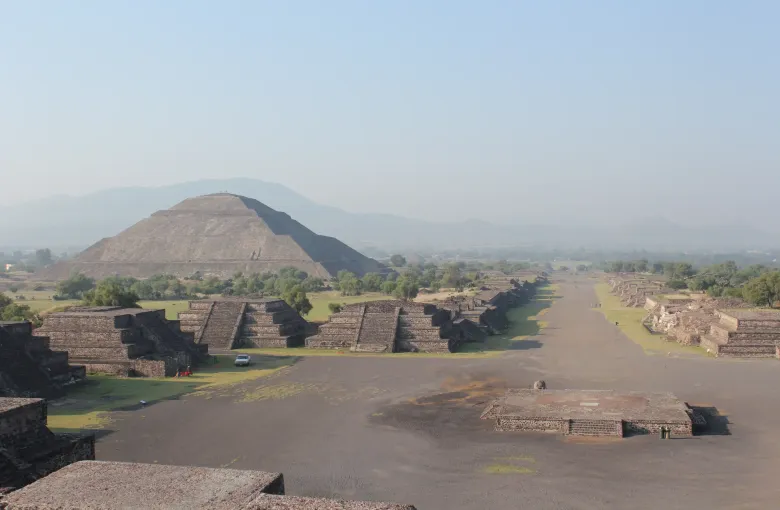
Go early. Teotihuacan, Monte Alban and the Yucatan sites are exposed, and by late morning in any month they are hot and full. The equinoxes draw very large crowds to the sites with alignments, which is worth seeking out or avoiding deliberately rather than by accident.
Monte Alban is one half of a single World Heritage property, inscribed in 1987 together with the historic centre of Oaxaca, so a day there and a day in the city are two halves of one thing rather than two separate stops. Our Oaxaca guide takes that up.
A working answer
- A first trip. Late October into early November, for the weather turning and for Day of the Dead, or February for reliability.
- Beaches only. December through April.
- Archaeology and highland cities. October through March, and start early.
- Fewest people, lowest prices, some weather risk. September, which is the wettest month and the quietest.
Verify before you travel
Festival dates move, site opening hours change and storm tracks are only ever current. Confirm close to travel.
Sources
- UK Foreign, Commonwealth & Development Office: Mexico safety and security: the requirement to carry the passport and entry stamp and the refusal of copies or photographs, the illegality of bringing in or selling vaping devices, robbery by unlicensed taxi drivers and the sitio and pre-paid airport alternatives, the Cancun taxi protests that have pulled visitors from ride hailing cars, theft and hijacking on buses and the case for first class services on toll roads, carjacking on the Pacific Highway, methanol in spirit drinks, low hotel balcony railings, the hurricane season from June to November and Hurricane Otis at Acapulco in 2023, and the LGBT+ legal position. Accessed 16 September 2026.
- UK Foreign, Commonwealth & Development Office: Mexico health: the emergency number 911 and the emergency buttons on Mexico City street cameras, the eight week lead time before travel, the limits of medical and ambulance services outside state capitals, altitude sickness in parts of the country, dengue, chikungunya, Zika, air pollution and Cyclospora, and the advice to drink only boiled or bottled water and avoid ice. Accessed 16 September 2026.
- UNESCO World Heritage Centre: the inscription of the Historic Centre of Oaxaca and the Archaeological Site of Monte Alban in 1987 as a single property composed of two distinct sites, and the founding of the city as Antequera in 1529 on a checkerboard plan laid out by Alonso Garcia Bravo. Accessed 16 September 2026.
Other Articles
Mexico Weather Guide
Teotihuacan: Visitor and Heritage Guide