What is actually inscribed
In 1987 UNESCO inscribed a property composed of two distinct sites: the historic centre of Oaxaca de Juarez and the archaeological site of Monte Alban. Not two properties. One, with two parts.
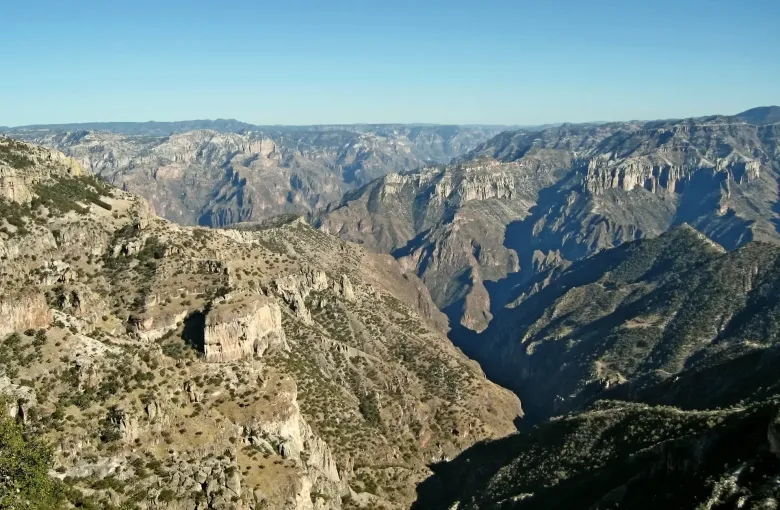
They sit in the central valleys of Oaxaca, in the depression between the Sierra Madre Oriental and the Sierra Madre del Sur. Monte Alban is the Zapotec city on the ridge; Oaxaca is the colonial city on the valley floor below it, founded in 1529 as Antequera in a valley already occupied by Zapotec people.
The citation is precise about the colonial city's plan. It is an example of sixteenth century town planning that retains its checkerboard grid with portals on all four sides of the square, laid out by Alonso Garcia Bravo from a central plaza on two axes, east to west and north to south, at a point chosen midway between the rivers Jalatlaco and Atoyac and the Cerro del Fortin.
What that means for a visit
It means do not treat Monte Alban as a day trip away from Oaxaca. It is the other half of the same inscription, and the relationship between the two is the thing being recognized: a Zapotec capital on a levelled mountaintop, and the Spanish city founded below it a thousand years later in the valley it had governed.
See them close together, and see Monte Alban first if you can. The city reads differently afterwards.
Monte Alban
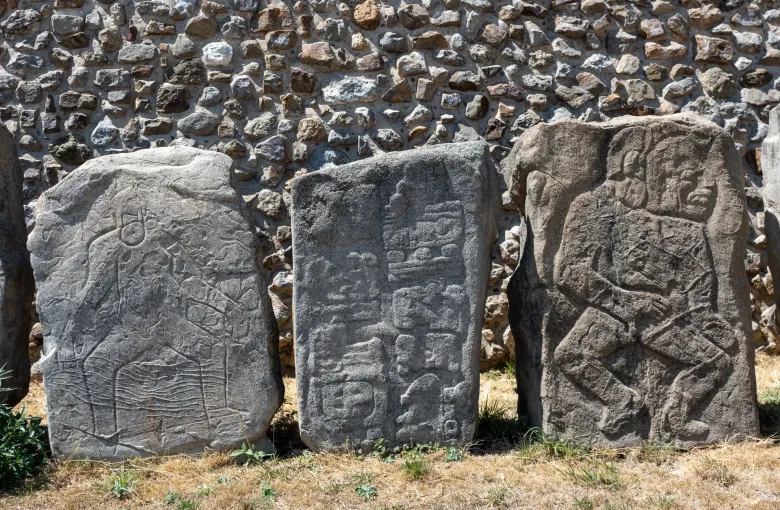
The ridge was levelled by hand to make the Gran Plaza. What to look for: the Danzantes, the carved stone figures whose contorted poses have been read as captives and whose accompanying glyphs are among the earliest writing in Mesoamerica; the arrowhead shaped Building J, set at an angle to everything else and generally understood as astronomical; and the ball court.
Go early. It is exposed and there is no shade. The view over the three arms of the valley is the argument for the site's location and is worth ten minutes of just standing still.
The historic center
The grid makes the city unusually easy to walk. The things worth the time:
- Santo Domingo de Guzman, the church and former monastery, with an interior of gilded relief that is overwhelming in the correct way, and the adjoining cultural center holding the finds from Tomb 7 at Monte Alban.
- The markets, which are a working part of the city rather than an attraction. See our Mexico food guide.
- The Zocalo and the arcaded portals the citation names, which are where the city actually spends its evenings.
- The ethnobotanical garden behind Santo Domingo, visitable by guided tour only.
The valley beyond the property
Not inscribed, and worth a day anyway: the tree at Tule, the weaving village of Teotitlan del Valle, the mezcal palenques, Mitla with its geometric stone mosaics, and the mineral terraces at Hierve el Agua. A driver for a day covers more of this than public transport will.
Practical notes
- Oaxaca is at around 1,550 meters, much lower than Mexico City, so the altitude is mild.
- Cobbles everywhere. See our accessible travel guide.
- The city fills completely for Day of the Dead and for the Guelaguetza. Book months ahead or travel at another time deliberately.
- Buy textiles and carvings from the makers and the cooperatives in the villages rather than from resellers in the city, as our Mexico culture and etiquette guide explains.
- The state of Oaxaca carries no travel advisory. That is worth knowing because the neighboring state of Guerrero does, and the two are frequently confused.
Verify before you travel
Opening hours, tour arrangements and ticketing change. Confirm close to travel.
Sources
- UNESCO World Heritage Centre: the inscription of the Historic Centre of Oaxaca and the Archaeological Site of Monte Alban in 1987 as a single property composed of two distinct sites, and the founding of the city as Antequera in 1529 on a checkerboard plan laid out by Alonso Garcia Bravo. Accessed 16 September 2026.
- UNESCO World Heritage Centre: Mexico's State Party record: thirty six properties inscribed on the World Heritage List, twenty eight of them cultural, the most of any country in the Americas. Accessed 16 September 2026.
- UK Foreign, Commonwealth & Development Office: Mexico safety and security: the requirement to carry the passport and entry stamp and the refusal of copies or photographs, the illegality of bringing in or selling vaping devices, robbery by unlicensed taxi drivers and the sitio and pre-paid airport alternatives, the Cancun taxi protests that have pulled visitors from ride hailing cars, theft and hijacking on buses and the case for first class services on toll roads, carjacking on the Pacific Highway, methanol in spirit drinks, low hotel balcony railings, the hurricane season from June to November and Hurricane Otis at Acapulco in 2023, and the LGBT+ legal position. Accessed 16 September 2026.
Other Articles
Best Time to Visit Mexico
Accessible Travel in Mexico