The honest position
Mexico does not have the accessible infrastructure of North America or Western Europe, and this page will not pretend otherwise. Pavements in historic centers are narrow, high, cambered and often broken, and much of what visitors come to see was built centuries before anyone thought about access.
What is also true is that the modern parts are considerably better than the reputation, that Mexico City in particular has invested in transport accessibility, and that people are generally willing and quick to help when asked directly.
Mexico City
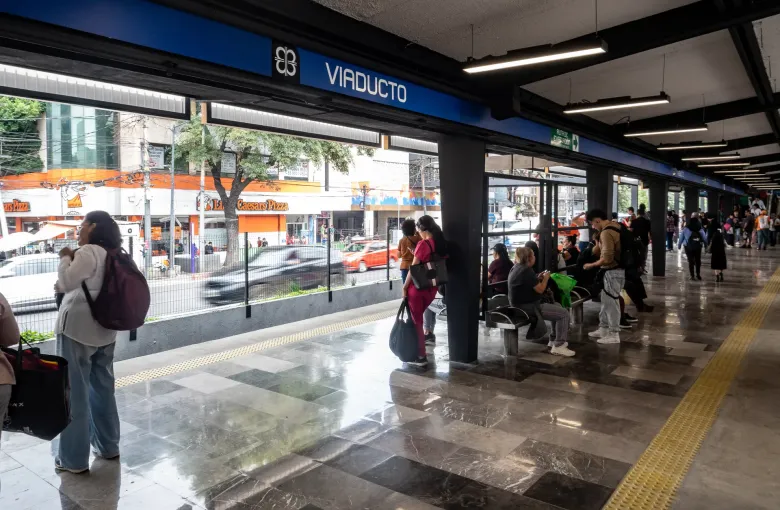
The most workable base in the country. Many metro stations have elevators and the newer lines are better again; the Metrobus runs level boarding from raised platforms in dedicated lanes and is often the easier option. The major national museums, including the Anthropology museum, are among the better provided in Latin America.
Against that, the altitude is real: the city is above 2,200 meters, which affects anyone with a heart or lung condition, and the air quality in the dry months is a genuine factor for anyone with a respiratory condition. Discuss both with your own clinician before booking.
Taxis are ordinary cars. Accessible vehicles exist through specialist operators and need booking in advance. The general rule about not taking an unarranged car applies with full force and is set out in our Mexico travel safety guide.
The resorts
The Caribbean coast is the most straightforward part of Mexico for a traveler with mobility needs. The large international properties in Cancun and the Riviera Maya have accessible rooms, elevators, ramps and often beach wheelchairs, and the airport has assistance.
Ask precisely rather than generally. "Accessible room" can mean a grab rail and nothing else. Ask about the width of the door, the route from the lobby, whether the pool has a lift or steps, and how far the room is from the restaurant.
Colonial centers
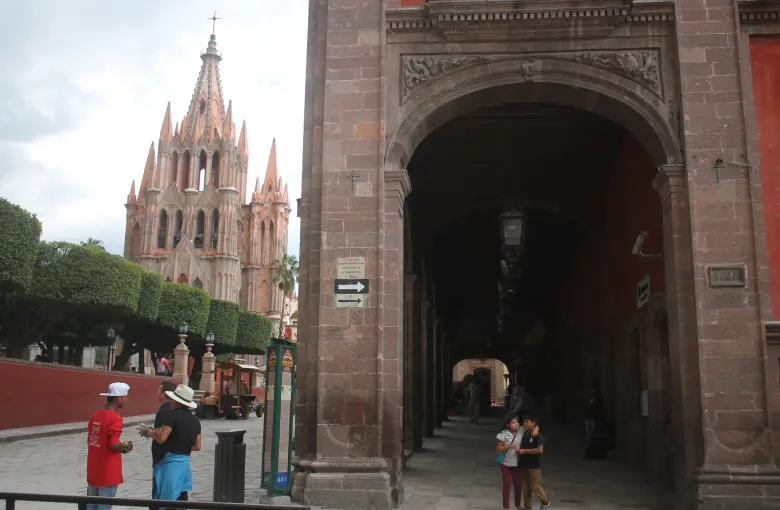
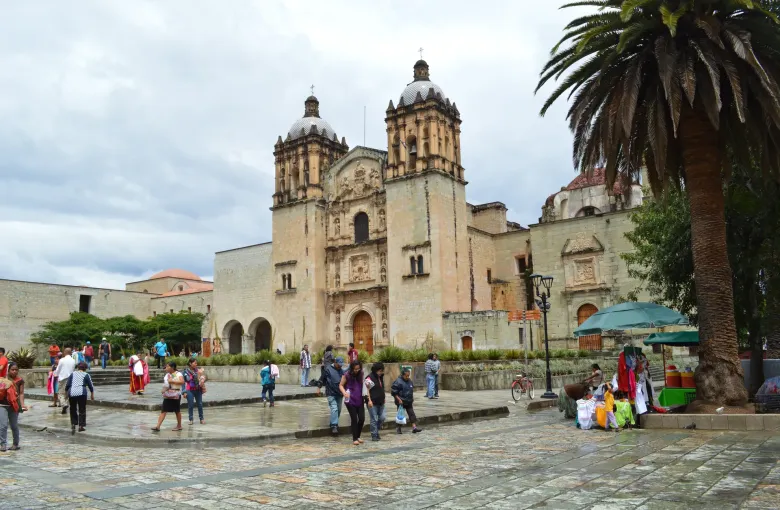
Oaxaca, Puebla, San Miguel de Allende, Guanajuato and Merida are all beautiful and all difficult: cobbles, high curbs, and hotels in converted buildings where the elevator may not exist. Guanajuato is built on the sides of a ravine and is steep everywhere.
Merida is the gentlest of them, being flat. It is worth considering as the Yucatan base for that reason alone.
Ask hotels about the route from the street to the room rather than about the room itself, and ask for a photograph. A converted colonial building with a central courtyard often has steps that nobody mentions because they do not think of them as steps.
Archaeological sites
Be clear about the ground. These are uneven stone, frequently with sand or gravel paths, usually without handrails, and often large: the Avenue of the Dead at Teotihuacan is over two kilometers long and the site was laid out for processions rather than for wheelchairs.
Some sites have made real provision: ramps at parts of Chichen Itza, an elevator at some museums, and level paths through parts of Teotihuacan and Monte Alban. Pyramid climbs are not adaptable, and at several major sites climbing is now prohibited for everybody, which levels that particular field.
Ask the site operator directly and close to travel, because provision changes and published descriptions lag.
Travelers with other requirements
- Vision. Uneven ground is the main hazard, and it is constant in historic centers. Guides are used to descriptive commentary if asked for it.
- Hearing. Ask for itineraries and confirmations in writing, and for a way to contact operators by message.
- Existing conditions. Medical services outside state capitals and large cities may be limited, including ambulances and equipment. Carry a written summary of your condition and medication in Spanish, carry more supply than the trip needs in original labeled packaging, and check that your insurance covers your condition and includes evacuation.
- Anxiety and sensory load. Markets, festivals and the metro at rush hour are loud and crowded. Mornings are calmer everywhere, and every major site has a quieter hour.
Questions worth asking an operator
- How many steps between the street and the room, and is there an elevator that reaches it?
- What is the surface at each site, and how far from where the vehicle stops?
- What altitude does each night sleep at?
- Can the itinerary absorb a rest day without losing a booking?
- Where is the nearest hospital to each location, and how long does it take to reach?
- Is the vehicle accessible, and if not, what is the transfer arrangement?
An operator who answers these precisely is the one to book. An operator who says it will all be fine is not.
Verify before you travel
Site access, hotel facilities and transport provision all change. Confirm each directly and close to travel rather than relying on any published description, including this one.
Sources
- UK Foreign, Commonwealth & Development Office: Mexico health: the emergency number 911 and the emergency buttons on Mexico City street cameras, the eight week lead time before travel, the limits of medical and ambulance services outside state capitals, altitude sickness in parts of the country, dengue, chikungunya, Zika, air pollution and Cyclospora, and the advice to drink only boiled or bottled water and avoid ice. Accessed 16 September 2026.
- UK Foreign, Commonwealth & Development Office: Mexico safety and security: the requirement to carry the passport and entry stamp and the refusal of copies or photographs, the illegality of bringing in or selling vaping devices, robbery by unlicensed taxi drivers and the sitio and pre-paid airport alternatives, the Cancun taxi protests that have pulled visitors from ride hailing cars, theft and hijacking on buses and the case for first class services on toll roads, carjacking on the Pacific Highway, methanol in spirit drinks, low hotel balcony railings, the hurricane season from June to November and Hurricane Otis at Acapulco in 2023, and the LGBT+ legal position. Accessed 16 September 2026.
- UNESCO World Heritage Centre: the inscription of the Pre-Hispanic City of Teotihuacan in 1987, recording a settlement that grew between the first and seventh centuries into one of the largest ancient cities in the Americas with at least twenty five thousand inhabitants, its Avenue of the Dead aligned on the diverted San Juan River, the Pyramids of the Sun and the Moon, the Temple of Quetzalcoatl, and the talud-tablero architecture that spread from it. Accessed 16 September 2026.
Other Articles
Mexico for Senior Travelers
Oaxaca: Visitor and Heritage Guide