The short version
Rain falls mostly from June through October, usually as an afternoon downpour. Hurricanes are possible from June to November on both coasts. And the highlands are cold at night all year, which is the thing visitors consistently fail to plan for.
The plateau
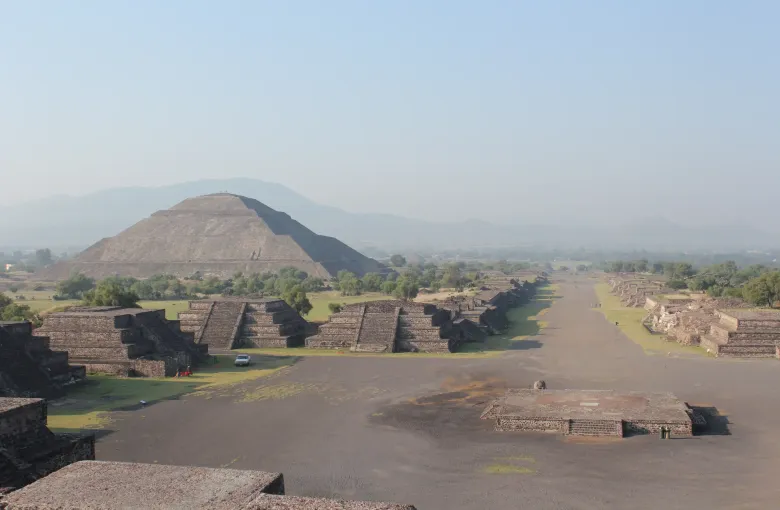
Central Mexico sits on a high volcanic plateau. Mexico City is above 2,200 meters, and Puebla, San Miguel de Allende, Guanajuato and the Oaxaca valleys are all high enough to behave the same way: warm in the sun, cold as soon as it goes, and colder still in January and February.
A clear winter night in the central highlands can approach freezing while the afternoon was pleasant in a shirt. Buildings are frequently unheated, which makes the indoor temperature at night the real issue rather than the outdoor one. Ask about heating when you book.
The sun at that elevation is strong out of proportion to how warm it feels, so sunburn on a cool day is routine, exactly as it is in the Andes.
The coasts
The Yucatan peninsula and the Caribbean coast are hot and humid nearly all year, with the heat peaking before the rains in May. The Pacific coast is similar, hotter in the south. On both, humidity rather than temperature is what tires people out, and clothing that dries overnight is worth more than clothing that is merely thin.
The far north and the Baja peninsula are desert: hot days, cold nights, very little rain, and a much larger daily swing than anywhere else in the country.
The rains
From roughly June through October the pattern across most of Mexico is a clear morning, cloud building through the middle of the day, and heavy rain in the late afternoon or evening. It rarely rains all day. Plan the outdoor half of the day first and keep the afternoon flexible, and the wet season becomes a good time to travel rather than a compromise.
What it does cost is certainty on the roads. Rain brings flooding and landslides, and mountain routes are the first to close.
Hurricanes
The season runs June to November and affects the Pacific and Atlantic coasts alike, bringing floods, landslides and disruption to transport networks, with flooding and high winds continuing after the storm itself has passed. Hurricane Otis, a Category 5 storm, struck the coast near Acapulco in 2023 and did severe damage to infrastructure there; that coast sits in Guerrero, which also carries a travel advisory for separate reasons.
Practically: travel insurance that covers weather disruption, a flexible booking where you can get one, attention to forecasts once you are in the country, and compliance with evacuation orders rather than a judgment about them.
Air quality
Air pollution is named as a health risk in Mexico, and it is most noticeable in Mexico City in the dry months when the air sits still in the valley. Anyone with asthma or a respiratory condition should factor that in, and the city's own driving restrictions based on number plates exist for exactly this reason.
Earthquakes and volcanoes
Central Mexico is seismically active and Popocatepetl, beside Mexico City, is an active volcano whose activity fluctuates and occasionally affects air traffic. Neither should change whether you go. Both are a reason to know your accommodation's emergency procedure.
Packing implications in one place
- A warm layer for every highland night, in every month, including a jacket in winter.
- Rain protection from June through October, and something for a camera.
- Strong sun protection at altitude, whatever the temperature.
- Quick drying clothes for the coasts and insect repellent.
- Comfortable shoes with grip. Colonial centers are cobbled and archaeological sites are uneven stone.
The full list is in our Mexico packing list.
Verify before you travel
Seasonal patterns shift and any given year runs wet or dry. Check forecasts and local conditions close to travel.
Sources
- UK Foreign, Commonwealth & Development Office: Mexico safety and security: the requirement to carry the passport and entry stamp and the refusal of copies or photographs, the illegality of bringing in or selling vaping devices, robbery by unlicensed taxi drivers and the sitio and pre-paid airport alternatives, the Cancun taxi protests that have pulled visitors from ride hailing cars, theft and hijacking on buses and the case for first class services on toll roads, carjacking on the Pacific Highway, methanol in spirit drinks, low hotel balcony railings, the hurricane season from June to November and Hurricane Otis at Acapulco in 2023, and the LGBT+ legal position. Accessed 16 September 2026.
- UK Foreign, Commonwealth & Development Office: Mexico health: the emergency number 911 and the emergency buttons on Mexico City street cameras, the eight week lead time before travel, the limits of medical and ambulance services outside state capitals, altitude sickness in parts of the country, dengue, chikungunya, Zika, air pollution and Cyclospora, and the advice to drink only boiled or bottled water and avoid ice. Accessed 16 September 2026.
Other Articles
Best Time to Visit Mexico
Mexico Packing List