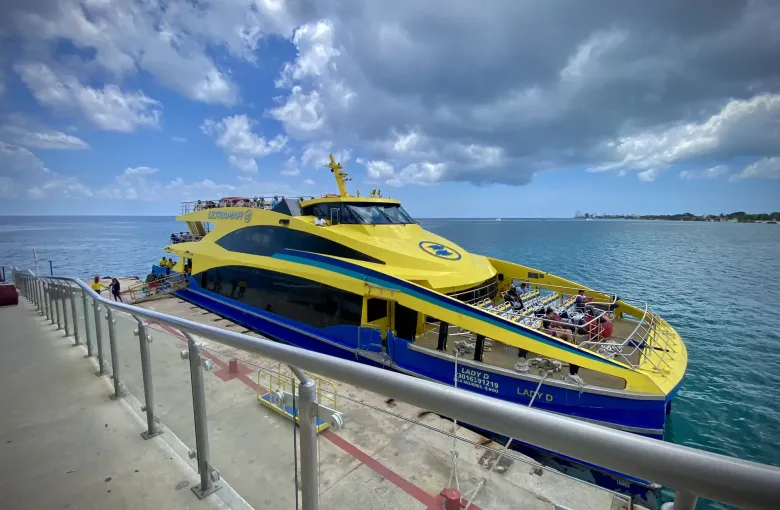
The variable is not age.
It is how far you want to walk, how much heat you are comfortable in, how firm your deadline is and what happens if something goes wrong a long way from the ship. Those are the same questions for everyone; they are simply more concrete for some travelers than others.
This page does not describe a senior traveler as having a condition, and nothing in this register supports treating age as a health status. What follows is planning, not advice about your body.
Build the day around the return time.
An all aboard time does not move. The single most useful decision on a port call is to pick one thing rather than three, and to know the return journey before you commit to the outward one. A road trip inland on a fixed deadline is the plan most likely to end badly, and it is the plan most often sold.
The town is walkable from the waterfront and a good deal of what a short call can reach is within that walk. That is not a lesser day. It is the version with the most margin in it.
Medical questions worth settling before you sail.
Dial 911 and ask for an ambulance: that is the official instruction here and it is worth knowing before you need it. Bring the medicines you take in their original packaging and in enough quantity for the whole trip rather than planning to buy them ashore.
The general advice asks every traveler to get appropriate travel insurance and to check it covers all their planned activities. On a port call the clause that matters most is medical evacuation rather than local treatment alone, because moving someone is the expensive scenario. Nothing in this register describes the medical facilities on this island, so this page does not describe them either.
On malaria, the CDC names the transmission areas in Mexico as Campeche, Chiapas, and the southern part of Chihuahua state, and Quintana Roo is not among them. That is what the list says, and it is not the same as a guarantee. A prescription decision belongs with a travel health professional in advance.
Two things the advice records that bear on a slower day.
Sea conditions can be unpredictable and some beaches are unpatrolled, so follow coastguard and local authority guidance on whether it is safe to swim. And unlicensed taxi drivers have robbed and assaulted passengers, so use an official rank or book through your ship. Neither is about age; both cost more to get wrong when you are less inclined to walk away quickly. The safety guide carries both in full, and the Mexico senior travelers guide covers the country-level picture.
Sources
- UK Foreign, Commonwealth and Development Office: the Mexico health page: that the emergency medical number is 911 and a caller should ask for an ambulance; and that altitude sickness is among the risks it links out to, which is a country-level statement about a country whose capital sits well above sea level rather than about an island at sea level. Accessed 21 September 2026.
- UK Foreign, Commonwealth and Development Office: the Mexico travel advice landing page: that no travel can be guaranteed safe, and that anyone who chooses to travel should research their destination and get appropriate travel insurance. Accessed 21 September 2026.
- UK Foreign, Commonwealth and Development Office: the Mexico safety and security page: that crime is a risk to foreign nationals in Mexico, particularly in major cities and tourist resort areas; that pickpocketing and theft are common; that unlicensed taxi drivers have robbed and assaulted passengers; that the Mexican government makes efforts to protect major tourist destinations and names this island among them, and that in the same passage criminals have physically and sexually assaulted British travelers in those locations, in some cases involving hotel employees, taxi drivers and security personnel, with hotel staff sometimes unhelpful and trying to convince victims not to contact police; that anyone taking part in adventure sports including scuba diving should be aware equipment may not meet UK safety and insurance standards and that British nationals doing so have been injured and in some cases killed, and should use a company that is reputable, takes safety precautions, uses up to date equipment and is fully licensed and insured; that sea conditions can be unpredictable and some beaches are unpatrolled; that shark attacks are rare in Mexico; that crocodiles normally live in lagoons and coastal areas including Cancun and Pacific coast resorts, which does not name this island; and that the hurricane season normally runs from June to November. Accessed 21 September 2026.
- US Centers for Disease Control and Prevention: the Mexico traveler health page: that the CDC recommends travelers going to certain areas of Mexico take prescription medicine to prevent malaria; and that it gives the transmission areas as Campeche, Chiapas and the southern part of Chihuahua state, with malaria rare in the states of Oaxaca, Sinaloa, Sonora and Tabasco. Measured on 21 September 2026 the page does not name Quintana Roo or this island at any point. Accessed 21 September 2026.
Other Articles
Cozumel Safety and Health
Accessible Travel at Cozumel