The short version, and it starts with a limit.
No source in this cluster research register covers accessibility in India. Not the travel advice, not the health record, not the heritage record. So this page will not give you step counts, door widths, ramp gradients or a list of accessible hotels, because it has no authority behind any of them and an invented one would be worse than silence.
What it can do is set out honestly what kind of country this is to travel in with limited mobility, which questions actually determine whether an itinerary works, and where the newest infrastructure is. The rest is a conversation with us about a specific trip, which is the only way this question gets a real answer anywhere.
The honest picture.
Provision in India is uneven in a way that resists generalization. New construction is often built to modern standards, and some of it is excellent. Older construction usually is not, and a great deal of what visitors come to see is several centuries old and was built with steps, thresholds and uneven stone as part of its design. The gap between those two realities can be a single street.
Pavements are the part that surprises people most. Where they exist they are frequently interrupted by poles, parked vehicles, steps and open drainage, so a route that looks short on a map may not be a route at all. Planning a day around vehicle drop-offs close to each objective does more than any single piece of equipment.
Where the built environment is newest.
The metro systems are the clearest exception and are worth building a city itinerary around. Several Indian cities now run modern metros with lifts, level boarding through platform screen doors and staff on the platforms. Where a metro reaches where you want to go, it is very often the easiest part of the day.
Airports are the other. India's newer terminals are large, modern and built to current standards, and assistance is arranged through the airline in the ordinary way. Arrange it at booking rather than at check-in, and reconfirm before departure.
The questions that actually decide it.
Ask about the bathroom, specifically and with measurements, rather than asking whether a hotel is accessible. The word means different things to different properties and the answer is frequently given in good faith and still wrong.
Ask how many steps there are between the vehicle and the room, including at the entrance and at the lift lobby. Ask whether the lift reaches every floor you need, because in older buildings it often does not. Ask for photographs rather than descriptions.
Ask about the ground at each site rather than about the site. Many Indian monuments have a considerable walk on uneven surfaces between the gate and the thing itself, and that distance, not the building, is usually what decides whether a visit works.
Two things from the register that bear on this.
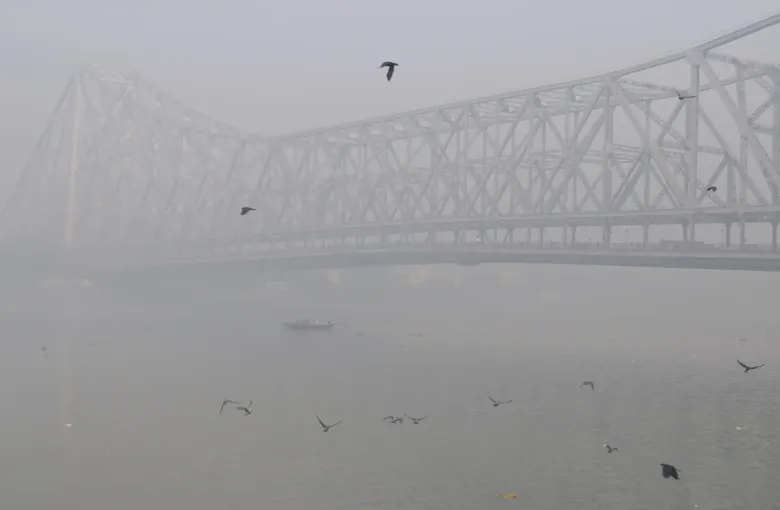
The health advice records severe air pollution as a major health hazard in India especially during the winter months from October to February, with north Indian cities most affected, and it names people with pre-existing conditions among those most at risk. For a traveler with a respiratory condition that is a genuine reason to choose the dates or the region differently.
The safety advice records that there are no commercial mountain rescue services operating above 3,000m. That is worth knowing for any itinerary that goes high, and it applies to everybody rather than being an accessibility point specifically.
Equipment.
Bring what you depend on rather than planning to hire it, and bring spares for anything that would end the trip if it broke. Repair and replacement are possible in the large cities and are not something to rely on elsewhere. Carry prescriptions and documentation for anything medical in your hand luggage.
How to settle it.
Tell us what the actual requirement is, in plain terms, at the planning stage rather than after the hotels are booked. A specific requirement produces a specific itinerary: the right cities, the right buildings, the right distances between them, and drivers who have been told what is needed. A general question about whether India is accessible has no useful answer and this page is not going to pretend otherwise.
Sources
- UK Foreign, Commonwealth and Development Office: advises seeking advice at least 8 weeks before a trip, names dengue and malaria in India, records severe air pollution as a major health hazard especially during the winter months from October to February with north Indian cities most affected, and gives 112 as the number to dial for an ambulance. Accessed 22 September 2026.
- UK Foreign, Commonwealth and Development Office: gives the police helpline in India as 100 and the national emergency number as 112, with a women helpline on 1091, records that vapes and related products are banned, that possession of illegal drugs carries a minimum sentence of 6 months for small amounts and that you could be detained for several years while your case is processed, that it is illegal to possess and operate satellite phones and GPS devices in India without a license even if you are only transiting through India, that British women have been victims of sexual assault and that travelers should avoid isolated areas including beaches when alone at any time of day, that alcohol is illegal in Bihar, Gujarat, Mizoram, Nagaland and Lakshadweep with a prison sentence of 5 to 10 years and that some states sell 30-day alcohol permits, that a 1949 version of the international driving permit is needed, and that there are no commercial mountain rescue services operating above 3,000m. Accessed 22 September 2026.
Other Articles
India for Senior Travelers
Getting Around India