What Seychellois food is
Seychellois Creole cooking is what happened when French colonial cooking, the food of enslaved Africans, and later Indian and Chinese influences met on islands where the protein is fish and the starch is rice, breadfruit and cassava.
It is milder than Mauritian food and sharper than French, it uses coconut milk, ginger, chili and lime, and it is built around whatever came off a boat that morning.
The market, first
The Sir Selwyn Clarke Market in Victoria is the single most useful hour of eating in the country and it is not a restaurant. Tuna and reef fish laid out on concrete, fruit you will not recognize, spice stalls, and the ordinary shopping of a small capital. Go in the morning, go before you book any food tour, and bring small cash.
Dishes worth asking for
- Grilled fish with Creole sauce. Red snapper, job fish, bourgeois, or whatever is on the board that day. This is the national meal and it is best from a small place rather than a large one.
- Tuna, which is the backbone of the economy as well as the menu, served fresh in ways that make tinned tuna feel like a different species.
- Octopus curry, slow-cooked in coconut milk. If you order one dish in Seychelles, this is a strong candidate.
- Breadfruit, roasted or fried as chips. There is a local saying that if you eat it you will return.
- Ladob, plantain or cassava cooked in coconut milk with nutmeg, served sweet as a dessert or savory alongside fish.
- Chatini, the sharp chutneys, especially the golden-apple one.
Fruit
Mango, papaya, passion fruit, jackfruit, custard apple, and the small sweet bananas that ruin the imported ones for you. Buy from the market rather than from a hotel.
To drink
Local beer is the everyday choice. Takamaka rum is made here and the distillery on Mahé is a straightforward afternoon. Fresh coconut water is everywhere. Tap water is generally treated on the main islands, but if you have any doubt on a smaller one, use bottled or filtered.
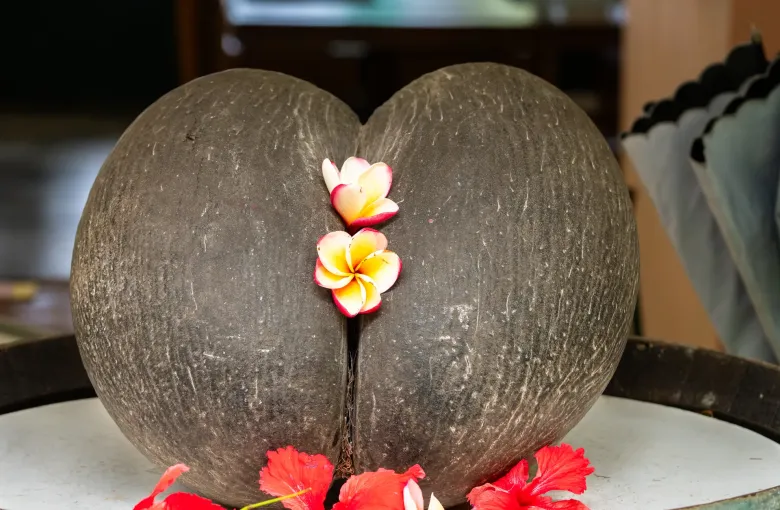
⚠ The coco-de-mer is not a snack, and not a casual souvenir
The coco-de-mer is the emblem of the country and the bearer of the largest seed in the plant kingdom, and it grows wild in only a couple of places, one of which is the Vallée de Mai. It is a protected species. A nut sold as a souvenir must come with the official permit and certificate that make its export lawful, and buying one without that paperwork is both an offense and the reason the species needs protecting.
Buy it from a licensed vendor, keep the certificate with your passport, and expect to declare it. There are strict rules about what may be taken out of Seychelles. See Seychelles Visa and Entry Requirements.
Eating away from the hotel
The gap between resort food and Creole food is wide here, and the second one is inexpensive. Look for the takeaway counters at lunchtime in Victoria, the roadside stalls near the beaches on Mahé, and the small family restaurants on La Digue. See Seychelles Culture and Etiquette Guide.
Sources
- UNESCO Intangible Cultural Heritage: Seychelles's single inscribed element, the Moutya, inscribed in 2021. Accessed 14 September 2026.
- UK Foreign, Commonwealth & Development Office: Seychelles travel advice, which warns against travel to no part of the country. Accessed 14 September 2026.
- UNESCO World Heritage Centre: the inscription of the Vallée de Mai, 19.5 hectares of palm forest on Praslin holding the world's largest population of endemic coco-de-mer. Accessed 14 September 2026.
Other Articles
Seychelles Culture and Etiquette Guide
Seychelles Currency and Money Guide