Maya is a present tense here, not a period.
The port is called Costa Maya. The excursions are sold as Maya experiences. The souvenirs use the word freely. It is worth holding on to the fact that Maya peoples live across this peninsula now, speak Mayan languages now, and are not a civilization that ended. UNESCO's own record for the protected area up this coast puts it in the past tense of the place rather than of the people: the name Sian Kaan means Origin of the Sky in the language of the Maya who lived there.
Nothing about enjoying an archaeological site requires pretending otherwise. But a day that treats a living culture as a backdrop is a different day from one that does not, and the difference is mostly in how you ask questions.
What a short call can honestly offer.
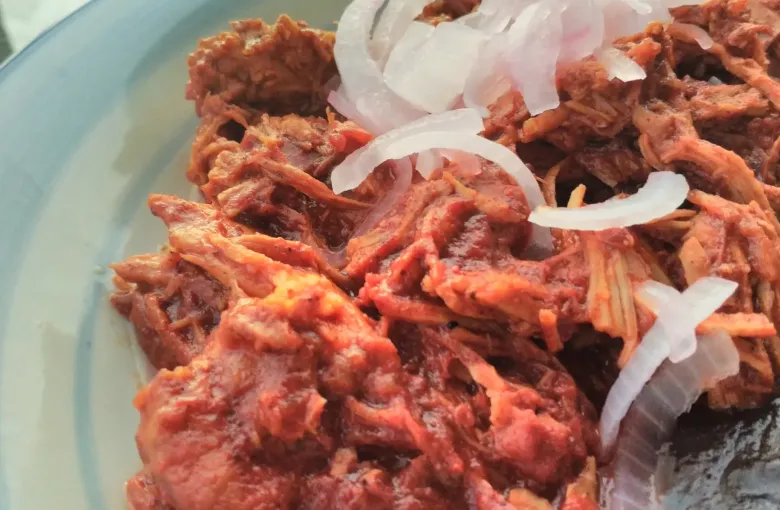
A few hours near a cruise terminal is not an immersion, and a guide that promises one is selling something. What it can offer is a real archaeological site with someone who knows it, a meal cooked the way the region cooks, and a conversation with a person whose job is not to perform for you.
The single most useful question to ask an operator is whose community a cultural visit involves and who benefits from your going. A good operator answers it without hesitating. An answer that stays vague is itself an answer.
Crafts, and what you are buying.
Textiles and other handwork are sold everywhere a ship docks, and quality and provenance vary enormously. Work made on a backstrap loom takes a long time and the price reflects that; work that costs almost nothing usually did not come from one. Buying directly from the person who made something, where you can, puts the money where the skill is.
Haggling is normal in some settings and not in others, and reading the room matters more than any rule. A cooperative with fixed prices is not inviting a negotiation.
Ordinary courtesies.
Ask before photographing people, and accept a refusal without negotiating it. Cover up away from the beach, which matters at a religious site and in a village where people are going about their day rather than visiting. A few words of Spanish are received warmly and nobody expects fluency. Modest amounts of cash in small denominations make small transactions easy and are themselves a kindness in a place where change is not always available.
Broader country level etiquette, which differs considerably between regions of Mexico, is in the Mexico culture and etiquette guide.
If you would like a day built around meeting the place rather than passing it, tell us.
Sources
- UK Foreign, Commonwealth and Development Office: the Mexico safety and security page: that crime is a risk to foreign nationals in Mexico, particularly in major cities and tourist resort areas; that pickpocketing and theft are common, including on public transport; that unlicensed taxi drivers have robbed and assaulted passengers, and that travelers should use the better regulated sitio taxis from authorized ranks or ask a hotel to order one; and that travelers should check their travel insurance covers all their planned activities. Accessed 21 September 2026.
- UK Foreign, Commonwealth and Development Office: the Mexico travel advice landing page: that no travel can be guaranteed safe, and that anyone who chooses to travel should research their destination and get appropriate travel insurance. Accessed 21 September 2026.
- UNESCO World Heritage Centre: the World Heritage List entry for Sian Kaan: that it was inscribed in 1987 under the natural criteria (vii) and (x); that it lies in the state of Quintana Roo on the east coast of the Yucatan peninsula and covers 528,148 hectares of linked marine, coastal and terrestrial ecosystems along roughly 120 kilometers of coastline; and that its name means Origin of the Sky in the language of the Maya people who lived there. The entry gives no distance or travel time from any port. Accessed 21 September 2026.
Other Articles
Costa Maya and Reconnection
World Heritage and Costa Maya