Start with the crossing inside the country.
The single most important transport fact in Malaysia is not about a mode of transport. The entry advice this cluster cites states that traveling between Peninsular Malaysia and East Malaysia, which is Malaysian Borneo and the states of Sabah and Sarawak, means passing through immigration control and getting entry and exit stamps, and that you must carry your passport to do it.
It is sold as a domestic flight and it is booked as one. Sabah and Sarawak run their own immigration, so it is not a domestic movement for immigration purposes. Two practical consequences. Carry the passport on that leg even though it looks internal, and give the connection more time than a domestic transfer would need, because there is a queue in the middle of it that a domestic itinerary does not account for.
City transport.
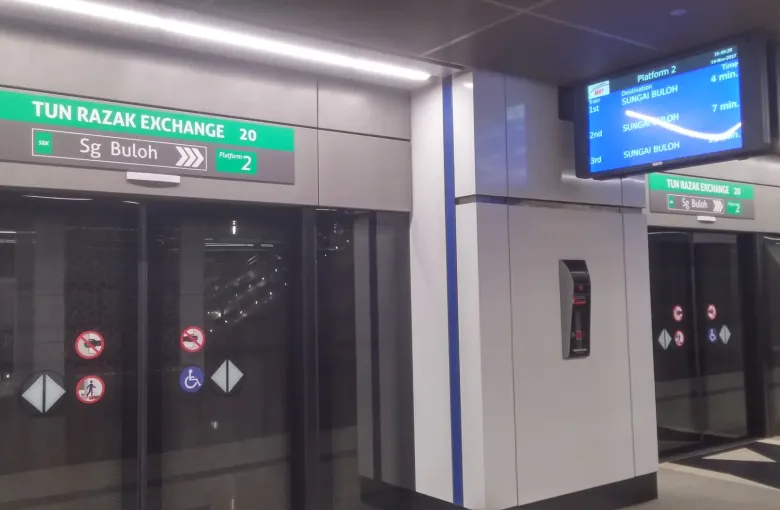
Kuala Lumpur has an interconnected network of rail lines, and stations such as Titiwangsa bring the MRT, the LRT and the monorail into one interchange. For a visitor this is the easiest way to move around the city and avoids the traffic entirely. Stations are signed in English as well as Malay, and the newer lines have platform screen doors and step-free access, which the accessibility guide in this cluster goes into.
Between the peninsula's cities, rail and long-distance coaches both run, and Penang is reached from the mainland either by bridge or by the ferry from Butterworth, which lands beside the rail and bus interchange. None of the sources here publishes a fare, a frequency or a journey time, so this page does not either.
Taxis, apps and the money warning that applies to both.
Ride-hailing is widely used in Malaysian cities and has the same advantage it has anywhere: the route and the price are agreed before you get in, which removes an argument. The safety advice this cluster cites does not single out taxis here, but it does state that credit card and ATM fraud is widespread, which is worth carrying into any transaction where a card leaves your hand.
What the advice does single out is worth reading before you walk anywhere with a bag. It records that bag-snatching is common, particularly in major cities, that thieves on motorbikes target tourists and have cut straps or pulled off bags carried on the shoulder closest to the road, and that people have been injured and in some cases killed trying to hold on. Walking between stations with a shoulder bag on the traffic side is the specific situation that describes. Carry it on the inside, or carry it across the body, and if it goes, let it go.
Driving.
No source in this cluster research register covers driving licenses, insurance requirements or road rules for visitors in Malaysia, so this page states none. That is a gap in the register rather than a judgment about whether to drive, and it is the kind of question to take to your own licensing authority and your insurer before assuming an international permit is or is not needed.
What travels with you.
The safety advice states that by law you must carry identification and to always carry your passport, which makes the document part of your transport kit rather than something left behind for the day. On the Borneo crossing it is required outright. Keep it on your person rather than in a bag, for the reason the previous section gives.
Two things worth building into the plan.
The health advice records that haze from forest fires in Indonesia between June and October can disrupt local travel and regional air travel. If you are flying between the peninsula and Borneo in those months, a connection with no slack in it is a connection with a real chance of breaking.
And the main advice states plainly that no travel can be guaranteed safe and that you should get appropriate travel insurance covering your itinerary and planned activities. A policy that does not cover an internal flight, a ferry or an activity you have booked is a policy that covers the part of the trip least likely to go wrong.
Sources
- UK Foreign, Commonwealth and Development Office: sets out Malaysia's entry rules as the UK government understands them: a passport valid for at least 6 months after arrival, normally 90 days on arrival for tourism without a visa, an arrival card submitted online before travel, immigration control between Peninsular Malaysia and East Malaysia, and a customs declaration for cash worth 10,000 US dollars or more. Accessed 22 September 2026.
- UK Foreign, Commonwealth and Development Office: records a kidnapping threat in coastal eastern Sabah, that it is illegal under Malaysian law for foreign nationals to take part in demonstrations, that bag-snatching by thieves on motorbikes is common and has injured and killed people who held on, that credit card and ATM fraud is widespread, that drink spiking and methanol poisoning occur, and that by law you must carry identification. Accessed 22 September 2026.
- UK Foreign, Commonwealth and Development Office: advises against all but essential travel to parts of Malaysia, and states that no travel can be guaranteed safe and that travelers should get appropriate travel insurance. Accessed 22 September 2026.
Other Articles
Malaysia Visa and Entry Requirements
Malaysia Travel Safety Guide