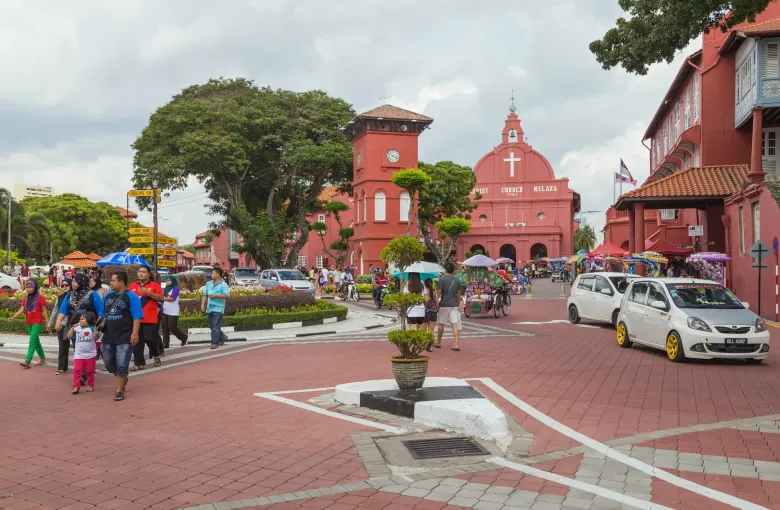
The one item the law has an opinion about.
The safety advice this cluster cites is direct: by law you must carry identification, and it says to always carry your passport. That is the first line of any Malaysian packing list and it is a legal obligation rather than a suggestion.
It also sits awkwardly beside the advice for the country next door, so it is worth being explicit. Some of Malaysia's neighbors warn travelers never to let a passport out of their hands as a rental deposit, which is about handing it to a business. Malaysia's requirement is about having it on your person. They are not in conflict. You keep the document, you keep it on you, and you do not leave it as security with anyone.
The practical answer is a way of carrying it that you will actually use every day: something flat, under clothing or in a front pocket, rather than a shoulder bag that the same advice says thieves on motorbikes cut from the road side. Take a copy as well, kept separately, because the entry advice notes that if you cannot show your original stamp on exit you may be treated as an overstayer.
A second reason the passport travels with you.
If the itinerary includes Sabah or Sarawak, the crossing from Peninsular Malaysia is an immigration control with entry and exit stamps, so the passport is needed for what looks like a domestic flight. Pack for that rather than discovering it at the gate.
Clothes, and the places that will turn you away.
The safety advice states that Malaysia is a multicultural, majority Muslim country, that you should dress modestly particularly in conservative and rural areas, and that you may be refused entry to places of worship or government offices without your shoulders and knees covered or without closed shoes. It adds a genuinely useful instruction: check the signs displayed at the entrance.
Closed shoes is the part people miss. Sandals are the obvious choice in this climate and they are the thing that gets someone turned away from a government office. So the list is lightweight long trousers or a long skirt, tops that cover the shoulders, a scarf that packs to nothing and doubles as a head covering, and one pair of closed shoes even if they spend most of the trip in the bag.
Many mosques that receive visitors lend robes to guests who arrive uncovered, which is a courtesy rather than a substitute for packing properly. Arriving dressed for the place you are visiting is the point.
Heat, and what it actually does to a day.
No source here publishes a temperature, so this list carries none. What the sources do support is that the historic quarters worth walking are walked, and that the middle of the day is the hardest part of it. Light, loose, covering clothing does more than less clothing does. Take something for sudden rain that is not a coat. And carry water rather than planning to buy it, since the stretch where you want it is usually the stretch with nowhere selling it.
Medication, and the rule that catches people.
The entry advice is specific: if you are not sure whether it is legal to bring an item, including medications, declare it on entry. Alongside that, the health advice notes that the legal status and regulation of medicines can differ from country to country.
So the packing instruction is a paperwork one. Bring medicines in their original labeled packaging, bring the prescription or a letter from your doctor, bring enough for the trip plus a margin, and declare anything you are unsure about rather than deciding for yourself that it is fine. Malaysia's drug laws are severe and the entry advice records that authorities could require a urine test on arrival, so this is not a country in which to improvise.
Health items the sources point at.
The health advice names malaria, dengue and rabies among the risks, with rabies specified in the states of Perlis, Kedah, Penang and Sarawak. What follows for a bag is insect repellent that you will actually reapply, long sleeves for dusk, and a plan made with a clinician at least 8 weeks before the trip rather than a purchase made at the airport. Bite avoidance works against more than one thing at once and is the item on this list with the best return.
What not to pack.
Anything resembling a weapon. The entry advice states that it is illegal to import unlicensed firearms and ammunition, that this includes spent ammunition and souvenirs from war museums, and that replica weapons are covered too. A cartridge case picked up as a keepsake is the way an ordinary traveler ends up in that sentence.
Sources
- UK Foreign, Commonwealth and Development Office: records a kidnapping threat in coastal eastern Sabah, that it is illegal under Malaysian law for foreign nationals to take part in demonstrations, that bag-snatching by thieves on motorbikes is common and has injured and killed people who held on, that credit card and ATM fraud is widespread, that drink spiking and methanol poisoning occur, and that by law you must carry identification. Accessed 22 September 2026.
- UK Foreign, Commonwealth and Development Office: sets out Malaysia's entry rules as the UK government understands them: a passport valid for at least 6 months after arrival, normally 90 days on arrival for tourism without a visa, an arrival card submitted online before travel, immigration control between Peninsular Malaysia and East Malaysia, and a customs declaration for cash worth 10,000 US dollars or more. Accessed 22 September 2026.
- UK Foreign, Commonwealth and Development Office: advises seeing a health professional at least 8 weeks before travel, names malaria, dengue and rabies in the states of Perlis, Kedah, Penang and Sarawak among the health risks, records altitude sickness as a risk including on Mount Kinabalu, and notes that forest fires in Indonesia can cause haze between June and October. Accessed 22 September 2026.
Other Articles
Malaysia Culture and Etiquette Guide
Malaysia Weather Guide